

WASP-193b reveals the astonishing variety and complexity of planetary systems discovered beyond our solar system.
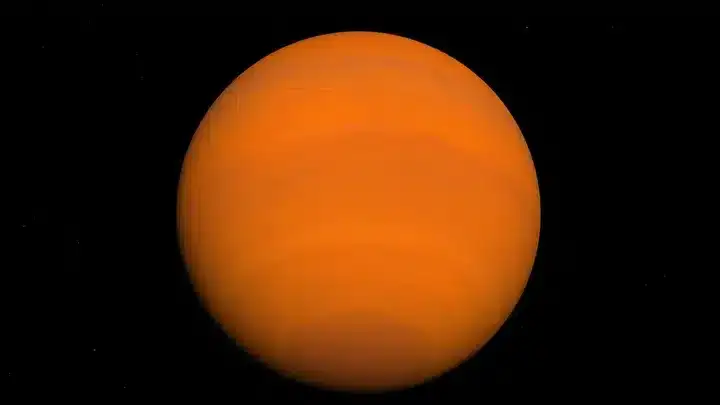
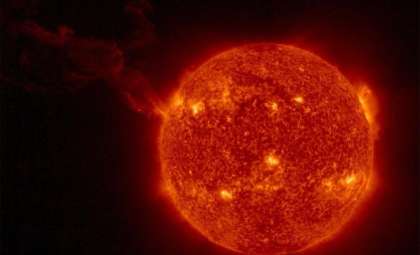
This distant exoplanet orbits a star very similar to our Sun, located approximately 1,200 light-years from Earth, and confounds scientists with its immense size paired with an incredibly low density, giving it a delicate, airy quality reminiscent of cotton candy rather than a typical gas giant.
“The planet is so light that it’s difficult to think of an analogous, solid-state material,” declared Julien de Wit, MIT professor and study co-author in a news release. “The reason why it’s close to cotton candy is because both are pretty much air. The planet is basically super fluffy.”

Origins and Characteristics of WASP-193b
WASP-193b was first detected through the efforts of the Wide Angle Search for Planets (WASP) program, a global partnership employing terrestrial telescopes to scan the brightness of thousands of stars. The planet caught attention because of its repeated transits in front of its host star, causing subtle but regular dips in light. Follow-up studies revealed that this exoplanet is about 50% larger than Jupiter but remarkably less dense — with a density a seventh of Jupiter’s — making it an outlier among known gas giants.
Decoding the Nature of a Super-Puff Exoplanet
Classified as a “Super-Puff,” WASP-193b defies traditional assumptions about how gas giants form. Unlike typical models that suggest these planets are dominated by heavy gases compressed under intense pressure, WASP-193b’s composition hints at a predominance of ultra-light gases like hydrogen and helium. This extraordinary fluffiness points to unknown atmospheric phenomena possibly inflating the planet beyond what standard planetary science currently explains.
Addressing the Difficulties in Observing Low-Density Worlds
Investigating planets like WASP-193b pushes the limits of current astronomical methods. Their low mass and diffuse nature complicate mass and composition measurements that typically depend on gravitational analysis. Instead, astronomers rely on extremely precise measurements of stellar light dimming and spectral signatures to deduce the properties of these unusual objects.
Enhancing Exoplanet Insights through Advanced Technology
The arrival of cutting-edge instruments such as the James Webb Space Telescope (JWST) is revolutionizing our ability to study planets like WASP-193b. JWST’s superior imaging and spectral capabilities allow scientists to probe their atmospheres in unprecedented detail, potentially identifying chemical compounds and atmospheric dynamics responsible for the planet’s inflated state and unique thermal features.
Implications for Science and Future Exploration
The enigmatic WASP-193b encourages researchers to rethink prevailing theories of planet formation and evolution, especially regarding planets circling stars akin to our own Sun. Deepening understanding of such worlds may also hint at atmospheric processes that could influence habitability elsewhere, even if WASP-193b itself is an unlikely candidate for life due to its hostile conditions and absence of a solid surface.
The discovery of WASP-193b enriches our cosmic catalog with its unique characteristics and challenges long-held assumptions about planetary systems. As astronomical techniques continue to evolve, the study of such enigmatic worlds will undoubtedly transform our understanding of the universe’s diversity. Each new discovery, including that of WASP-193b, not only expands our knowledge of distant planetary systems but also refines our theories about the cosmos, pushing the boundaries of what we know about the myriad worlds beyond our solar system.
- Categories:
- Astronomy ,
- News ,
- Science ,
- Space












0 comments
Sign in to Comment