
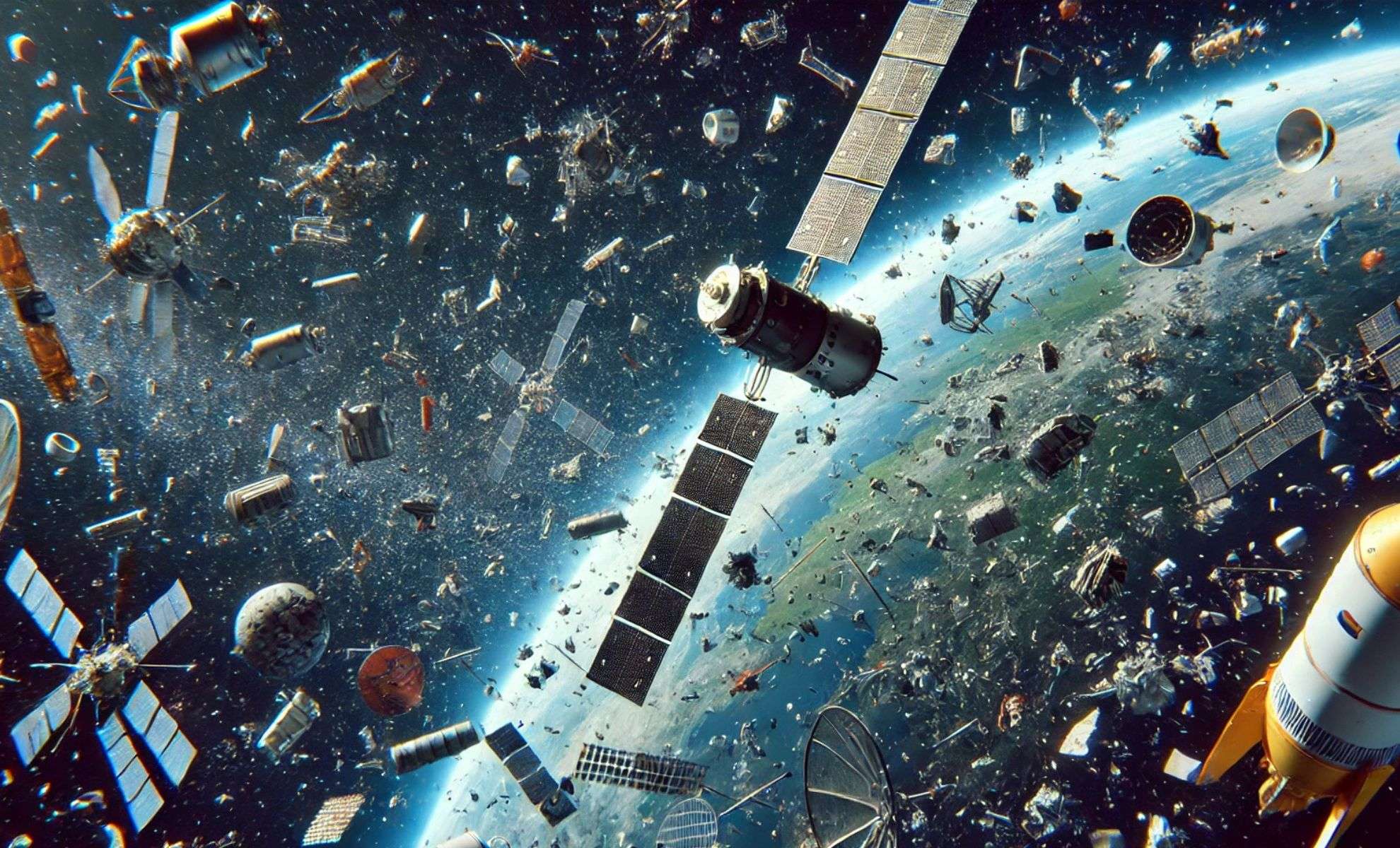
Earth's orbital environment, once a nearly empty frontier, has become cluttered with countless pieces of human-made debris. This growing cloud of defunct satellites and discarded rocket parts threatens not only space exploration but also the everyday technologies our society depends on. Scientists caution that we are nearing a critical threshold known as Kessler Syndrome, a chain reaction of collisions that could render Earth's orbit inhospitable for decades or even centuries.
This looming hazard carries the risk of widespread disruptions in global communication networks, weather tracking, GPS services, and manned space missions. As more satellites enter orbit, the probability of catastrophic debris collisions rises. Although efforts to tackle this problem are underway, effectively managing space debris on a global scale remains an overwhelming task.
Understanding the Kessler Syndrome Phenomenon
Kessler Syndrome was first conceptualized by NASA scientist Donald Kessler in 1978. It describes a scenario where the concentration of orbital debris becomes so dense that collisions between objects initiate a domino effect, producing an ever-increasing number of fragments. This escalating cascade could block access to Earth’s orbit, jeopardizing ongoing satellite operations and future space ventures.

Presently, the European Space Agency (ESA) tracks over 47,000 pieces of orbital debris larger than 4 inches (10 centimeters). These include obsolete satellites, spent rocket parts, and fragments from prior accidents. Moreover, numerous smaller debris particles, which are untracked, pose substantial dangers since their high velocity can inflict serious damage on active satellites.
Dr. Carolin Frueh, a space debris specialist at Purdue University, warned, “I’m pessimistic … that we will act timely enough to not have economic damage in the process.” Such collisions risk undermining vital satellite systems crucial for internet connectivity, navigation, and environmental monitoring, potentially destabilizing modern infrastructure.
The Growing Burden of Space Debris
The sharp rise in orbital debris is linked to decades of satellite and rocket launches since Sputnik 1 in 1957. More recently, the surge in commercial satellite deployments has amplified the problem. Companies like SpaceX have launched vast constellations for worldwide internet access, with nearly 7,000 Starlink satellites already in orbit and plans for thousands more.
University of Arizona planetary scientist Dr. Vishnu Reddy noted the explosive growth, stating, “The number of objects in space that we have launched in the last four years has increased exponentially. So we are heading toward the situation that we are always dreading.”
The situation worsens with deliberate actions like anti-satellite missile tests. For example, in 2021, Russia’s destruction of one of its satellites created over 1,500 pieces of trackable debris, which remain a threat to other spacecraft and the International Space Station (ISS), highlighting the long-term impact of such events.
Examples Illustrating Orbital Hazards
The increase in space debris has already resulted in several serious incidents hinting at the dangers posed by Kessler Syndrome. In 2009, the defunct Russian satellite Kosmos 2251 collided with the active U.S. communications satellite Iridium 33, generating nearly 2,000 trackable fragments still orbiting today.
In 2023, a NASA weather satellite narrowly escaped collision with a defunct rocket body, passing at a mere 65 feet (20 meters). Such close encounters are becoming routine, with satellite operators receiving numerous collision warnings daily.
These incidents highlight the immediate dangers of space debris and the potential for an uncontrollable cascade of collisions in orbit.
The Far-Reaching Consequences of a Debris Cascade
If Kessler Syndrome were to fully develop, the ramifications would extend far beyond the mere loss of satellites. Our society relies heavily on space-based infrastructure, and a blockaded orbit would trigger sweeping disruptions.
Communication Blackouts
Orbital satellites underpin global communication links, including internet, television, and emergency services. Their loss would isolate vast populations, disrupting governments, industries, and individuals.
Interruption of Space Exploration
Future voyages to the Moon, Mars, and beyond would face unprecedented barriers. Scientific experiments dependent on space platforms would also come to a halt.
Massive Economic Costs
The financial impact could be staggering. Lloyd’s of London estimates that one major collision might cause economic losses surpassing $3.6 trillion in the first year alone, with prolonged consequences affecting many sectors.
Current Strategies to Combat Space Debris
Although the threat grows, multiple initiatives aim to alleviate the space junk problem.
- Advanced Debris Removal
Technologies like ESA’s ADEO Braking Sail are designed to gently pull obsolete satellites into Earth’s atmosphere so they burn up safely. Innovative tools including nets and robotic arms are being trialed to grab larger debris pieces. - Better Surveillance and Tracking
Firms such as LeoLabs employ sophisticated sensor systems to detect smaller debris, enhancing collision forecasting. Improved space situational awareness is crucial to reducing secondary breakups. - Stronger Regulations
The United Nations has proposed the Pact for the Future, aiming to tighten debris mitigation protocols and enforce responsible satellite de-orbiting. However, enforcing these standards remains difficult due to competing interests among nations and private enterprises.
University of Michigan’s Dr. Nilton Renno compares space debris to ocean pollution: “The analogy that I like to think about space debris is plastic in the oceans. We used to think the oceans were infinite. Now we realize they’re not, and the damage is huge if we’re not careful.”





0 comments
Sign in to Comment