
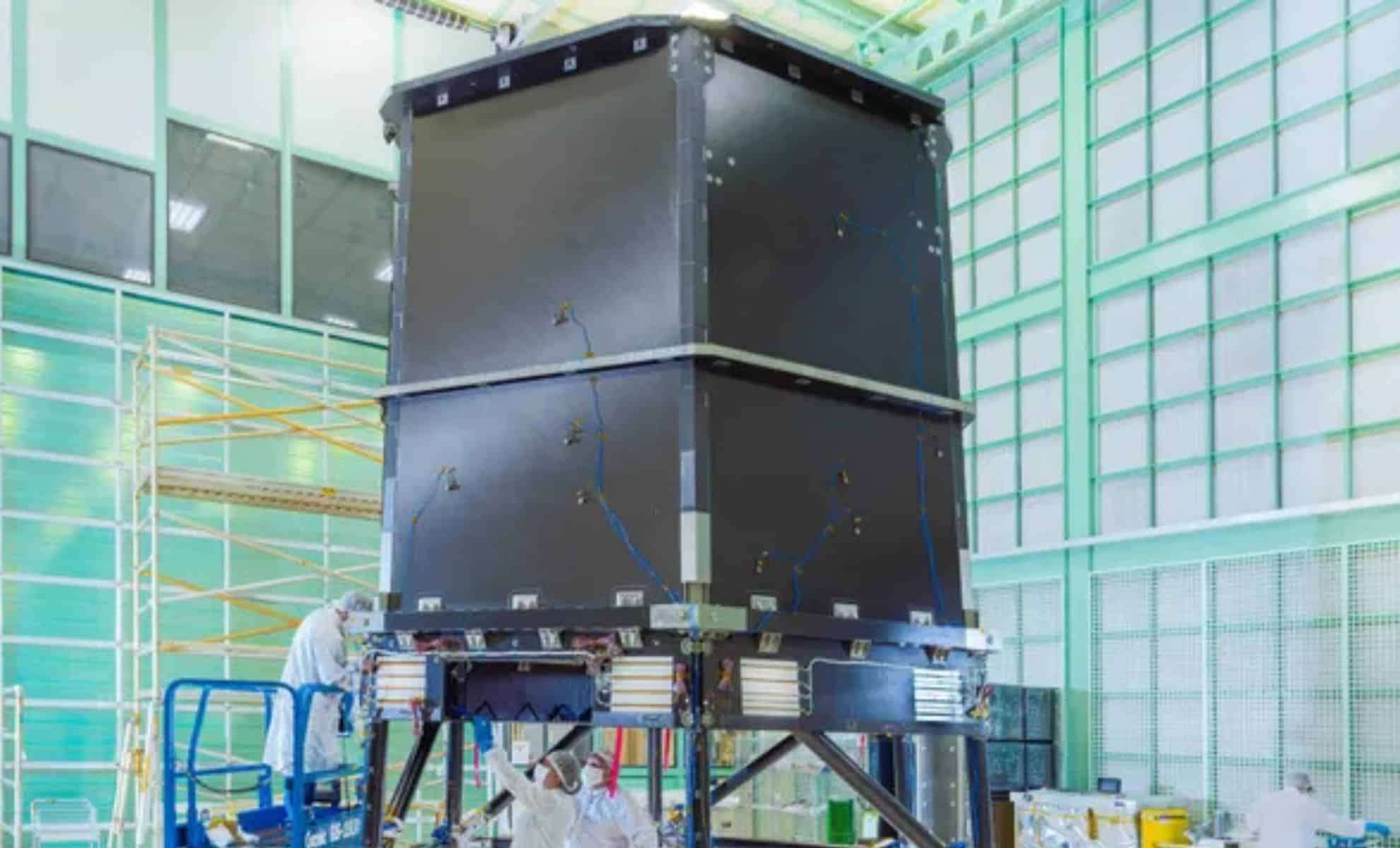
NASA’s highly anticipated Nancy Grace Roman Space Telescope has successfully completed demanding centrifuge evaluations at the Goddard Space Flight Center.
These tests centered on the telescope’s Outer Barrel Assembly, a vital structure designed to shield the instrument from unwanted light interference and thermal instabilities during its mission. The centrifuge trials recreated the extreme gravitational forces anticipated during launch, a critical measure to validate the spacecraft’s durability ahead of its targeted 2025 deployment.
Challenging Boundaries: Intensive Spin Testing
The telescope’s Outer Barrel Assembly was subjected to high-speed rotation within a centrifuge at NASA’s Goddard facility. This centrifuge, featuring a massive 600,000-pound steel arm, generated forces exceeding seven times Earth’s gravity (7G). Spinning at a rate of 18.4 rotations per minute, the tests confirmed the assembly’s capability to endure the severe conditions it will face in orbit.

Given its extensive size, the Outer Barrel Assembly was evaluated in two phases. Initially, engineers assessed its supporting legs, named the “elephant stand”, which encompass core instruments such as the Wide Field Instrument and Coronagraph Instrument. The follow-up phase tested the “house”—a protective shell and ring that encapsulate the telescope’s central components, maintaining thermal consistency to prevent optical misalignments. Product design lead, Jay Parker, explained, “It’s designed a bit like a house on stilts, so we tested the ‘house’ and ‘stilts’ separately.”
Engineering a Resilient Spaceframe
To ensure thermal stability, the Outer Barrel Assembly incorporates advanced composites such as carbon fiber reinforcements combined with reinforced plastics, joined through titanium connectors. This approach guarantees a strong yet lightweight structure that resists deformation from temperature swings and keeps launch mass low. Inside, a honeycomb core design further lowers weight while enhancing rigidity, critical for preserving the telescope’s alignment and image clarity in the cold vacuum of space.
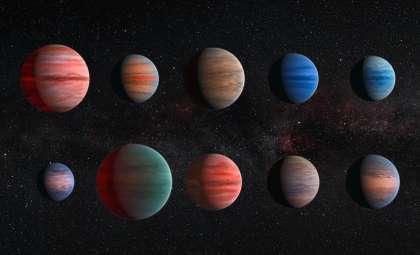
The assembly also acts as a vital shield against stray light, protecting the telescope’s sensitive instruments from interference. This feature is essential as the Roman Telescope aims to collect precise data on far-reaching exoplanets, distant galaxies, and the elusive dark energy accelerating the cosmos.
Preparing for Unprecedented Exploration
Following centrifuge testing, the Roman Telescope is set to enter additional trials, including thermal vacuum testing in 2025, to validate endurance under harsh space temperature swings and vacuum conditions. Subsequent vibration tests will simulate the stresses experienced during launch. Once fully assembled with solar arrays and the Deployable Aperture Cover, the telescope will be mission-ready.
Scientists eagerly anticipate the Roman Telescope’s capacity to transform our cosmic knowledge. Boasting a field of view 100 times larger than Hubble’s, it will scan vast sections of the sky, unveiling new astronomical phenomena. Julie McEnery, the mission’s senior project scientist, highlighted its discovery potential: “This Roman survey will provide a treasure trove of data for astronomers to comb through… We may serendipitously discover entirely new things we don’t yet know to look for.”
Slated for launch in 2025, the Roman Space Telescope is positioned to significantly advance our understanding of fundamental astrophysics, including the nature of dark energy and the identification of hidden exoplanets orbiting distant stars.





0 comments
Sign in to Comment