
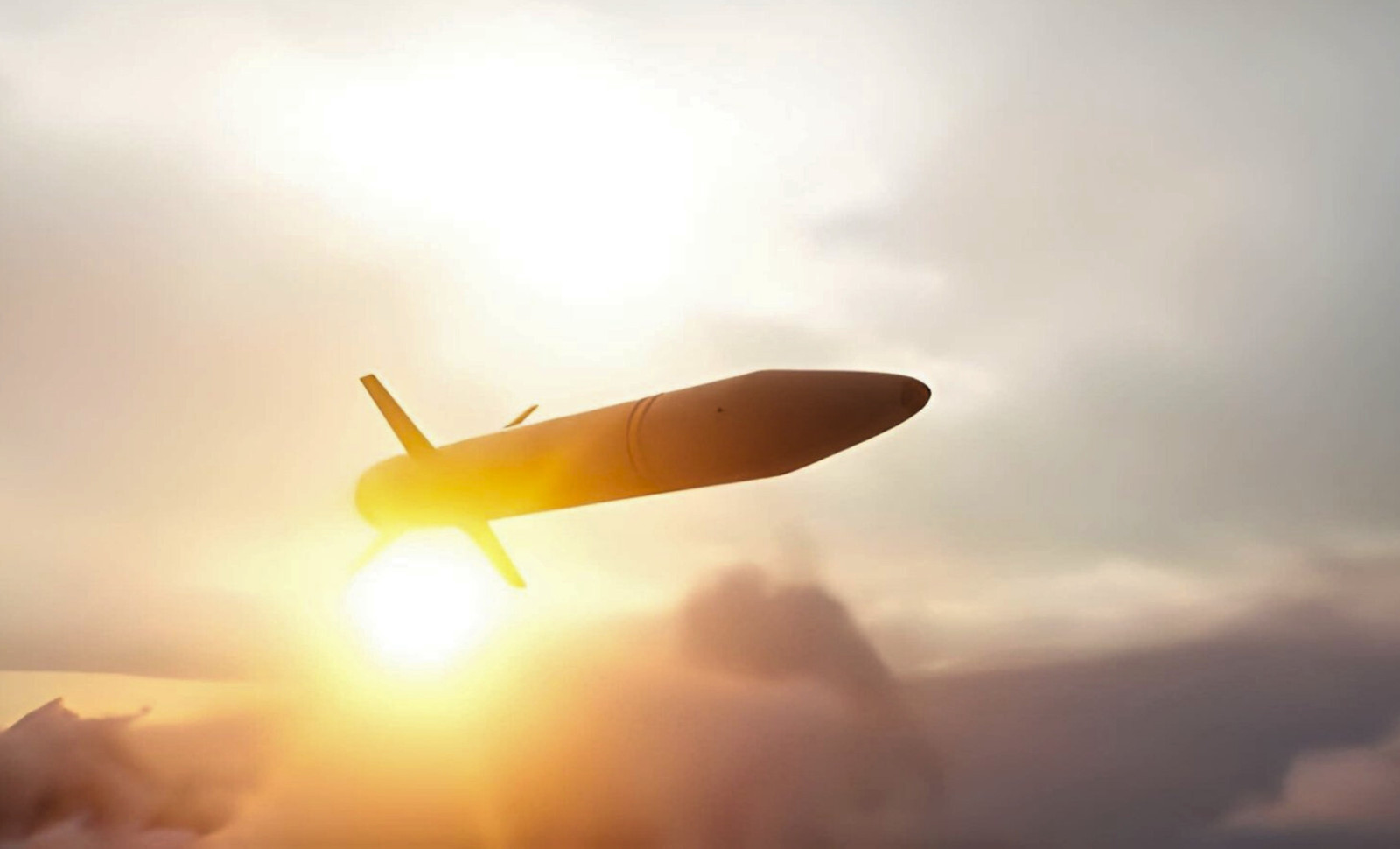
In late January at a U.S. testing site, a missile made history by defying conventional hypersonic design. Developed under the Air Force's Affordable Rapid Missile Demonstrator initiative, this missile achieved supersonic velocity within weeks of assembly. Its distinctiveness lay not only in speed but in its internal technology.
Traditional hypersonic weapons often depend on solid-fuel rockets or air-breathing engines, both of which have strict operational limits. Some require fueling just before launch, while others lose propulsion past a set speed and continue as unpowered gliders. This January's test missile embraced an entirely different approach.
Innovative Propulsion Technology
The engine, named Draper, was crafted by Colorado-based Ursa Major. It uses a less common form of propulsion in hypersonic systems: a storable liquid rocket engine. Unlike cryogenic fuels that require extremely cold storage and last-minute fueling, the Draper motor uses safe propellants stable enough to be kept onboard for long durations.

A March 2026 press release from Ursa Major revealed that this flight was conducted alongside the Air Force Research Laboratory. Program manager Katrina Hornstein explained to Breaking Defense that this propulsion allows continuous powered maneuvering, unlike typical boost-glide missiles, which rely solely on unpowered gliding post-launch.
This January’s flight marked the inaugural showcase of a hypersonic missile employing storable liquid propulsion. The Air Force Research Laboratory stressed this milestone as vital progress toward operational deployment.
Rapid Development Within Eight Months
From contract award to a ready-to-fly missile, Ursa Major achieved this feat in just eight months. CEO Chris Spagnoletti highlighted the swift pace, uncommon in the protracted world of hypersonics. “We transitioned from contract signing to flight-capable propulsion and vehicle within eight months,” he stated in March 2026.
Key to this rapid progress was consolidating engineering, manufacturing, and testing under one roof, enabling seamless transitions between design and production stages. Additionally, extensive use of additive manufacturing permitted in-house fabrication of complex engine components, lowering part count and allowing innovative designs impossible with traditional methods.
Prioritizing real flight tests over prolonged ground trials, Spagnoletti mentioned, introduced risks but dramatically shortened development time.
Advantages of Storable Propellants
The distinction between cryogenic and storable propellants carries strategic significance. Missiles needing fueling right before launch demand specially trained personnel with protective gear and complex storage facilities. In contrast, those with stable onboard fuels can be kept in standard containers and launched rapidly.
The Draper engine’s ability to modulate thrust and restart mid-flight offers another edge, enabling powered course corrections throughout its trajectory. This differs from boost-glide weapons that gain thrust only during initial boost and then coast unpowered.
Hornstein noted that since the missile carries its own fuel and oxidizer, it isn't constrained by factors such as airspeed or altitude the way air-breathing hypersonics are. This flexibility allows dynamic adjustments enhancing evasion capabilities against defense systems.
From Prototype to Scalable Production
Even before the successful January launch, Ursa Major had progressed toward a deployable variant. In February 2026, the company introduced the Ursa Major HAVOC Missile System—a medium-range hypersonic platform designed for mass production. The HAVOC announcement indicated it shares the Draper engine but adds a modular design compatible with various boosters and launch configurations.
HAVOC is adaptable for launches from fighter jets, bombers, ship-based vertical launch systems, and ground launchers. By eliminating the need for costly thermal protection systems found on some hypersonic missiles, Ursa Major aims to keep production costs reasonable.
Brig. Gen. Jason Bartolomei of the Air Force Research Laboratory described the January launch as a step toward affordable, scalable hypersonic deterrence. “We aren’t just delivering one missile; we’re pioneering a pathway for a cost-effective, mass-producible deterrent,” he emphasized. The flight occurred on January 27, 2026.
- Categories:
- News







0 comments
Sign in to Comment