
The quest to explore the cosmos has always been limited by one critical factor: the dependency on fuel. Conventional rockets need massive amounts of propellant, which restricts their operational range and mission durations. Recently, researchers have begun investigating propulsion concepts that eliminate the need for onboard fuel, potentially redefining how we approach journeys to distant worlds and beyond our solar neighborhood. A new comprehensive review published on the arXiv preprint platform examines several promising propulsion technologies that utilize natural forces, hinting at a future where spacecraft might travel deep into space without carrying fuel.
Exploring the Promise of Fuel-Free Spacecraft Propulsion
The concept of propulsion without traditional fuel has intrigued scientists for many decades but has only recently emerged as a credible field of study. A recent paper available through ArXiv provides an extensive overview of various propulsion strategies that could fundamentally alter the landscape of space exploration. These techniques capitalize on external energy sources such as solar radiation, gravitational assists, and the solar wind, enabling missions that would be unattainable with current chemical rocket technology. The research suggests these approaches could revolutionize our capacity for extended spaceflight.
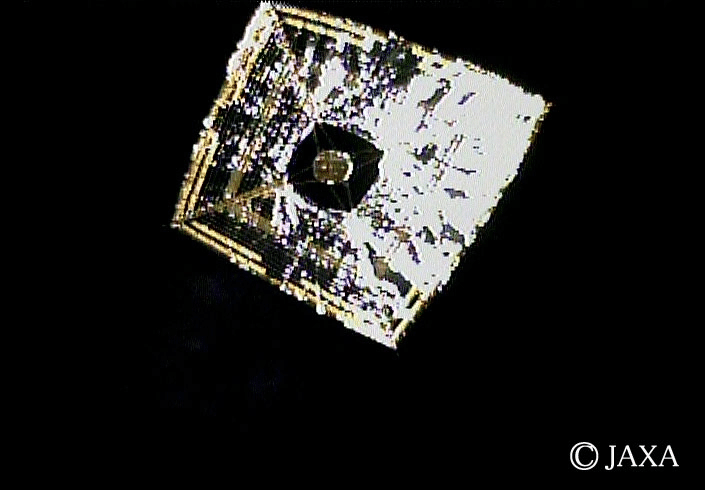
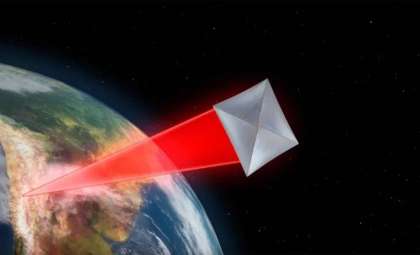
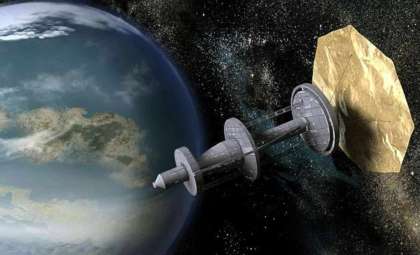
Among the explored innovations is the use of solar sails. Solar sails convert the momentum from sunlight into thrust by deploying expansive, ultra-light reflective surfaces that catch photons streaming from the Sun. The critical advantage is that they operate without needing any onboard propellant, making them suitable for voyages far beyond what chemical rockets currently allow. Solar sails could, in principle, steadily accelerate spacecraft towards the outer solar system and even interstellar destinations through persistent, gentle propulsion. As noted by Universe Today, this technology has the potential to open new frontiers for studying remote planets and surpassing the boundaries of our solar system.

Still, solar sails face practical challenges. Their effectiveness diminishes with distance from the Sun as solar radiation weakens. Additionally, the delicate materials used must endure extreme environmental conditions, posing significant design hurdles. Despite these obstacles, solar sails hold noteworthy promise as an alternative propulsion option for future exploration missions.
Planetary Gravity Assist: Leveraging Orbital Momentum
One of the earliest and most established propellant-free approaches is gravity assist, a maneuver famously employed by spacecraft like Voyager. By carefully navigating close to a planet, a spacecraft can gain speed by tapping into the planet’s orbital momentum without expending fuel. This technique has been crucial for reaching the farthest regions of our solar system by efficiently altering spacecraft trajectories and increasing velocity.
However, gravity assists depend heavily on precise celestial alignments and timing, requiring spacecraft to pass near specific planets. This imposes limitations on mission planning and flexibility, as such planetary configurations occur infrequently. Nonetheless, gravity assists remain a vital strategy, enabling costly and complex missions to traverse vast distances and visit multiple targets while conserving propellant.
Harnessing the Solar Wind: Magnetic and Electric Sails
Complementing solar sails, magnetic and electric sail concepts exploit the solar wind—a stream of charged particles emitted by the Sun. Magnetic sails generate thrust by interacting with these particles through large superconducting loops, whereas electric sails use long, electrified tethers that repel solar wind protons to produce propulsion. Both methods allow prolonged acceleration without consuming onboard fuel.
Despite their promise, these technologies are still emerging and face substantial engineering challenges. Magnetic sails would necessitate gigantic superconducting rings possibly spanning tens of kilometers, which must be cooled to cryogenic temperatures—a feat currently beyond our capabilities. Similarly, electric sails demand vast, lightweight, and durable wires along with considerable electrical power to sustain the required charge.
Both magnetic and electric sails offer potentially greater acceleration than solar sails and don’t degrade significantly over time. Still, the development and deployment of such enormous systems in the space environment represent immense obstacles. Nonetheless, the review indicates that with continued research and technological advances, these propulsion techniques could one day become viable alternatives to fuel-based engines for deep-space missions.
- Categories:
- News





0 comments
Sign in to Comment