

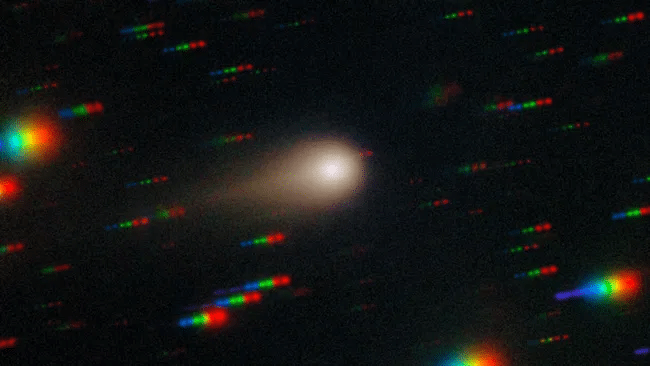
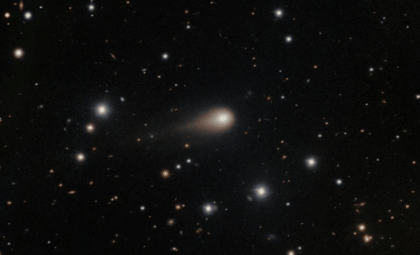
3I/ATLAS, the third recognized interstellar comet journeying through our solar neighborhood, is capturing worldwide attention for its potential contributions to space surveillance advancements. While it presents no immediate danger, this rare visitor offers scientists a valuable chance to improve methods for detecting and tracking celestial threats like asteroids. As the astronomy community readies itself to study the comet, its passage promises critical insights that could strengthen Earth's ability to anticipate and mitigate future hazards.
The Importance of 3I/ATLAS in Improving Asteroid Monitoring and Planetary Protection
Comet 3I/ATLAS (C/2025 N1) stands out as an extraordinary interstellar traveler, providing researchers with a unique opportunity to test and advance observational strategies for space objects. Although its trajectory keeps it approximately 1.8 astronomical units from Earth, this distance is ideal for detailed studies. The International Asteroid Warning Network (IAWN) is spearheading an observation campaign aimed at sharpening detection and data processing techniques. By monitoring a comet, which often follows an unpredictable orbit, astronomers can gain critical experience relevant to tracking asteroids that might threaten Earth in the future.
This initiative highlights the vital importance of global cooperation among observatories. The Minor Planet Center recently emphasized:

“The campaign will target comet 3I/ATLAS (C/2025 N1) to exercise the capability of the observing community to extract accurate astrometry,” highlighting the crucial role of accurate trajectory data in understanding the movement of interstellar objects.
This worldwide collaboration is a part of an expansive effort to monitor and catalog near-Earth objects. The insights gained from this research could lead to improved planetary defense tools, enhancing Earth's readiness to detect and respond to asteroid threats.
The Significance of Studying Comets Like 3I/ATLAS for Planetary Defense
Comets are challenging celestial bodies to observe due to their volatile and ever-changing characteristics. The glowing comas and sweeping tails make brightness estimations and precise orbital calculations difficult. This inherent unpredictability underscores the need for close monitoring of 3I/ATLAS. Accurately forecasting the paths of space objects is essential for planetary defense, and comets serve as excellent subjects to test the robustness of tracking methods originally designed for more stable asteroids.
This observation campaign will provide astronomers with a vital chance to refine their astrometry skills, gathering precise positional data necessary for accurate movement predictions. As outlined in the Minor Planet Center’s official release,
“The campaign will target comet 3I/ATLAS (C/2025 N1) to exercise the capability of the observing community to extract accurate astrometry.”
Observing this comet allows scientists not only to understand its unusual behavior but also to enhance observational techniques, improving future monitoring of asteroids that could endanger Earth.
The campaign also encourages participation from amateur astronomers, broadening the network of observers. This citizen science involvement significantly boosts the chances of capturing precise data, reinforcing global preparedness against possible celestial threats.
Interstellar Comets and Their Impact on the Future of Space Surveillance
The arrival of interstellar visitors like 3I/ATLAS presents rare study opportunities, offering astronomers a window into objects originating beyond our solar system. Being only the third identified interstellar entity to traverse our cosmic neighborhood, this comet is key to deepening our understanding of celestial navigation challenges.
Data from its journey could revolutionize how scientists track and predict the motion of various space debris, including threatening asteroids. The erratic nature of such objects helps refine models that anticipate the dynamics of bodies interacting with our solar environment.
Utilizing advanced telescope systems and precise instrumentation, researchers can discern movement patterns to improve prediction accuracy—an essential aspect of planetary defense initiatives geared toward shielding Earth from unforeseen dangers.
The International Asteroid Warning Network: Coordinating a Global Defense Against Asteroid Threats
The International Asteroid Warning Network (IAWN) is a cornerstone in Earth's defense framework against asteroid collisions. Formed under United Nations guidelines, the network unites astronomers and experts worldwide to identify, track, and characterize near-Earth objects (NEOs). Its efforts span from maintaining comprehensive asteroid and comet catalogs to evaluating their orbits and prioritizing monitoring of potentially hazardous objects.
The IAWN's active role in observing comet 3I/ATLAS highlights the critical need for international partnerships in planetary defense. As more nations contribute data and resources, collective understanding of space threats grows stronger, fostering more effective detection efforts.
Continuously updating its extensive NEO database, the IAWN leverages interstellar object observations like those of 3I/ATLAS to stress-test and improve its detection methodologies. These coordinated endeavors aim to prepare humanity for any future asteroid impact risks.
- Categories:
- News






0 comments
Sign in to Comment