
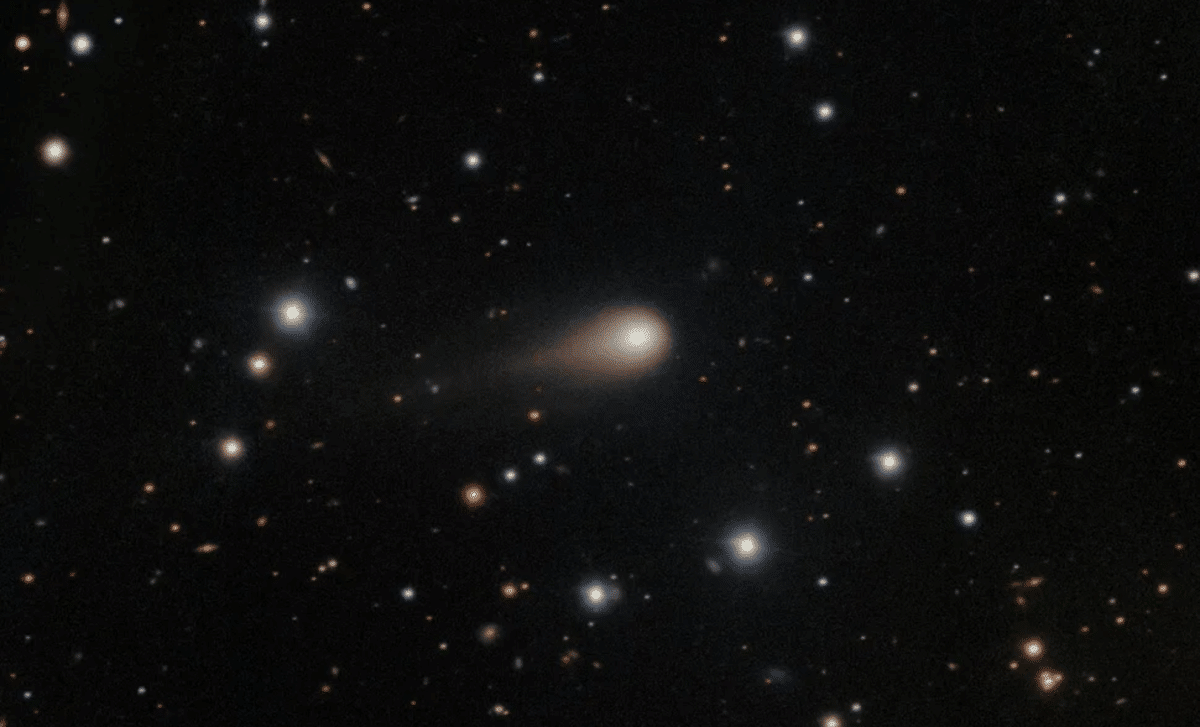
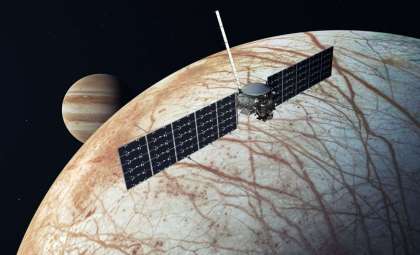
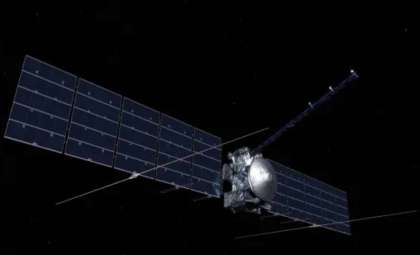
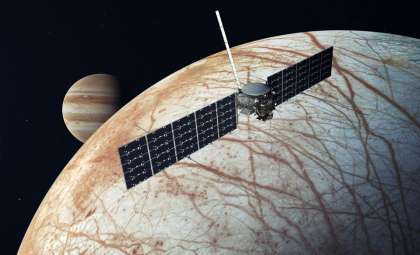
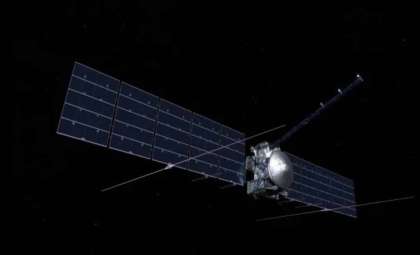
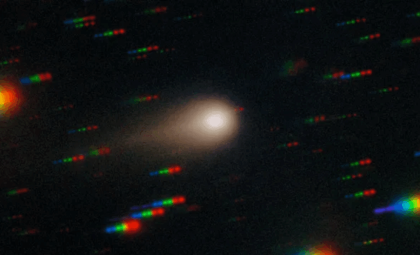
NASA’s Europa Clipper mission, en route to explore Jupiter’s icy moons, is poised for an extraordinary scientific event. The interstellar comet 3I/ATLAS is on a trajectory intersecting with the spacecraft's path, potentially exposing Europa Clipper to charged particles streaming from the comet’s ion tail. This encounter offers a rare chance to examine material from beyond our solar system up close, shedding light on the star systems where such comets originate.
An Uncommon Interstellar Opportunity
The prospect of a spacecraft directly sampling debris from an interstellar comet is highly unusual and scientifically valuable. Objects like 3I/ATLAS traverse our solar neighborhood from outside the Milky Way’s known regions. Though these visitors have been observed remotely, detailed data about their internal makeup or birth environments remains absent. As Samuel Grant, a leading researcher from the Finnish Meteorological Institute, notes, intercepting the comet’s ion tail could offer unprecedented insights into these enigmatic visitors.
“We have virtually no data on the interior of interstellar comets and the star systems that formed them,” Grant said. told Space.com. “Sampling the tail in this way is the closest we can currently get to a direct sample of such an object, and thus a different part of the galaxy.”
Add Cosmo Herald as a Preferred Source

The ion tail, consisting of particles emitted as the comet warms near the sun, could reveal information about its composition and the distant stellar nurseries that produced it. Analyzing this material offers a rare perspective on cosmic environments beyond our solar system, potentially helping scientists understand the formation processes of comets elsewhere in the galaxy.
What Distinguishes 3I/ATLAS?
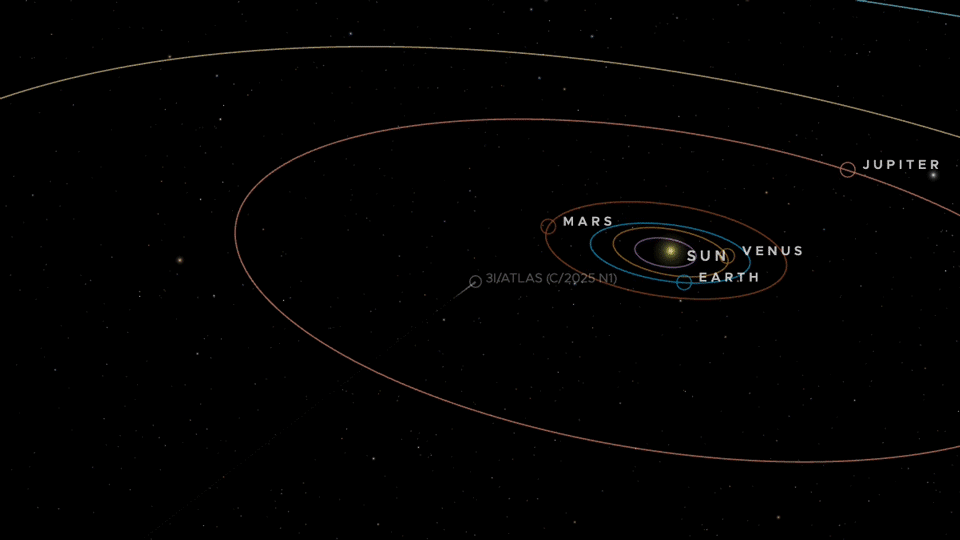
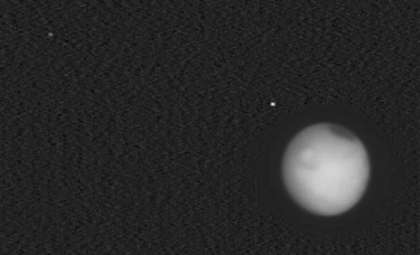
First spotted in 2017, 3I/ATLAS stands out as the first confirmed interstellar comet entering our solar system. Unlike typical comets formed in the Kuiper Belt or Oort Cloud around the sun, 3I/ATLAS originates from another star system entirely. As it approaches the sun, heat causes its ice and dust to sublimate, forming two distinct tails: a dust tail trailing behind and an ion tail pushed away by solar wind.
Studying the ion tail's makeup is critical because it enables researchers to differentiate between particles from the comet and those originating from the solar wind. The comet’s charged particles include heavier elements, especially water-group ions, setting them apart from the lighter hydrogen and helium components typical of solar wind. This unique chemical fingerprint could allow Europa Clipper to isolate comet-specific ions during the upcoming encounter.
“Comets preserve primordial material from billions of years ago, acting as our cosmic time capsules,” Grant explained. “As they near the sun, some of this ancient matter is released and carried away by the solar wind, forming the ion tail.”
Europa Clipper’s Chance to Intercept the Ion Tail
The Europa Clipper spacecraft, on its journey to Jupiter, is expected to travel through a zone where it could capture charged particles streaming from 3I/ATLAS’s ion tail. This event is anticipated to occur between October 30 and November 6, 2025. Yet, several obstacles remain, including the potential impact of the ongoing U.S. government shutdown on the spacecraft’s instrument readiness, possibly limiting data collection capabilities.
Despite these challenges, the alignment of comet, spacecraft, and sun creates a compelling chance for discovery. Utilizing a specialized simulation tool called Tailcatcher, scientists like Grant and Geraint Jones from the European Space Agency have forecasted this encounter. The software tracks solar wind particle trajectories, helping predict when spacecraft can intersect a comet’s ion tail. According to Grant,
“We use the velocity measured at [a packet’s] arrival to trace back the path it took to travel from the sun to the spacecraft, and we can compare this path to the position of the comet.”
Insights from Analyzing Charged Particles
If Europa Clipper successfully samples particles from 3I/ATLAS’s ion tail, researchers can contrast these with solar wind samples. Comet ions are detected by their heavier mass and unique chemical signatures compared to solar wind’s dominant hydrogen and helium. This comparison is expected to yield clues about the comet’s elemental composition and, in turn, illuminate conditions in its distant stellar birthplace.
Grant further explained,
“Cometary ions can be distinguished in a number of ways, most simply by chemical abundances — cometary ions include significant amounts of heavier species, particularly water-group ions, compared to the proton and helium-dominated solar wind. Additionally, the act of loading additional mass into the solar wind causes a general slowing and deflection of the ambient solar wind flow.”
- Categories:
- News




0 comments
Sign in to Comment