
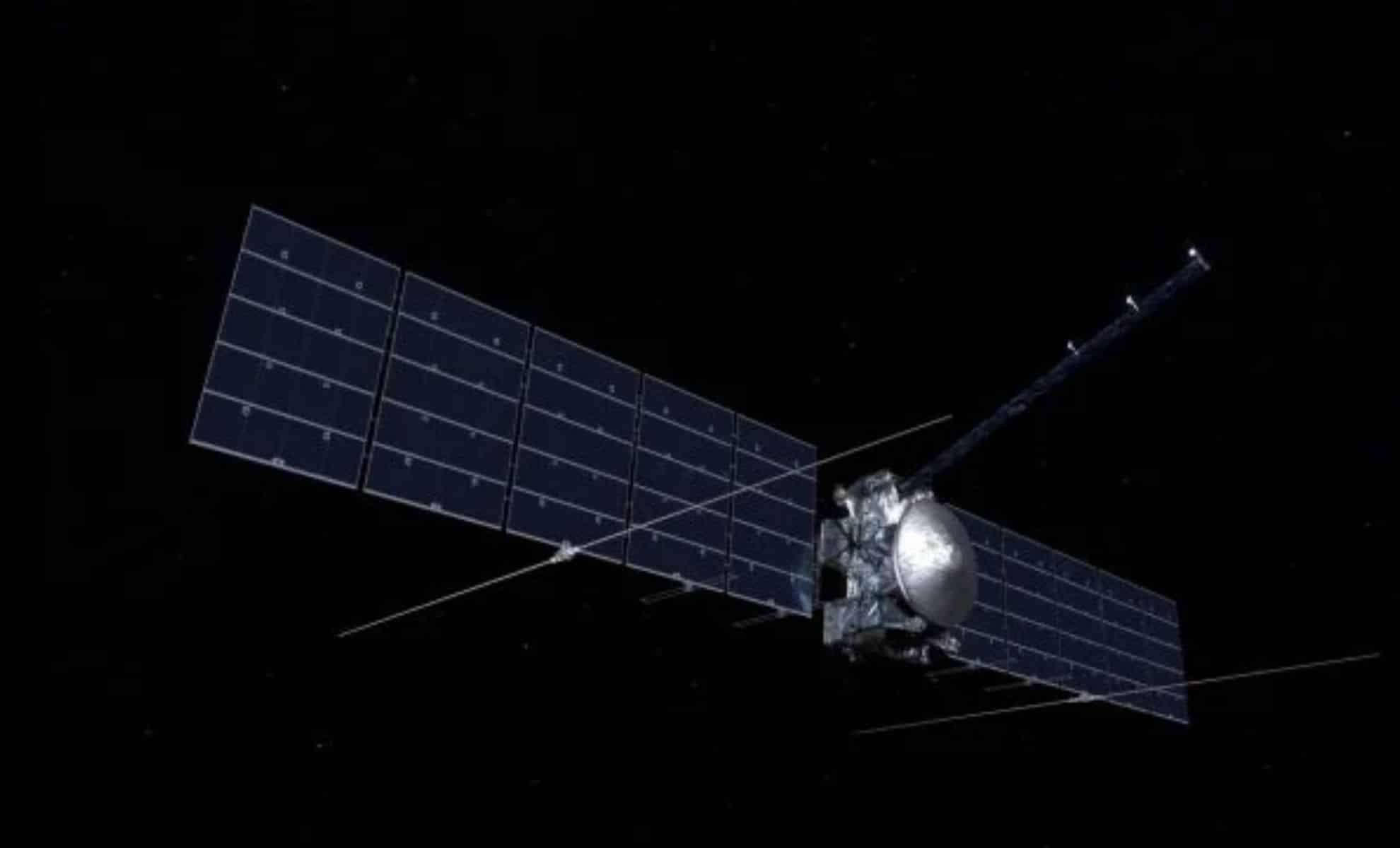
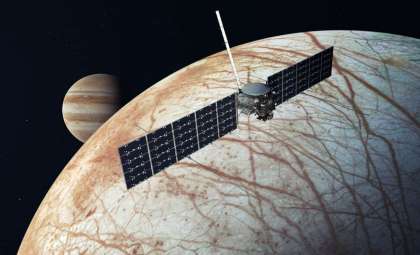
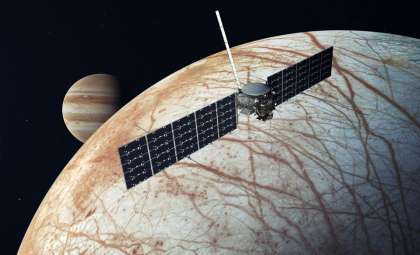
NASA’s Europa Clipper mission recently marked a significant milestone by successfully testing its radar system during a close pass by Mars. The spacecraft’s REASON radar, specially designed to investigate the icy surface of Europa, Jupiter’s intriguing moon, showcased its advanced features in this vital trial.
Radar Performance Validated Over Martian Terrain
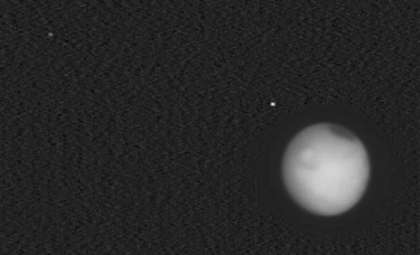
In March, as Europa Clipper flew past Mars, it conducted a crucial radar experiment by directing signals at the planet’s surface and analyzing their returns. This rare opportunity allowed engineers to evaluate the REASON radar's function in the space environment. The system operated flawlessly, receiving distinct echoes from Mars, confirming its readiness. Don Blankenship, the radar’s principal investigator from the University of Texas at Austin, remarked, “We got everything out of the flyby that we dreamed.”
This achievement ensures that the radar is fully functional and prepared to carry out its primary mission: investigating Europa’s thick ice layer to search for hidden oceans below. During the flyby, Europa Clipper amassed 60 GB of radar data, which will help scientists refine their analysis techniques ahead of the spacecraft’s 2030 arrival at Europa.

Space Testing Surpasses Earth-Based Limitations
Evaluating radar technology like REASON on Earth is extremely challenging due to the enormous scale required. Engineers would need a test chamber spanning more than 250 feet, almost three-quarters the length of a football field, which is impractical. The spacecraft’s Mars flyby provided a rare and invaluable chance to overcome these constraints. Utilizing Mars’ gravitational pull, the mission altered its flight path while performing radar tests over a well-studied Martian region.
By transmitting radio waves to the planet’s surface and analyzing the returned signals, REASON generated critical data for evaluation. This marked the radar’s first operational use in space, with the mission team celebrating its flawless performance. Trina Ray highlighted the moment, saying, “The engineers were excited that their test worked so perfectly. Now, the science team is getting a head start on learning how to process the data and understand the instrument’s behavior compared to models.”
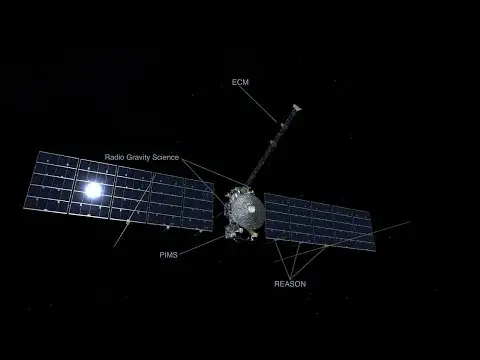
Probing Europa’s Hidden Ocean with Radar
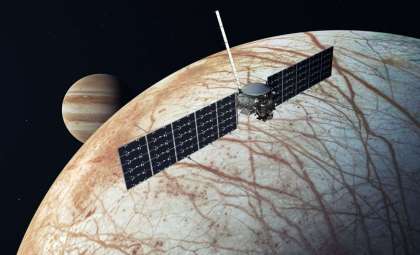
The REASON instrument is tasked with penetrating Europa’s thick ice crust to identify subterranean water pockets or the ocean believed to reside beneath. Scientists consider Europa’s subsurface ocean one of the most promising locations in our solar system for potential life. The Europa Clipper mission seeks to study not only Europa’s icy exterior but also its surface features, which can provide insights into the moon’s geological activity and habitability prospects.
A central goal of REASON is to explore how materials from Europa’s ocean may rise through the ice shell to the surface, helping explain surface formations like ridges in relation to underlying structures.
Harvesting Data from Mars Encounter
During the March flyby, Europa Clipper passed within approximately 550 miles of Mars, spending about 40 minutes transmitting and receiving radar signals. The mission collected an impressive 60 GB of data, which scientists are now examining to assess radar performance in detail. This early information will be crucial for optimizing REASON’s operation in preparation for the Europa encounter.
Following this successful test, the spacecraft continues its 1.8 billion-mile journey toward Europa. Its next gravity assist, scheduled for 2026, will use Earth’s gravity to adjust its path before the mission’s anticipated arrival in the early 2030s.
Equipped with state-of-the-art radar and other instruments, Europa Clipper is poised to transform our knowledge of one of the solar system’s most captivating moons, advancing the quest to understand environments that might support life beyond Earth.
- Categories:
- News






0 comments
Sign in to Comment