
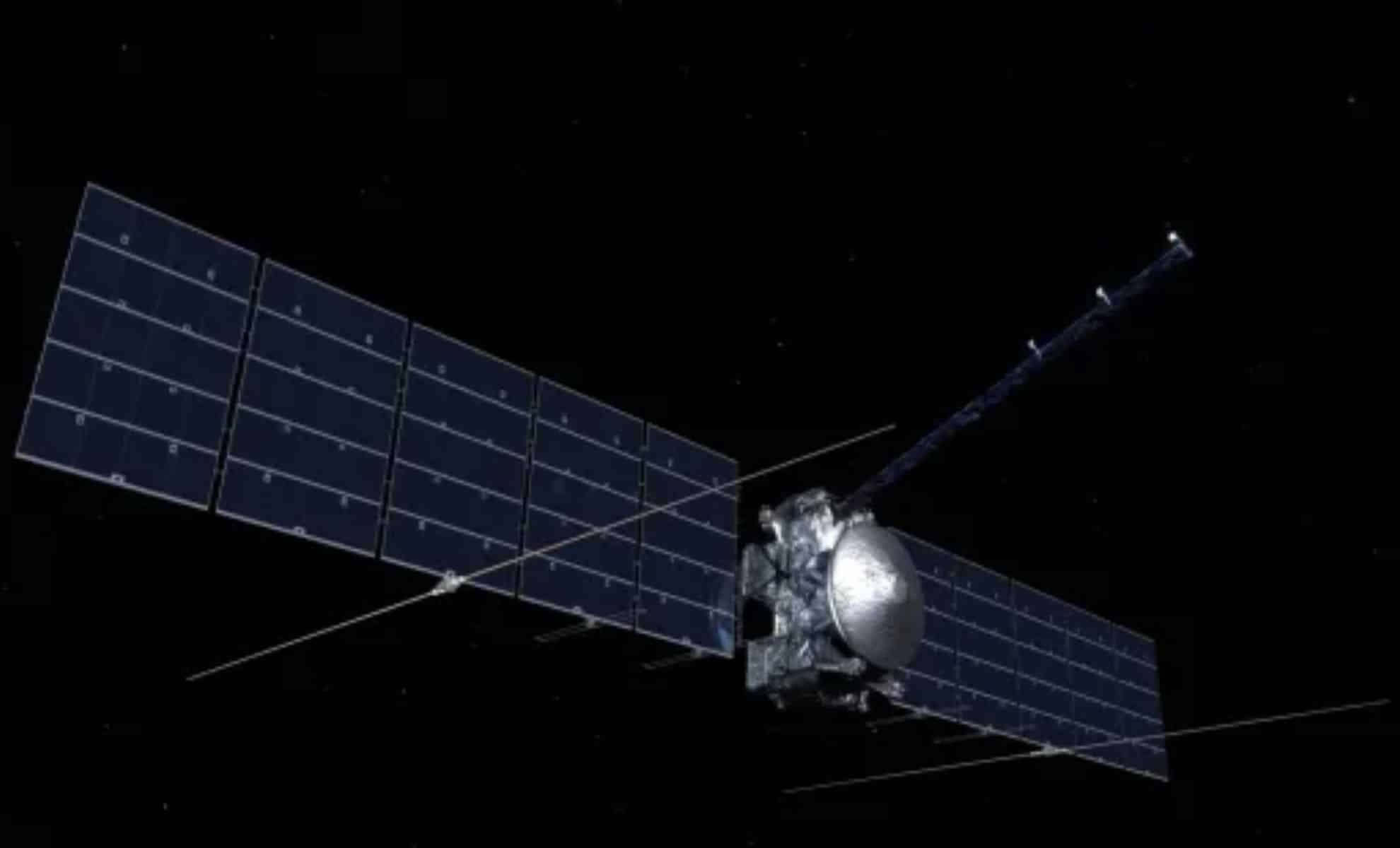
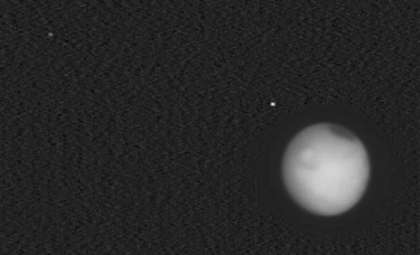
NASA has officially announced that the radar system onboard the Europa Clipper spacecraft operated flawlessly during its March 2025 flyby of Mars. A NASA report released on August 1, 2025 highlighted this event as a critical performance milestone, setting the stage for the spacecraft’s upcoming study of Europa, Jupiter’s icy moon. The flyby not only refined the spacecraft’s course through Mars’ gravity but also provided an exceptional opportunity to test and calibrate the radar instrument REASON, designed to peer beneath Europa’s frozen exterior.
Radar Technology Designed to Pierce Ice
REASON, which stands for Radar for Europa Assessment and Sounding: Ocean to Near-surface, is a specialized instrument crafted to explore beneath Europa’s thick ice crust and potentially detect liquid water or the hidden global ocean hypothesized by planetary scientists. The radar utilizes two pairs of elongated antennas that extend from Europa Clipper’s expansive solar arrays, roughly the size of a basketball court. This arrangement allows the spacecraft to transmit radio signals to a planetary surface and analyze the returning echoes to reveal details about subterranean structures—in this case, Mars.
During the Mars encounter, REASON gathered an impressive 60 gigabytes of radar data, simulating the conditions it will face at Europa, albeit under less extreme circumstances. “The flyby delivered all the data we hoped for,” said Don Blankenship, REASON’s lead scientist at the University of Texas at Austin. “The objective was to confirm the radar’s readiness for the Europa mission, and it exceeded expectations. Every component operated exactly as planned.”


Why Space Testing Outperforms Earth Simulations
Prior to the launch, NASA’s Jet Propulsion Laboratory (JPL) engineers rigorously tested REASON under extreme conditions. Antenna prototypes were stretched outdoors atop towers near JPL. However, Earth-bound tests faced limitations due to the vast scale and the need for uncontaminated environments. A chamber capable of fully replicating radar echo behavior would require a nearly 250-foot-long facility—impractical for ground-based validation.
The Mars flyby thus provided an irreplaceable chance to verify REASON’s capabilities in true planetary conditions. “Our engineering team was thrilled with the flawless outcome,” explained Trina Ray, deputy science manager for Europa Clipper at JPL. “Everyone involved was ecstatic—both scientists and engineers—as the data began coming in. This early exposure enables our team to refine data processing and better understand how REASON performs compared to our models, building invaluable experience before reaching Europa.”
The Significance of the Europa Clipper Expedition
Launched on October 14, 2024, from Kennedy Space Center, Europa Clipper is currently over 280 million miles away from Earth. The mission includes another gravity assist from Earth scheduled for 2026 before it finally arrives at Europa, completing a journey of around 1.8 billion miles. This ambitious path highlights the mission's scale and complexity.
Upon arrival, REASON will scan Europa’s surface from altitudes as low as 16 miles (25 kilometers), much closer than during the Mars flyby. Key objectives include measuring the thickness of Europa’s ice shell, studying geological processes, and assessing the chemical makeup of the moon’s surface to evaluate its habitability potential.
Crucially, REASON’s ability to penetrate the ice and identify zones where the ocean below may interact with the surface offers vital clues about Europa’s potential to support life. These interactions could bring oceanic materials to the surface, making them accessible for remote investigation.
Preparing for the Next Step Toward Europa
With REASON’s Mars testing complete and confirmed fully functional, the Europa Clipper team now has a valuable advantage. Analyzing the Mars radar data allows researchers to fine-tune their interpretations and prepare for the more intricate data sets expected when the spacecraft reaches Europa. This hands-on practice could greatly improve mission outcomes once the spacecraft begins its close, repeated passes over the icy moon.
The Mars flyby effectively launches the scientific phase of the mission. It transforms the radar system from a theoretical capability into a proven instrument, backed by real data and experience, as Europa Clipper ventures ever closer to unlocking the secrets beneath Europa’s mysterious ice.
- Categories:
- News









0 comments
Sign in to Comment