
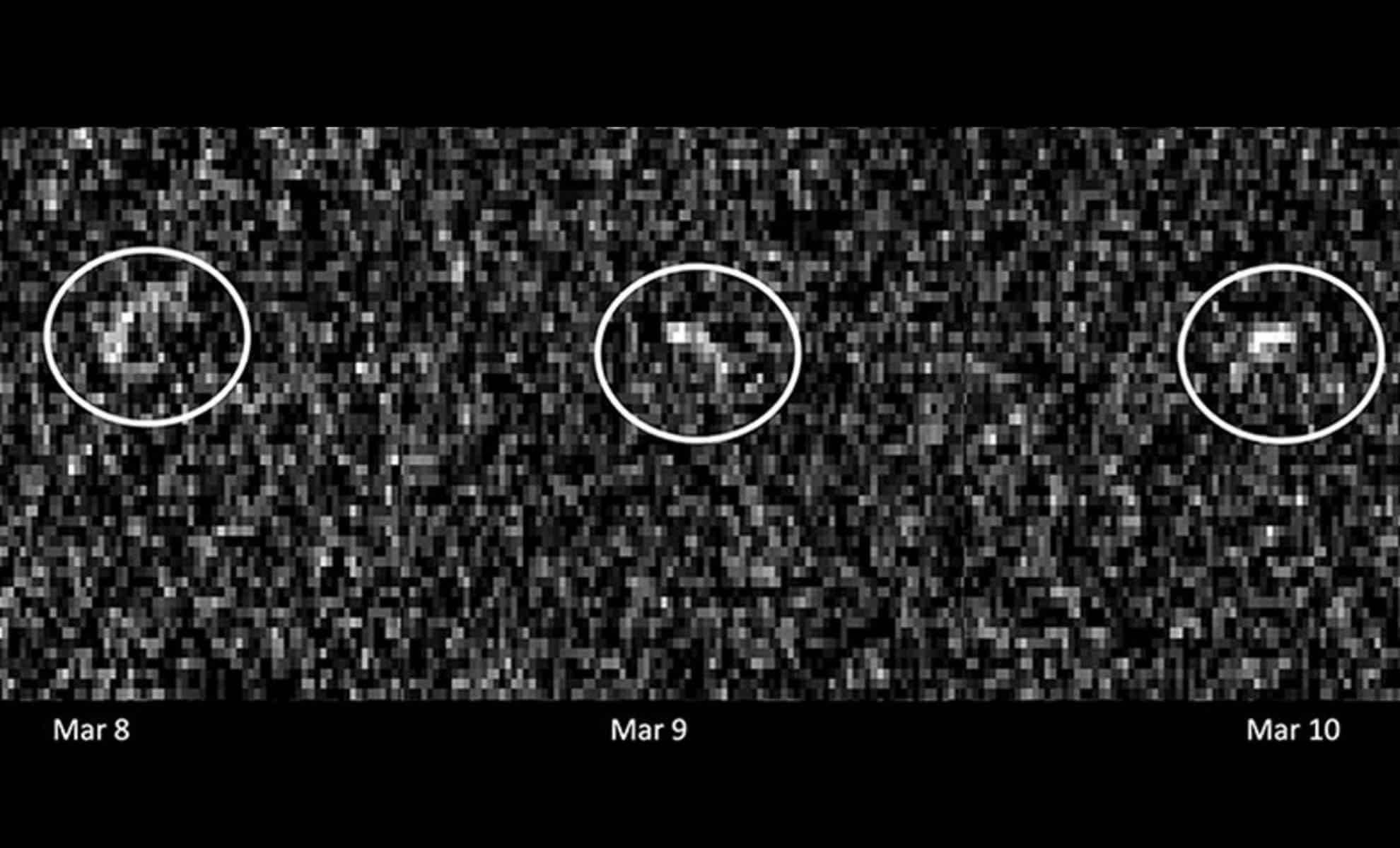
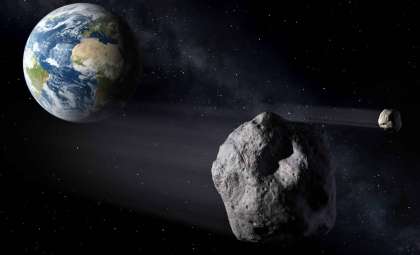
The near-Earth asteroid 99942 Apophis, named after the ancient Egyptian deity symbolizing chaos, is scheduled to make a notably close pass by Earth, sparking interest among scientists and the public alike. Stretching nearly 450 meters—roughly the height of the Empire State Building—this space rock will approach at a distance closer than many geostationary satellites. This proximity gives researchers a unique chance to analyze how Earth's gravity affects an asteroid’s surface and trajectory. Although NASA has confirmed there is no current threat of collision, the encounter will be invaluable for improving our understanding of near-Earth objects (NEOs) and enhancing planetary defense strategies.
Apophis’ 2029 Approach: Gravitational Interactions and Asteroid Dynamics
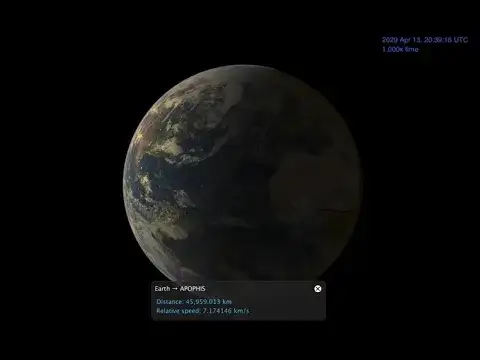
Apophis, first identified in 2004, has been closely tracked because of its repeated close passes by our planet. On April 13, 2029, it is expected to come as near as about 19,000 miles (31,000 kilometers), which is only a fraction of the distance to the Moon. Scientists predict that during this flyby, Earth’s gravity could trigger “astroquake” activity—seismic events—on Apophis’ surface. Astrophysicist Ronald-Louis Ballouz remarked that “at this distance, gravitational forces might cause shifts in the asteroid’s surface and subtly adjust its orbit,” underscoring possible physical changes the asteroid may undergo due to Earth's pull.
This gravitational influence is anticipated to cause surface rearrangements, affect rotational speed, and possibly reshape loose regolith on the asteroid. This rare celestial event offers an unprecedented window to observe how a sizable NEO responds during such a close planetary encounter. By examining Apophis’ reaction, scientists aim to refine predictive models regarding the stability, spin, and internal makeup of asteroids influenced by nearby planetary gravities. These findings can enhance our ability to forecast the trajectories of potentially hazardous space objects.

Enhancing Global Planetary Defense Capabilities
While Apophis poses no threat of impact during this approach, its significant size and close trajectory underscore the importance of global planetary defense efforts. If Apophis were ever to collide with Earth, its immense kinetic energy could unleash destruction comparable to hundreds of nuclear explosions, with the possibility of widespread regional damage or generation of large-scale tsunamis. This reality highlights the critical need to develop strategies for diverting or otherwise mitigating asteroid threats.
In 2022, NASA’s DART (Double Asteroid Redirection Test) mission successfully demonstrated the feasibility of altering an asteroid’s pathway by colliding a spacecraft into it intentionally. This mission validated kinetic impactor techniques as a viable planetary defense approach. The observations gathered from Apophis’ 2029 flyby will help scientists understand how gravitational encounters influence asteroid trajectories, providing essential data to improve deflection tactics should a similar future threat arise.
This close encounter provides an excellent testbed for planetary defense researchers to study gravitational effects on asteroid motion and rotation. NASA stresses that initiatives like the DART mission are vital tools for future scenarios involving dangerous near-Earth objects. The flyby data will contribute significantly to advancing prediction models and response strategies, enabling more effective preparation for potential asteroid impacts.
Improving Observation and Tracking of Near-Earth Objects
Apophis’ 2029 close approach underscores the ongoing necessity for enhancing NEO monitoring technologies and predictive software. Even slight gravitational disturbances or interactions with other celestial bodies may alter the orbit of an asteroid, as this event will demonstrate. Studying these subtle orbital changes will help scientists verify and improve the accuracy of models used to predict asteroid paths, ultimately increasing the reliability of threat assessments.
ScienceAlert notes that the gravitational impacts on Apophis during its approach could provide crucial data for refining asteroid movement simulations. Researchers are eager to observe potential modifications in Apophis’ rotation and trajectory, which will enhance tracking systems and enable improved forecast precision regarding possible future collisions.
This flyby also highlights the imperative of international collaboration in addressing NEO hazards. Global space agencies, including NASA and ESA, must work jointly to develop comprehensive planetary defense frameworks. Apophis’ 2029 passage exemplifies the benefits of sharing scientific data and coordinating efforts to effectively prepare for cosmic threats.
Apophis’ Role in Shaping the Future of Planetary Defense
As scientists gear up for the 2029 event, Apophis serves as a focal point for advancing the field of NEO research and planetary protection. Analyzing how Earth’s gravitational forces influence Apophis will yield valuable insights into asteroid behavior during close encounters. This knowledge will enhance our capability to model asteroid trajectories more precisely and improve early warning systems, thus bolstering Earth’s defense against potential impacts.
This upcoming close approach dramatically illustrates the ongoing risks posed by near-Earth asteroids and reinforces the vital importance of vigilance in planetary defense efforts. The scientific findings from this flyby will deepen our understanding of asteroid mechanics, help develop effective hazard mitigation strategies, and emphasize the critical need for preparedness in our ever-changing cosmic environment.
- Categories:
- News








0 comments
Sign in to Comment