
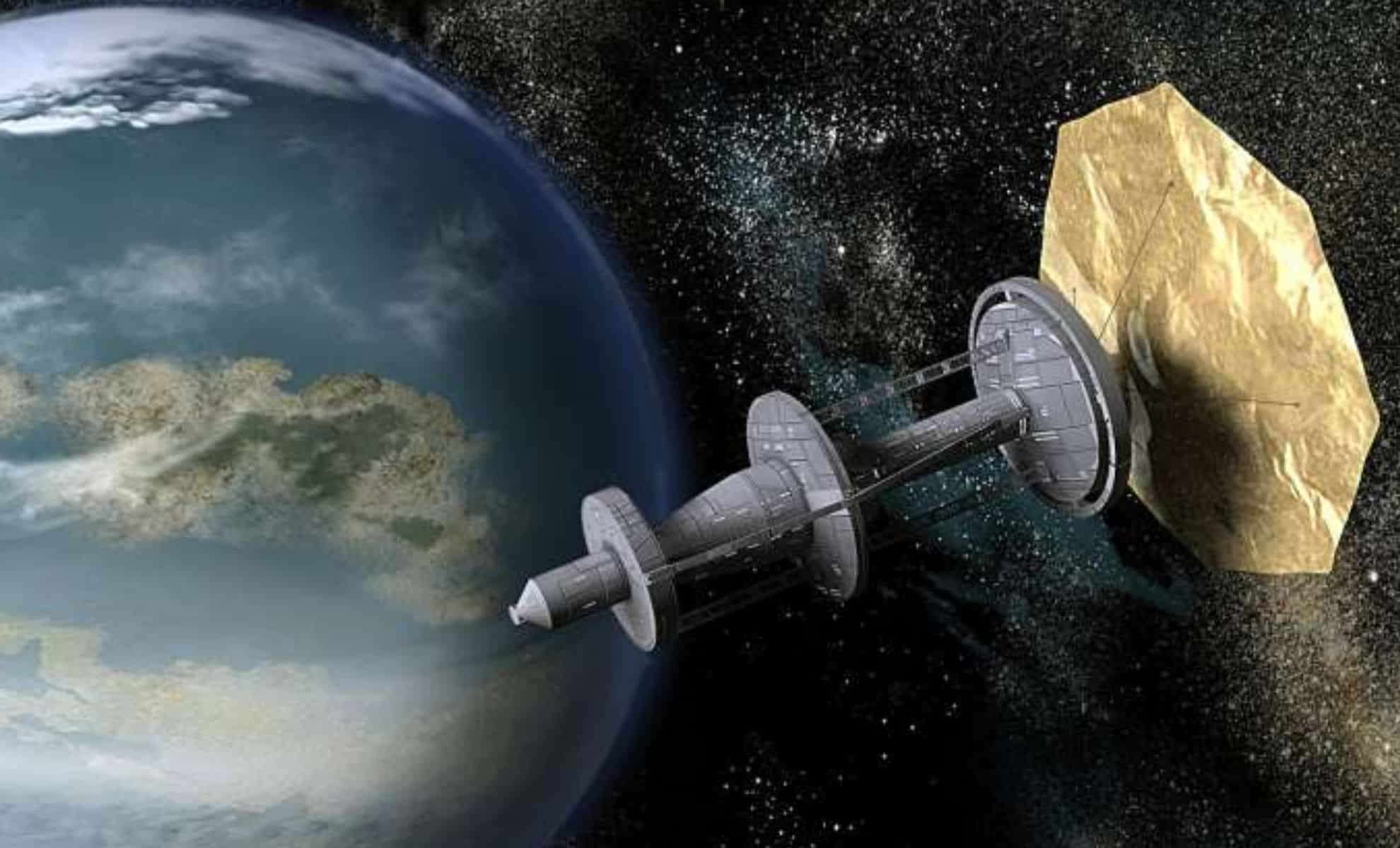
Researchers at the University of Nottingham have made a significant advancement in propulsion systems for spacecraft that require no fuel, offering a path toward greener space missions. Their work, detailed in the study “Modeling and Numerical Optimization of Refractive Surface Patterns for Transmissive Solar Sails,” published in Acta Astronautica, introduces a novel way to propel spacecraft by manipulating sunlight without traditional fuel sources. This innovative technology could revolutionize long-duration space exploration by providing a sustainable thrust mechanism powered solely by the sun’s rays.
Revolutionizing Space Propulsion Without Fuel
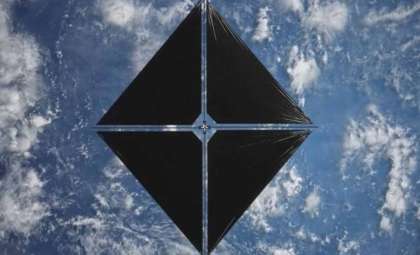
Within the University’s Faculty of Engineering, the team, in partnership with NottSpace, has designed a cutting-edge framework for creating lightweight, fuel-independent propulsion devices. Unlike classic solar sails that use reflective surfaces to harness solar radiation pressure, their transmissive sails employ microscopic patterns that refract sunlight, providing enhanced maneuverability and propulsion performance. These advancements promise to lessen reliance on onboard propellant, granting spacecraft extended mission durations in deep space and enabling more ambitious exploration goals.
Customizing Solar Sails for Mission-Specific Needs
Ph.D. candidate Samuel Thompson highlights the project’s adaptability: “The main advantage lies in the algorithm’s ability to optimize based on various criteria; thus, sails can be precisely tailored for different missions and operational conditions or swiftly modified as mission parameters change.” Utilizing ray tracing and reinforcement learning, the researchers maximized the sails’ acceleration and stability by fine-tuning their refractive properties. This versatility offers a powerful advantage in navigating the unpredictable challenges of space environments.

Advancing Space-Based Climate Engineering
Beyond propulsion, this research lays the groundwork for space-driven climate interventions. Collaborations involving Dr. Cappelletti, Dr. Pushparaj, the Technical University of Munich and KTH Royal Institute of Technology are exploring solar sails for large-scale planetary sunshades. This concept aims to address climate change by modulating solar radiation, leveraging solar sail technology to enhance efforts combating global warming from orbit.
Solar Sails in Future Climate Resilience Plans
At a recent United Nations climate innovation forum, Dr. Cappelletti presented the potential of a solar sail-enabled planetary sunshade. This vision positions solar sails as a promising tool in international strategies to build resilience against climate change, offering a futuristic approach to mitigating the impacts of rising global temperatures through space-based solutions.
Deploying Solar Sails in CubeSat Projects
The team is also applying transmissive solar sails within their own CubeSat developments. Missions like WormSail, focusing on an Astropharmacy Payload in collaboration with the School of Pharmacy, and JamSail, which involves a GNSS jamming mapper payload, are designed to prove the efficiency and operational value of this technology in practical scenarios, marking important steps toward routine deployment.
Enhancing Space Debris Removal with Solar Sails
An especially promising application of this innovation is its role in tackling space debris. Samuel Thompson explains, “In my doctoral work, I advanced these generative sail designs beyond current non-metamaterial models, influencing our NottSpace prototype. Accelerating development is crucial since these sails represent an eco-friendly propulsion method and one of the few cost-effective options for clearing debris from low Earth orbit.” As space congestion increases, these solar sails could become vital tools for sustaining orbital environments.
- Categories:
- News










0 comments
Sign in to Comment