

Ludwig van Beethoven, renowned as one of the most influential composers ever, has left a legacy filled with both musical genius and hidden truths. Recent DNA tests on his preserved hair samples have uncovered surprising information regarding his health and ancestral origins that were previously unknown.
Unraveling Beethoven’s Medical Mysteries
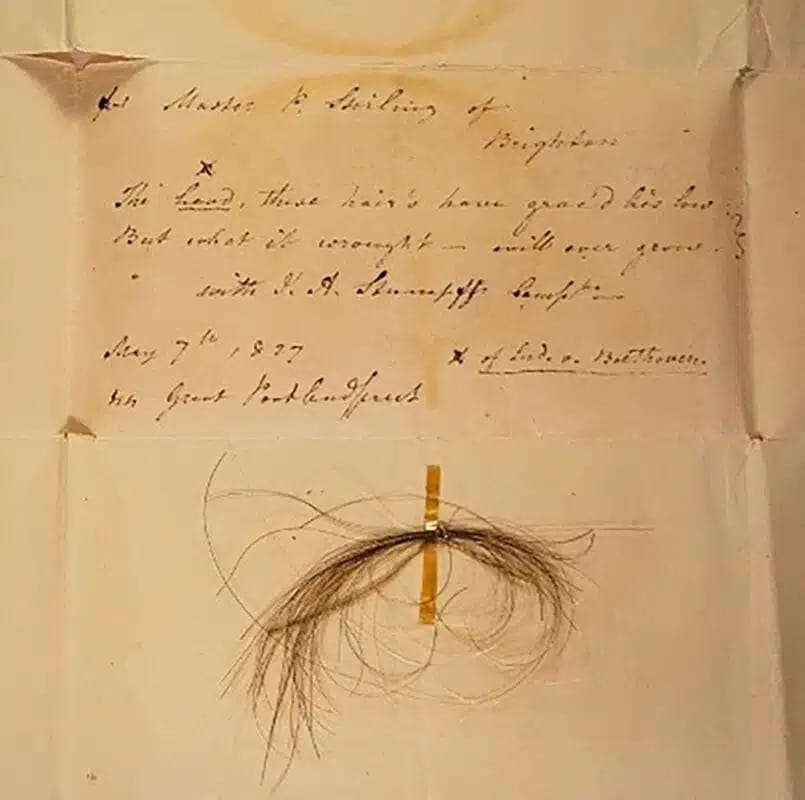
In March 2023, researchers performed a pioneering genetic investigation on verified strands of Beethoven’s hair. Their aim was to address longstanding questions documented by the composer concerning his declining health.
- The research found no support for the idea that lead poisoning caused his death.
- A likely contributor to his fatal condition was a hepatitis B infection.
- However, the underlying reasons for his hearing impairment and digestive ailments remain unclear.
Led by Johannes Krause, a bioarchaeologist at the Max Planck Institute, the study offered new perspectives on how Beethoven’s illnesses, including liver disease worsened by alcohol use, may have influenced his life and compositions.

Revealing a Hidden Family History
The investigation’s most unexpected discovery involved Beethoven’s ancestry. Genetic data showed an inconsistency in the paternal Y chromosome line, indicating a non-paternal event — likely an extramarital relationship — occurring somewhere between the 16th and 18th centuries in his lineage. This intriguing revelation adds complexity to the story of a man famous for his legendary symphonies.
The Persistent Mystery of His Deafness
Beethoven’s hearing decline began in his late twenties, starting with symptoms such as tinnitus and heightened sensitivity to loud sound. Over time, he lost the ability to perceive higher frequency tones. Despite comprehensive genetic screening, scientists have yet to determine a definite cause for his deafness.
His ongoing chronic digestive problems that started in early adulthood remain equally baffling. These health difficulties highlight his extraordinary determination as he composed some of his most acclaimed masterpieces despite intense physical challenges.
Challenging Historical Assumptions
Adding further complexity, a single hair sample previously believed to be Beethoven’s was identified as belonging to a female. This error calls into question earlier hypotheses, including one attributing his health issues to lead toxicity. The mishap underscores the critical necessity of scientific precision in historical research.
Nevertheless, verified hair samples have proven invaluable, revealing a narrative of disease, ancestry, and endurance. The origins of Beethoven’s hepatitis B infection and the mix-up involving a woman’s hair tied to his legacy continue to prompt inquiries among historians and scientists alike.
The Intersection of Science and Legacy
Almost two centuries after his passing, scientific analysis is still uncovering facets of Beethoven’s life. These genetic insights illuminate the physical hardships he endured as well as the personal stories—some scandalous, others inspiring—that influenced his journey. With ongoing advances in genetic research, even more revelations about past icons may emerge.
This research, featured in Current Biology, highlights how cutting-edge science reshapes our understanding of history’s most famous figures.
- Categories:
- Science













0 comments
Sign in to Comment