

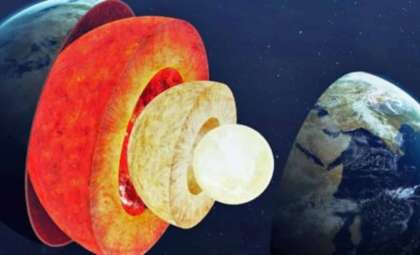
Researchers have uncovered two colossal underground mountains buried deep within the Earth’s mantle, each towering approximately 620 miles (1,000 kilometers) tall—making them more than 100 times the height of Mount Everest.
These gigantic geological structures, located nearly 1,200 miles beneath the surface, challenge conventional views of the planet’s internal composition and geological history. The groundbreaking findings were recently detailed in the Nature journal.
A Breakthrough from Seismic Data
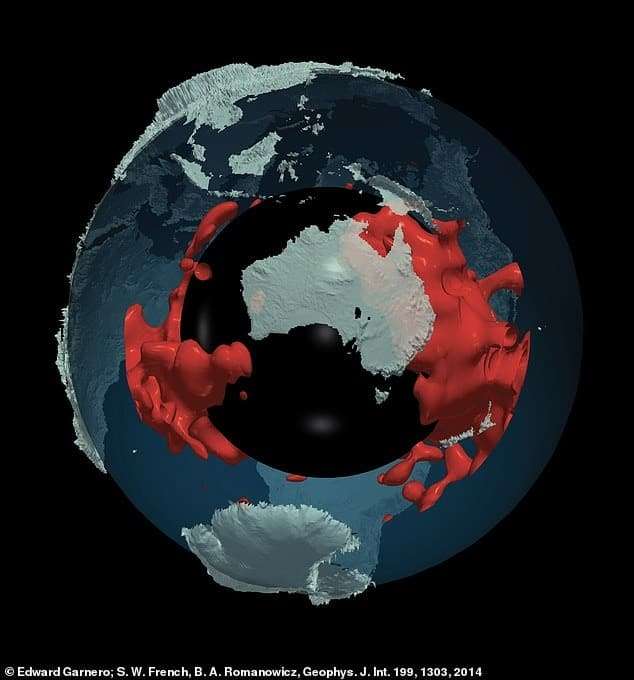
Termed Large Low Seismic Velocity Provinces (LLSVPs), these enormous mountain-like structures emerged through detailed analyses of seismic waves produced by powerful earthquakes.

As seismic waves traverse the Earth’s layers, their speeds vary depending on the density and composition of the material they pass through. By meticulously examining these variations, scientists were able to detect these massive formations deep inside the planet.
Situated beneath the regions of Africa and the Pacific Ocean, these LLSVPs tower far above Everest’s relatively modest 5.5-mile height. Composed of dense, ancient materials, these hidden mountains provide unique windows into Earth's primordial geological formation.
Unlocking Geological Time Capsules
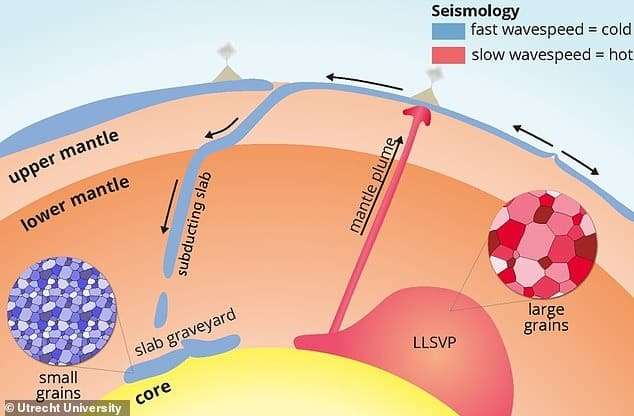
Experts hypothesize that the LLSVPs could be vestiges of ancient tectonic plates that have descended into the mantle over billions of years through a process known as subduction, where one plate slides beneath another.
This suggests that portions of the mantle contain remarkably stable structures that have persisted for upwards of 4 billion years, far outlasting typical geological formations.
Such longevity sheds new light on Earth’s evolving internal dynamics and contests the idea that the mantle is entirely convective and ever-changing. Instead, these regions appear to represent long-term stable zones.
Reconsidering Mantle Behavior
The identification of these enormous features forces scientists to rethink current models of the Earth’s inner workings. Traditionally, the mantle has been seen as a fluid layer with constant circulation driven by heat and pressure.
Discovering that LLSVPs are older and more stable than surrounding materials suggests some parts of the mantle have remained unchanged for billions of years.
Moreover, these structures exhibit elevated temperatures compared to their environment, adding complexity to understanding mantle convection and thermal dynamics.
Researchers are now investigating how these enduring formations can inform us about Earth's deep past, including tectonic and volcanic processes shaping the planet’s surface.
Future Prospects: Exploring Earth’s Deep Interior
The revelation of these subterranean giants marks the beginning of a new era in the study of Earth’s deep interior. With ongoing improvements in seismic imaging technology, researchers anticipate uncovering additional hidden features within the planet.
These advances promise fresh perspectives on Earth’s early development and the dynamic forces shaping its geology.
Though unreachable by any current means, these ancient mountains emphasize how much remains unknown beneath the Earth’s surface, providing important clues about our planet’s deepest secrets.
While Mount Everest remains the highest summit above sea level, the true colossi of Earth lie far beneath our feet—ancient giants standing tall in the depths.
- Categories:
- Science





0 comments
Sign in to Comment