
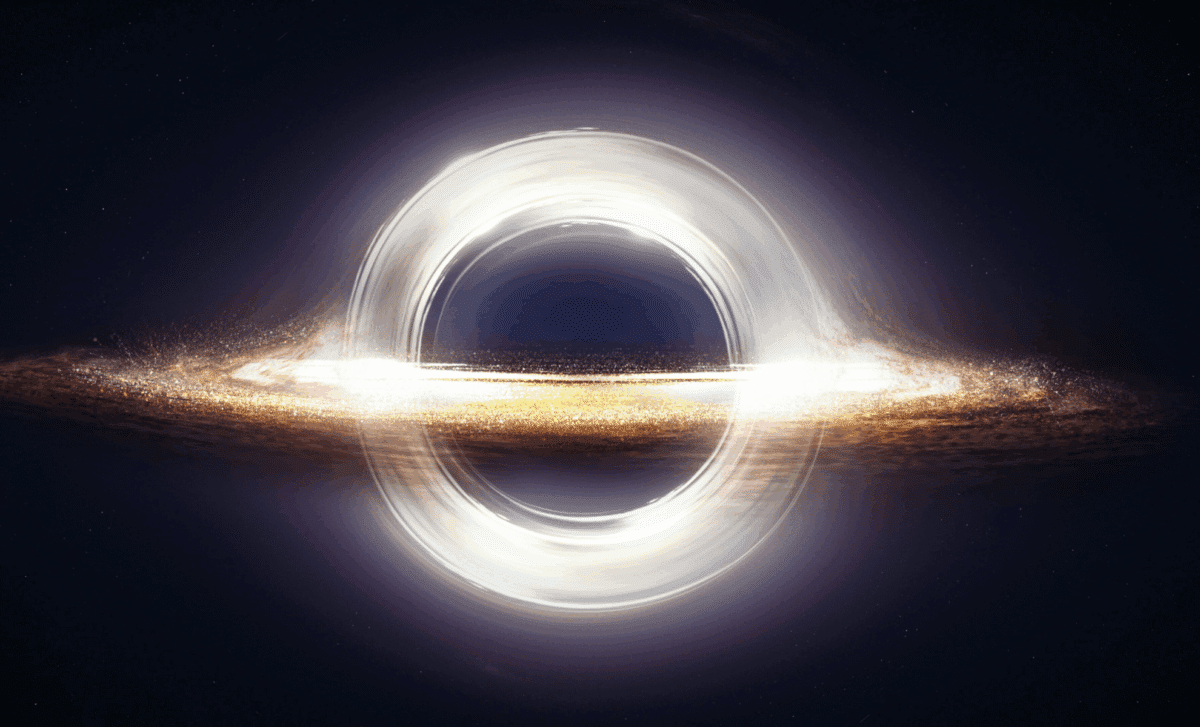
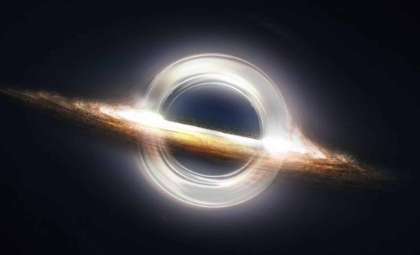
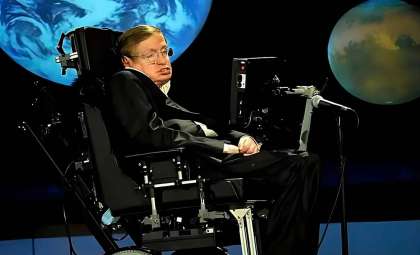
Astrophysicists have long been captivated by Stephen Hawking’s theories regarding black holes, and recent measurements from the LIGO-Virgo-KAGRA partnership provide the most compelling support yet. This cutting-edge research unveils new dimensions of black hole dynamics during their mergers, offering profound insights into space-time itself. Featured in Physical Review Letters, the results represent a critical advancement in confirming foundational elements of general relativity and Hawking’s area theorem.
Hawking’s Groundbreaking Idea: Black Hole Horizons Never Shrink
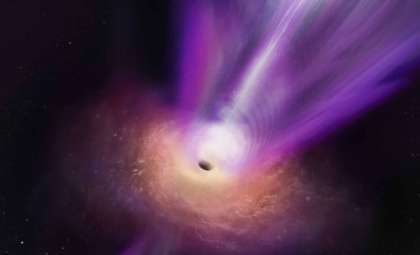
Back in 1971, Stephen Hawking put forward a revolutionary concept: once a black hole forms, its event horizon—the ultimate boundary beyond which nothing returns—cannot reduce in size, only stay constant or expand. When first proposed, this notion challenged conventional understanding. The question arose: how could such a dominant force withstand collapse, especially during mergers?
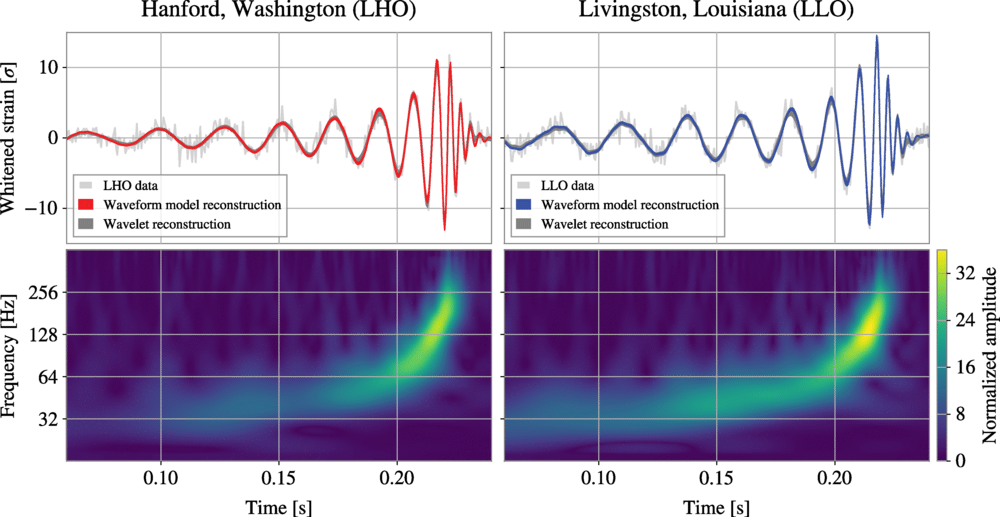
Nonetheless, the latest findings from the LIGO-Virgo-KAGRA team have offered striking evidence affirming this theory. In January 2025, the group recorded an exceptionally distinct gravitational wave, GW250114, emitted from the collision of two black holes. This signal provided an unprecedentedly sharp window into the mechanics of black holes, reinforcing Hawking’s area theorem more strongly than ever before.

Columbia University astronomer Maximiliano Isi commented, “The extraordinarily clear merger signal GW250114 tests some of our most vital hypotheses about black holes and gravitational waves.” The observations made it possible to precisely calculate the mass and spin of the newly formed black hole, lending crucial support to Hawking’s predictions.
Gravitational Waves: Cosmic Messengers of Collisions
Gravitational waves ripple through space-time when massive objects accelerate, such as during black hole mergers. These waves traverse the cosmos, carrying detailed clues about their violent origins. For many years, their existence was theoretical until the launch of LIGO and Virgo observatories ushered a new observational era.
Since LIGO’s first breakthrough detection in 2015, gravitational wave detectors have revealed the universe’s most extreme phenomena—from black hole mergers to neutron star collisions. The new observation of GW250114 reinforces this expanding collection, showcasing the extraordinary precision and capability of modern gravitational wave astronomy.
By “listening” to the vibrations produced when black holes unite, scientists decode information about their mass, spin, and geometry. These insights allow for rigorous tests of Einstein’s general relativity, deepening our understanding of gravity’s role in cosmic events.
Confirming the Kerr Model of Rotating Black Holes
A remarkable highlight of the recent study is the strong validation of the Kerr solution, formulated by mathematician Roy Kerr in the 1960s. Kerr revealed that rotating black holes should exhibit a unique, spinning event horizon structure. According to this model, the event horizon cannot contract and rotates with measurable properties.
Data from LIGO now provides the clearest indication yet that black holes conform to Kerr’s description. By examining gravitational waves produced by the resulting singularity after the merger, researchers identified the precise frequency and duration of the signal consistent with a Kerr black hole. This confirmation significantly advances the case for the classical Kerr model as the true nature of astrophysical black holes.
A Landmark Achievement in Black Hole Science
This latest evidence reinforcing Hawking's area theorem and capturing black hole merger details with unparalleled clarity represents a pivotal breakthrough. These findings not only endorse Stephen Hawking’s visionary framework but also demonstrate the tremendous evolution in gravitational wave detection. As exploration continues, these cosmic enigmas are bound to reveal even greater secrets about our universe’s fundamental workings. For more detailed information, see the full report in Physical Review Letters.
- Categories:
- News





0 comments
Sign in to Comment