
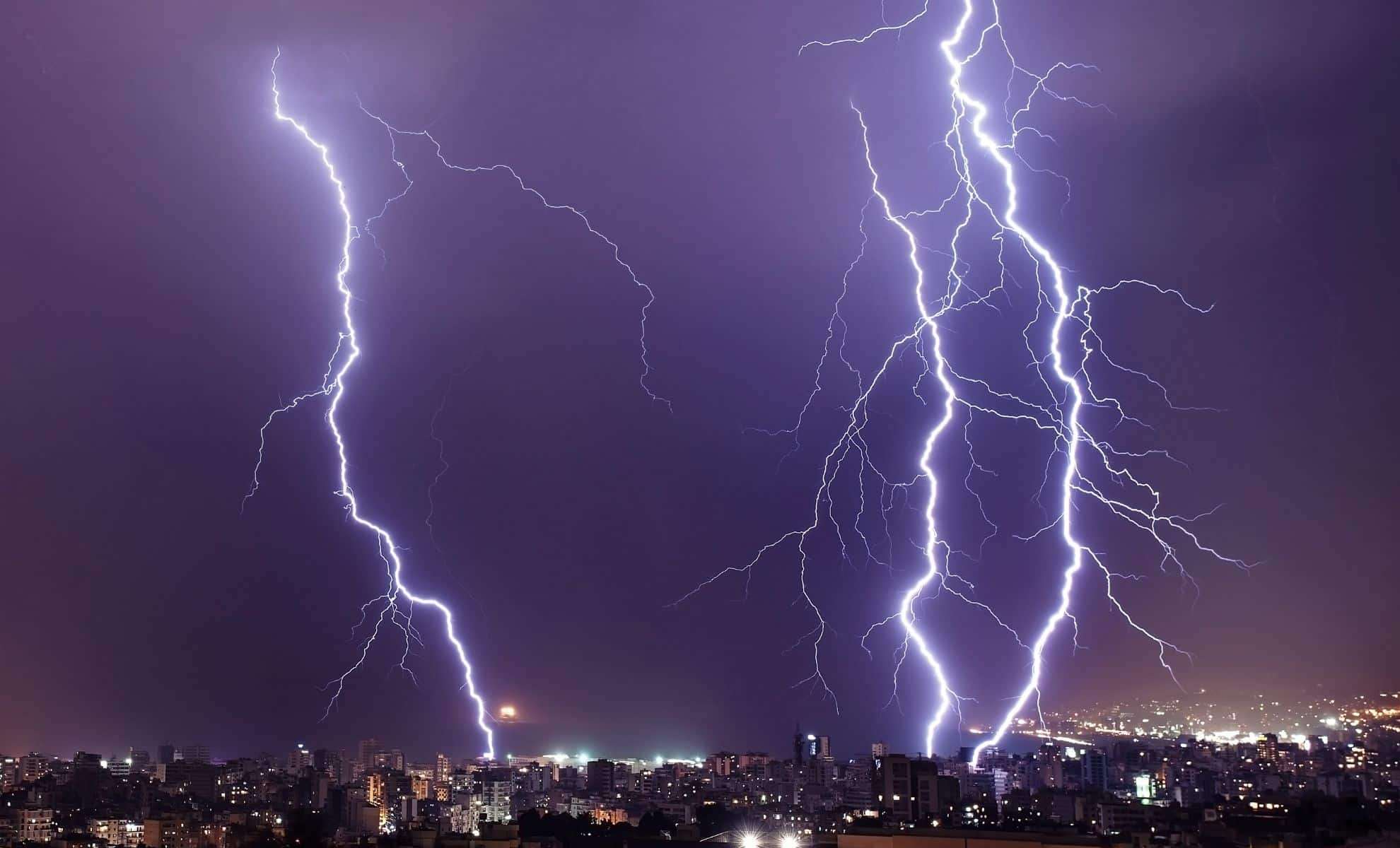
Scientists in Japan have documented an exceptional phenomenon showing that Earth’s lightning can emit gamma-ray flashes—intense bursts of high-energy radiation usually associated with distant cosmic events such as black hole mergers or neutron star collisions. The findings, published in Science Advances, report how a network of advanced sensors detected a terrestrial gamma-ray flash (TGF) sparked by an extraordinary lightning discharge over central Japan. This discovery provides new insight into the powerful electromagnetic phenomena occurring within Earth's atmosphere.
Collision of Lightning Channels Generates Gamma-Ray Explosion
During a winter thunderstorm in Kanazawa, researchers from the University of Osaka observed a rare event: a descending negative lightning leader met a positive leader ascending from a broadcasting antenna. As their electric fields combined and their paths met, a TGF burst forth. “Studying extreme events like TGFs triggered by lightning enables us to learn more about high-energy interactions in our atmosphere,” explained Yuuki Wada, the study’s lead scientist. This capture was uniquely precise, with sensors measuring the gamma-ray emission starting just 31 microseconds before the leaders connected and ceasing 20 microseconds after. The recorded electric current reached -56 kiloamperes, highlighting the immense power involved.
New Insights Into High-Energy Mechanisms of Lightning
While lightning already involves vast electrical charges, this observation shows that under specific conditions lightning leaders can funnel enough energy to propel electrons to near-light speeds, emitting gamma rays. These bursts are typically obscured by thunderstorm noise, making them incredibly hard to capture. “Although some questions remain, this approach brings us closer to unraveling these intriguing gamma emissions,” said Harufumi Tsuchiya, senior author and expert in radiation physics. The investigators employed an array combining optical, radio, and high-energy detectors, enabling unprecedented detailed timing of the flash and corresponding leader discharges, an achievement not accomplished before.

Extended Radiation Afterglow Points to Complex Atmospheric Nuclear Effects
An unexpected lingering glow lasting about 80 milliseconds was detected after the main gamma flash using highly sensitive plastic scintillators. This signal likely results from photonuclear reactions, where gamma photons interact with air molecules to release neutrons, which then decelerate and emit further gamma rays upon reabsorption. This sustained emission suggests a nuclear-like chain reaction process taking place, revealing that storm-associated radiation could involve more complex and dynamic nuclear physics than previously recognized.
- Categories:
- News







0 comments
Sign in to Comment