
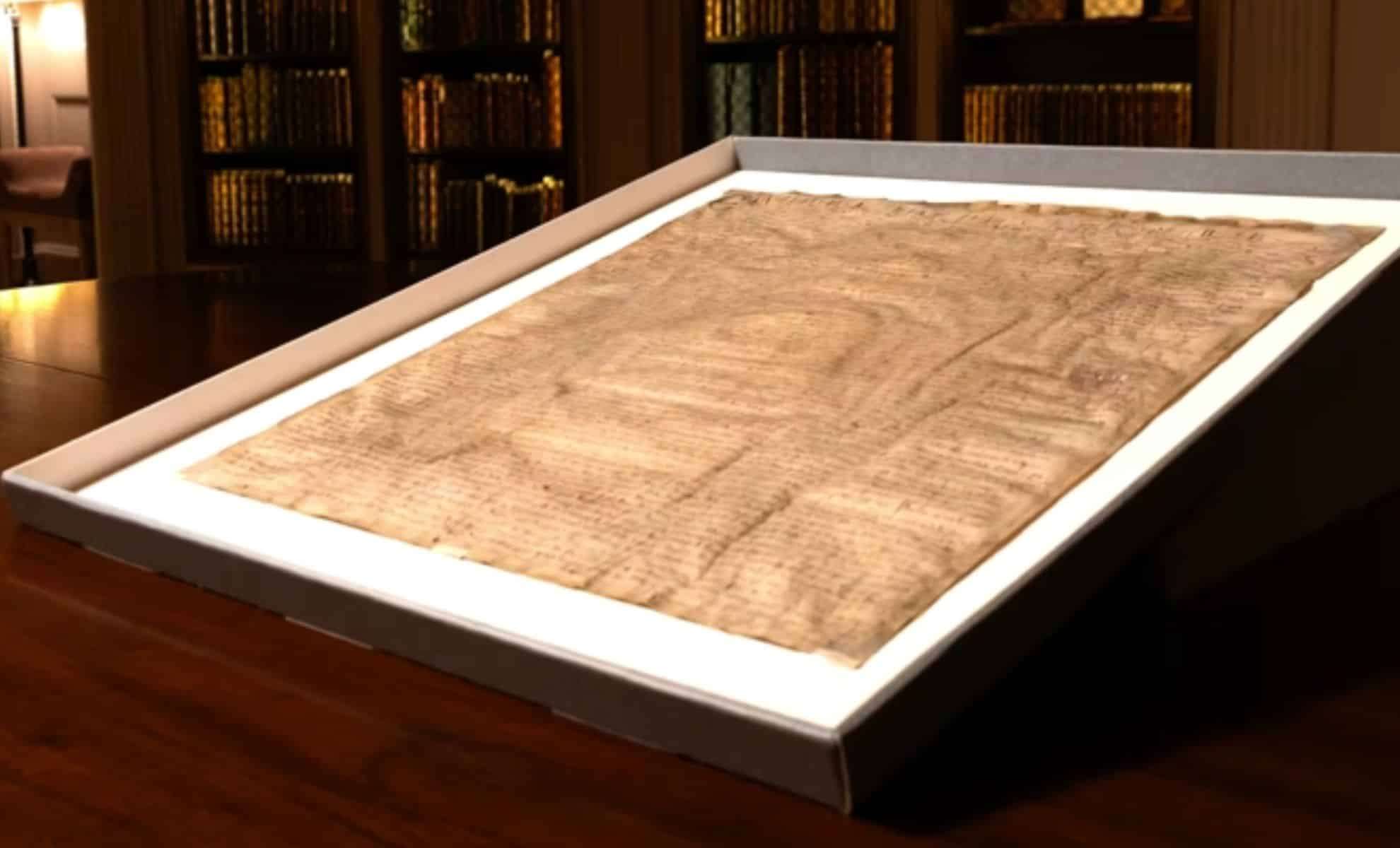
In a remarkable discovery, scholars have determined that a text held by Harvard Law School, previously believed to be only a replica of the Magna Carta, is in reality a rare original dating back to the early 14th century.
Acquired in the 1940s for a mere $27.50, this document has now been authenticated by experts from King’s College London and the University of East Anglia as one of only seven extant copies issued by King Edward I in 1300.
The Enduring Importance of the Magna Carta
The Magna Carta, first sealed in June 1215, stands as one of the most pivotal documents in global history. It introduced the revolutionary idea that the monarchy and government must be bound by law, a principle foundational to constitutional governance and democratic rights worldwide.

Professor Vincent described the Magna Carta as "a symbol of liberty that shapes our identity as a people who cherish freedom.” This landmark charter influenced major historical documents like the US Declaration of Independence and the US Constitution, cementing its role as a timeless emblem of justice and human dignity.
King Edward I issued a slightly revised final edition of the Magna Carta in 1300, known as the Confirmation of the Charters, which reaffirmed its principles and represented a key moment in Western legal and political heritage.
A Surprising Treasure Within Harvard’s Archives
When Harvard Law School purchased the manuscript in 1946, it was cataloged as a simple facsimile. Accounting for inflation, the price of $27.50 corresponds to roughly $470 today. Its exceptional nature remained unrecognized until recent examinations by British medieval manuscript scholars.
Examination revealed the document shares exact dimensions with the six other authenticated originals from Edward I’s 1300 issuance. The text’s handwriting shows unique traits, such as the ornate capital ‘E’ starting "Edwardus" and extended lettering in the opening line, matching perfectly with known originals.
Experts Applaud Harvard’s Magnificent Discovery
Professor David Carpenter, a medieval historian at King’s College London, called the revelation “an extraordinary find.” He highlighted the document’s significance: “Harvard’s Magna Carta should be celebrated not as a mere weathered copy, but as an original artifact from one of the world’s most crucial constitutional documents—a foundation of freedoms past, present, and future.”
Nicholas Vincent of the University of East Anglia remarked, “It stands as a powerful icon within Western political tradition and constitutional law. Ask anyone to name the world’s most renowned historical document, and Magna Carta would undoubtedly be the answer.”
This unparalleled discovery enriches Harvard’s prestigious holdings and contributes a vital piece to the international historical archive. “The provenance of this document is outstanding. In light of contemporary challenges around freedoms and constitutional heritage in America, you simply couldn’t invent a more fitting backstory,” he concluded.
- Categories:
- News













0 comments
Sign in to Comment