

The Chang’e-6 mission from China has achieved a pioneering discovery by detecting negative ions on the Moon's far side for the first time.
This landmark finding advances our knowledge of the lunar environment and reveals new details on how the Moon’s surface interacts with solar winds.
Chang’e-6’s Landmark Arrival and Mission Details
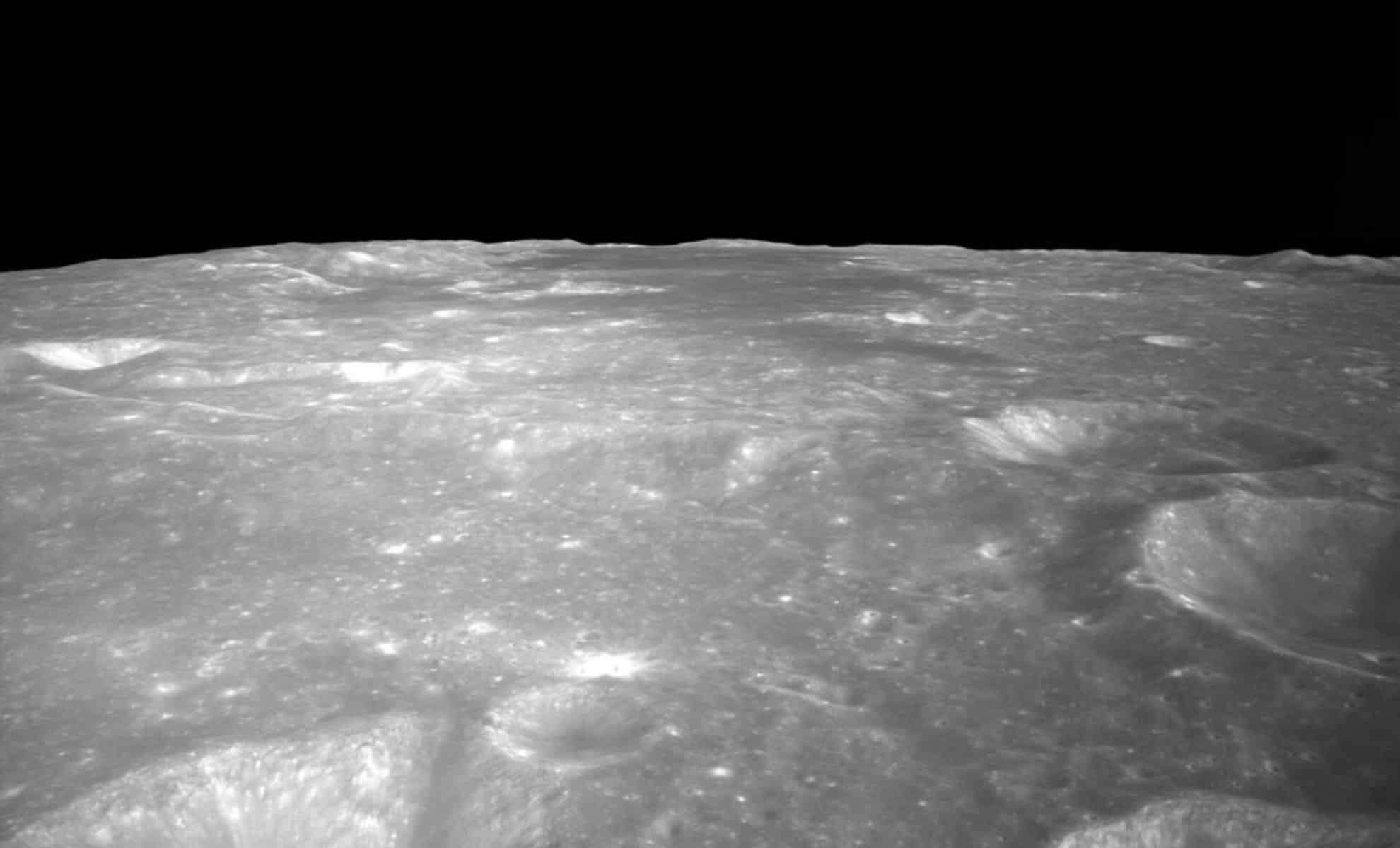
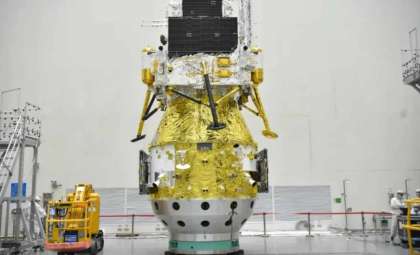
On June 1, 2024, the Chang’e-6 lander touched down in the Apollo crater within the South Pole-Aitken Basin, outfitted with sophisticated scientific tools. Among its payload was the European Space Agency’s (ESA) Negative Ions at the Lunar Surface (NILS) experiment. This cooperative mission between China and ESA sought to gather lunar samples and conduct extensive surface analyses. It also marked ESA’s inaugural deployment of an instrument on the lunar surface.

Girish Linganna, an expert in defense and aerospace policy, remarked on the mission’s significance: “Within just over two days, Chang’e-6 landed on the Moon’s far side, collected samples, and lifted off successfully—achieving the first-ever sample return from the region that never faces Earth.”
Identifying Negative Ions on the Lunar Surface
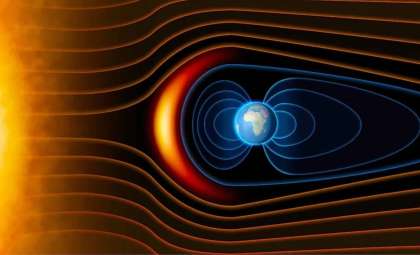
The NILS experiment commenced immediately after arrival, detecting negative ions generated by the interaction between the solar wind and the lunar soil. These ions form when solar wind particles strip electrons from atoms and molecules, which then attach to neutral particles, creating negatively charged ions. Unlike Earth, shielded by its magnetic field, the Moon’s surface is fully exposed to these charged solar particles.
Neil Melville, ESA’s lead technical officer for NILS, shared, “This marks ESA’s inaugural surface operation on the Moon, representing a scientific milestone and the start of lunar collaboration with China. We've gathered far more extensive and higher-quality data than anticipated.”
Scientific Significance for Lunar and Planetary Research
The presence of negative ions on the lunar surface opens new pathways for understanding the Moon’s regolith, the loose layer covering solid rock. Insights from the NILS findings will enhance comprehension of surface processes on airless bodies across our solar system, from asteroids to other satellites.
Martin Wieser, lead investigator for NILS, highlighted the broader relevance: “Our Moon-based observations help decode its environment and expand our knowledge of negative ions on diverse airless objects—from planets and moons to asteroids.”
Wider Scientific and Practical Applications
Researching lunar negative ions via Chang’e-6 presents a range of crucial benefits spanning science and technology:
Atmospheric Science: Studying the formation and behavior of lunar negative ions improves our grasp of similar upper atmosphere chemistry on Earth, bolstering weather and climate models.
Space Weather Understanding: Exploring these ions deepens understanding of solar radiation impacts on airless bodies, aiding forecasts and mitigation of space weather effects on Earth’s satellites and communication networks.
Technological Progress: Findings could drive innovation in ion propulsion and electrical material science, potentially transforming space travel and electronics technology.
Radiation Protection: Insights into negative ion dynamics aid development of advanced radiation shields for both space missions and terrestrial applications to safeguard electronics and health.
Environmental Monitoring: Detection techniques pioneered on the Moon may translate into better air quality and pollution monitoring solutions on Earth, leveraging negative ions’ air-purifying properties.
Fundamental Physics: Investigations into lunar negative ions help test and enhance fundamental physics theories, fueling broad scientific progress and associated technological breakthroughs.
Neil Melville emphasized the robustness of the experiment: “Despite extreme heat, NILS performed within its thermal limits and demonstrated excellent resilience, reflecting the exceptional work by the Swedish Institute of Space Physics.”
- Categories:
- Astronomy ,
- News ,
- Space ,
- Aircraft ,
- Physics





0 comments
Sign in to Comment