
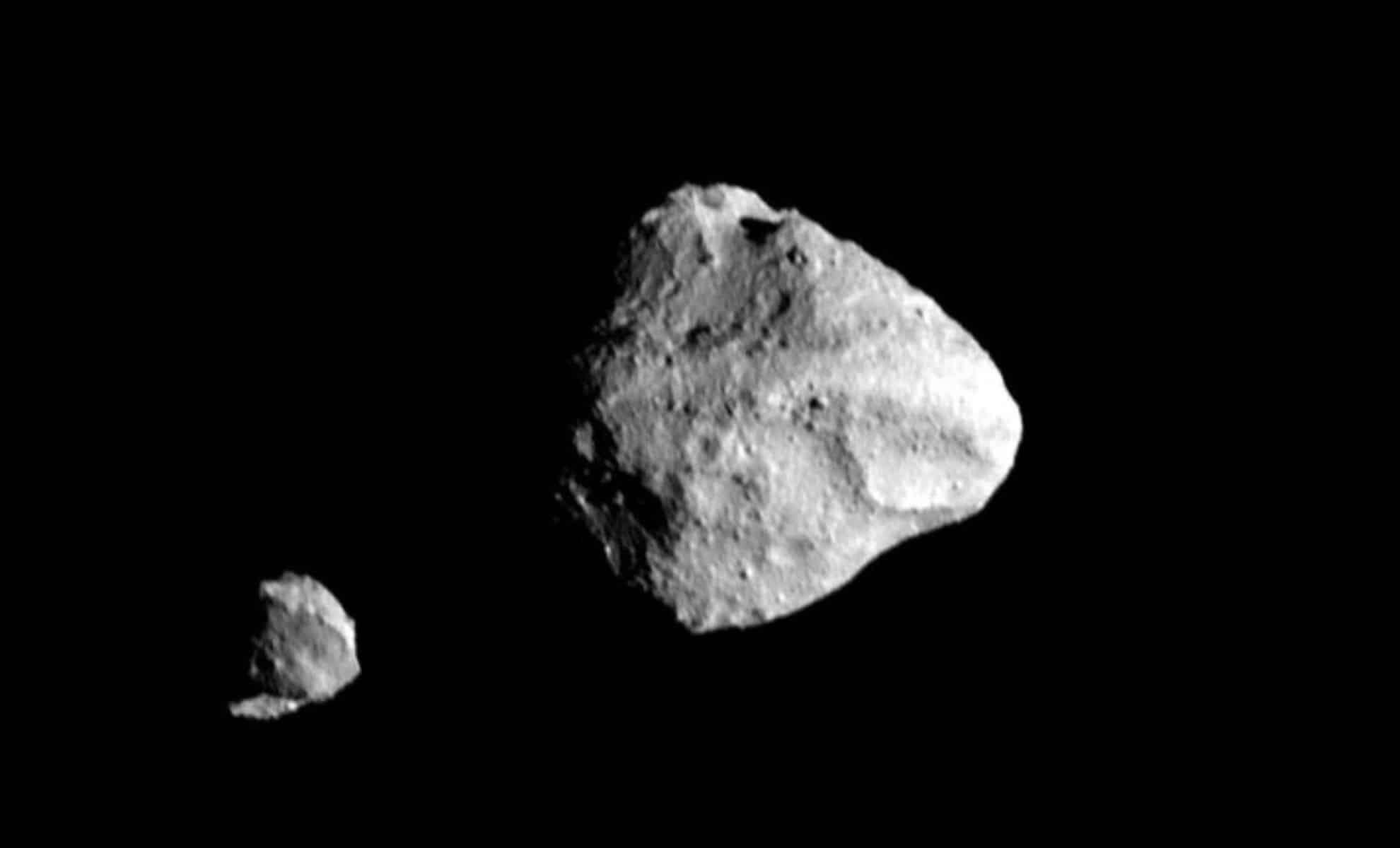
In a groundbreaking encounter in November 2023, NASA’s Lucy spacecraft uncovered an astonishing discovery around asteroid Dinkinesh.
The spacecraft documented striking geological formations and identified a unique binary satellite known as Selam. This unusual double moon, classified as a contact binary, likely originated from debris orbiting Dinkinesh following a major geological shift.
The Lucy mission seeks to deepen our knowledge of small solar system bodies, which hold crucial clues to the origins and development of planets like Earth.

Geological Insights and Structural Complexity
During the flyby, the spacecraft captured high-resolution images revealing a pronounced ridge and trough on Dinkinesh, shedding light on the asteroid’s structural integrity and intricate history.
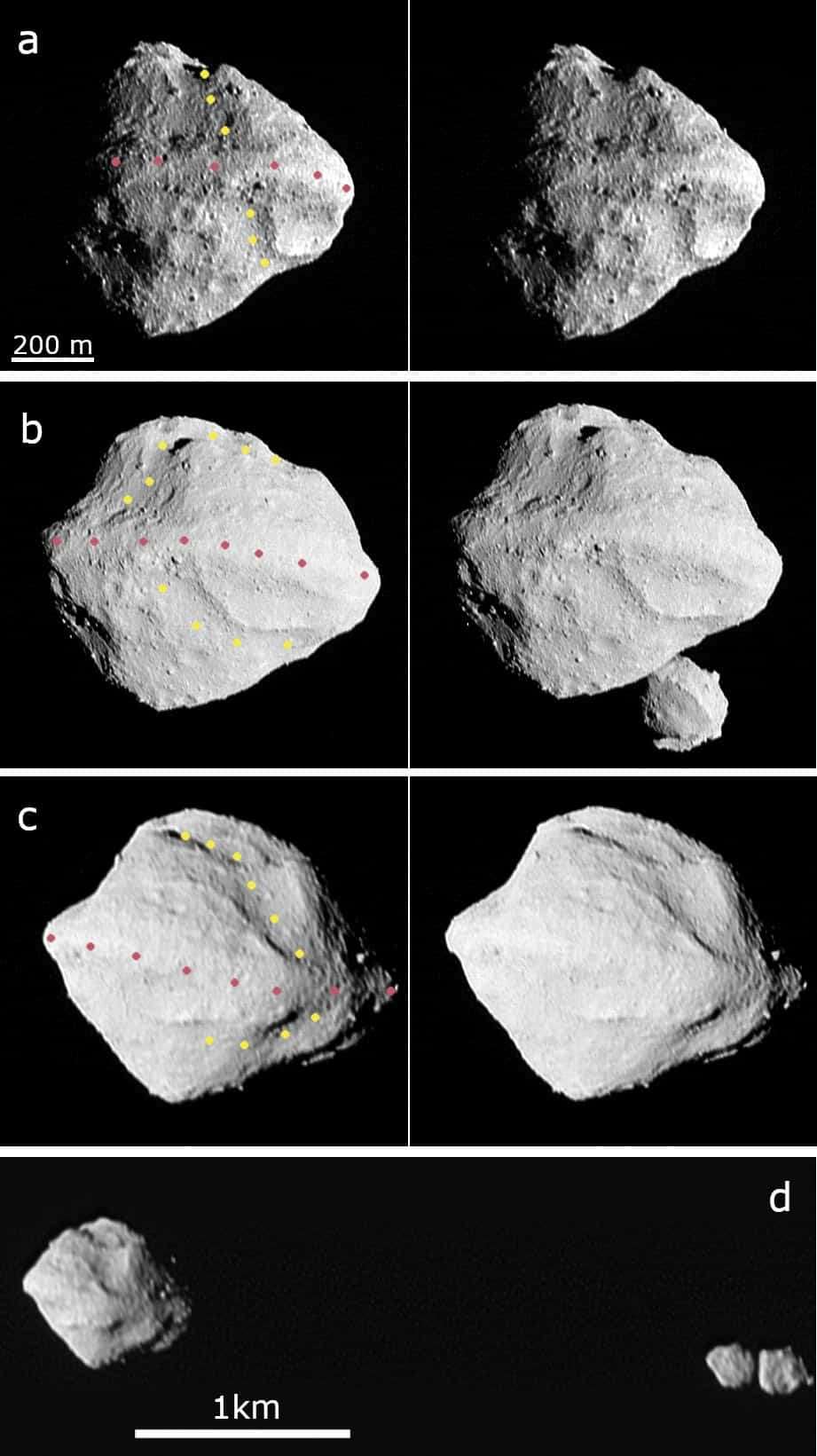
Utilizing the Long Range Reconnaissance Imager (L’LORRI), Lucy obtained stereographic images that expose how a significant section of Dinkinesh shifted, generating these notable features. This movement over millions of years reflects the asteroid’s response to internal stresses, offering fresh perspectives on its makeup and activity.
Researchers propose that Dinkinesh’s gradual rotation acceleration, driven by subtle thermal forces, produced enough centrifugal force to eventually distort the asteroid, elongating it. This transformation likely expelled debris into orbit, which coalesced into the ridge and Selam’s contact binary structure, indicating that Dinkinesh exhibits solid rock-like strength rather than being a loosely held rubble pile.
Selam: A Twin-Lobed Satellite
Named after the Amharic term for “peace,” Selam was initially identified as a solitary small moon. However, subsequent observations revealed it consists of two connected lobes, underscoring a complex formation involving materials ejected from Dinkinesh’s surface during its evolution. This binary formation offers important clues about the physical properties and origin stories of both Selam and its parent asteroid.
Hal Levison, the project's lead scientist from the Southwest Research Institute, emphasized the importance of such discoveries: “Understanding how small celestial bodies like Dinkinesh hold together and respond to collisions is essential for unraveling planetary formation. The way these objects break apart or stick together depends heavily on their internal strength and structure.”
Expanding Horizons: Upcoming Mission Phases
Discoveries at Dinkinesh mark just the start of Lucy’s ambitious 12-year expedition, which includes flybys of nine more asteroids. The spacecraft is on course for a gravity assist maneuver near Earth in December 2024, propelling it toward its next encounter with asteroid Donaldjohanson in 2025. Afterward, Lucy targets Jupiter’s Trojan asteroids, beginning detailed studies in 2027. These primordial objects serve as time capsules from the solar system’s infancy and hold vital data on planetary formation processes.
The detection of the double moon and comprehensive geological analyses offer researchers a treasure trove of information. By retracing the evolutionary pathways of such small bodies, scientists gain valuable insight into the dynamic forces shaping the solar system's architecture. Lucy’s continuing journey promises further revelations on how planets and their moons form and change over time.
Preparing for Future Encounters
As Lucy approaches its next asteroid flyby in 2025, teams worldwide are readying to collect detailed data from Donaldjohanson, named in honor of the pioneer discoverer of the famous fossil named Lucy. This mission leg will deepen understanding of main-belt asteroid characteristics before the spacecraft ventures to the Trojan asteroids, where it will study eight ancient targets over several years.
Trojan asteroids are especially valuable due to their preserved state since the solar system’s early period. Investigating these bodies will help scientists reconstruct environmental conditions and processes during planetary formation. The mission’s findings will refine existing models of how Earth and other planets originated.
Collaboration Driving Discovery
The Lucy mission's achievements underscore the importance of teamwork and cutting-edge innovation in space exploration. Partners include NASA, the Southwest Research Institute, Lockheed Martin Space, and multiple academic and research organizations. This collaboration has enabled the development of instruments pivotal to mission success.
The Long Range Reconnaissance Imager (L’LORRI) aboard Lucy has proven essential for capturing detailed snapshots of Dinkinesh and Selam, enabling scientists to analyze surface features and the binary moon in unprecedented detail. The mission’s technological advancements illustrate how innovation propels the frontiers of solar system science.
- Categories:
- Astronomy ,
- News ,
- Space ,
- Nasa













0 comments
Sign in to Comment