
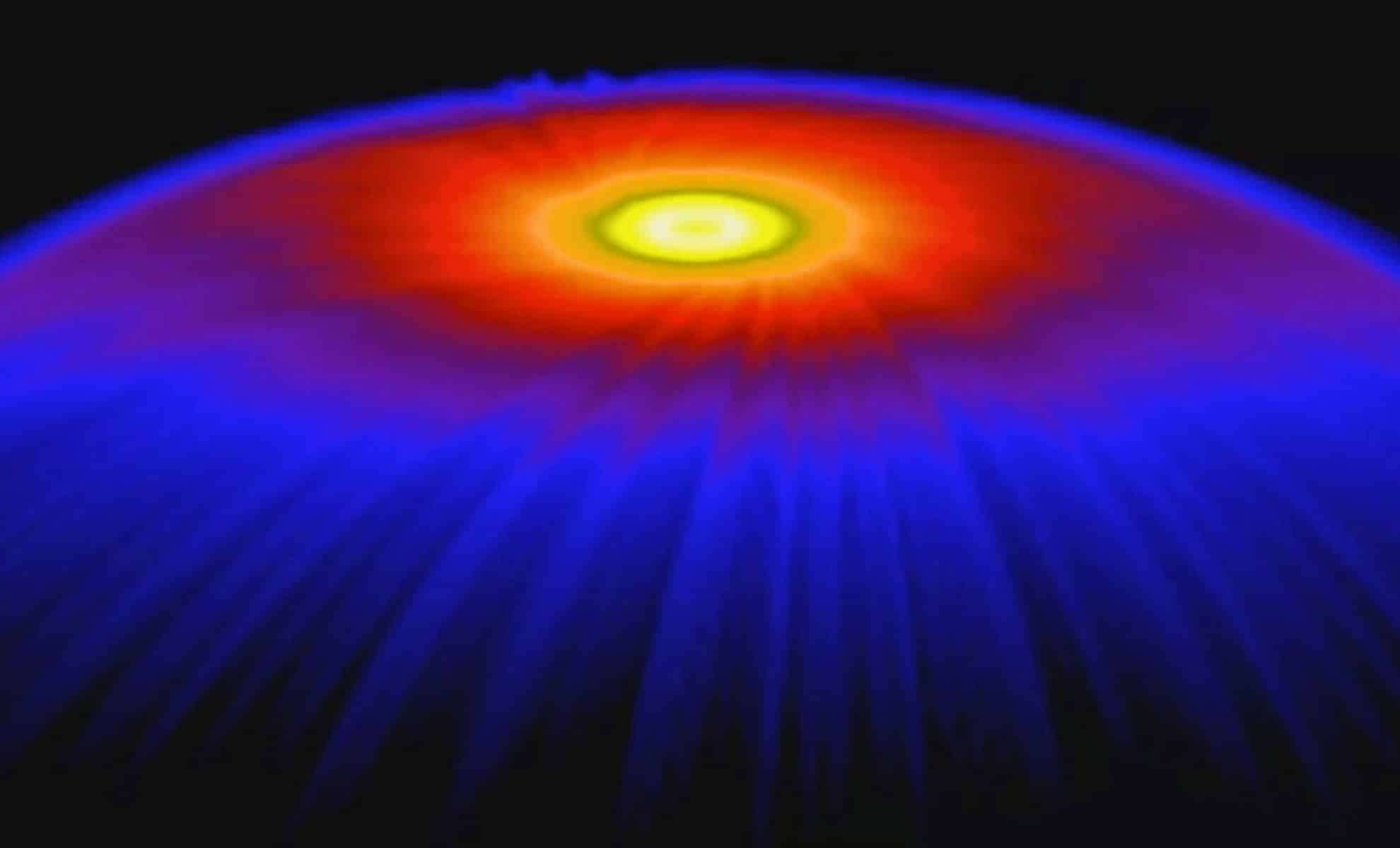
Astronomers have made a landmark achievement by photographing the first ever astrosphere surrounding a star similar to our sun. The focus of this discovery is a star known as The Moth, whose distinct characteristics and vigorous stellar winds provide fresh understanding of youthful stars and their cosmic environments. This breakthrough may shed light on the early stages of our solar system and the forces that shaped it billions of years ago.
Defining an Astrosphere
An astrosphere is an enormous bubble of superheated, ionized gas that forms when a star’s stellar winds collide with the interstellar medium nearby. These winds consist of continuous streams of charged particles that create a vast protective layer extending into space. In our own solar system, this protective zone is called the heliosphere, which deflects harmful galactic cosmic rays and shields Earth and its neighboring planets.
Prior to this, astrospheres had been identified only around very young, massive, or dying stars. Spotting one around a sunlike star—especially one with the potential to host planets—had eluded researchers for decades. Carey Lisse, an astronomer from Johns Hopkins Applied Physics Laboratory, highlighted the importance: “For 20 years, we’ve been searching for this phenomenon and only now have witnessed it.”

The Moth: A Youthful Star with Powerful Winds
Located roughly 125 light-years away in the constellation Puppis, the star HD 61005, nicknamed The Moth, is approximately 100 million years old, much younger than our sun’s 4.6 billion years. Young stars like this emit stronger stellar winds which shape their surroundings in notable ways.
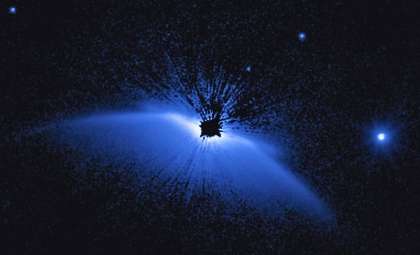
The name The Moth is inspired by the unique shape of the star’s debris disk, revealed through observations by the Hubble Space Telescope. The disk appears swept back into winglike structures, likely caused by the star’s rapid movement at about 10 kilometers per second through the surrounding interstellar gas. The combination of the star’s age, energetic winds, and swift passage through a dense medium made it an excellent candidate for astrosphere detection.
Observing the Astrosphere: Methods and Meaning
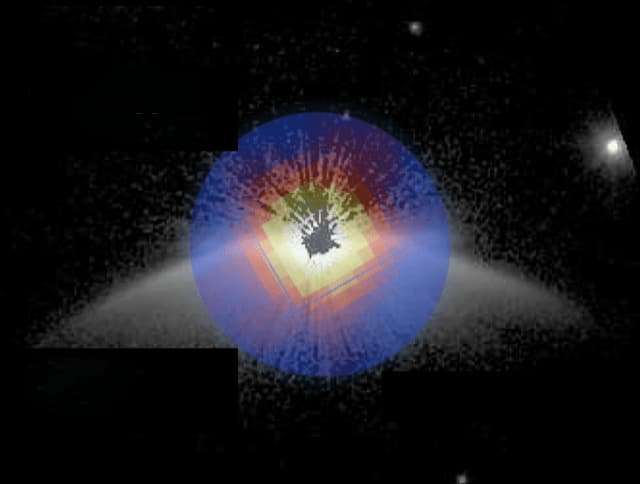
NASA’s Chandra X-ray Observatory revealed a luminous X-ray halo around the Moth, stretching about 100 astronomical units (AU) away—roughly 100 times the Earth-Sun distance. These X-ray emissions mark the boundary of the star’s astrosphere where stellar winds collide with interstellar gas.
Interestingly, the astrosphere looks nearly spherical despite the distinctive wing-shaped debris disk. This spherical form suggests the star’s winds are exceptionally forceful, pushing outward evenly against the surrounding gas. Lisse commented, “The astrosphere offers a glimpse into the sun’s own past. We once experienced similar conditions.”
Studying this astrosphere provides a rare window into what the early solar system's environment may have looked like, reflecting how the young sun’s intense winds shaped the heliosphere and influenced planet formation.
Impact on Planetary Habitability Research
Examining astrospheres around sunlike stars broadens our knowledge about exoplanetary environments. Stellar winds are crucial in determining if planets can support life. Astrospheres can shield planets from damaging cosmic rays, creating safer conditions for life, yet vigorous stellar activity might erode planetary atmospheres, making them less hospitable.
This finding also enriches our understanding of Earth’s origins. By analyzing the Moth, scientists can reconstruct the early conditions of the solar system and investigate how the young sun’s astrosphere influenced the emergence of life-friendly environments.
The full study is available at www.sciencenews
- Categories:
- Space




0 comments
Sign in to Comment