
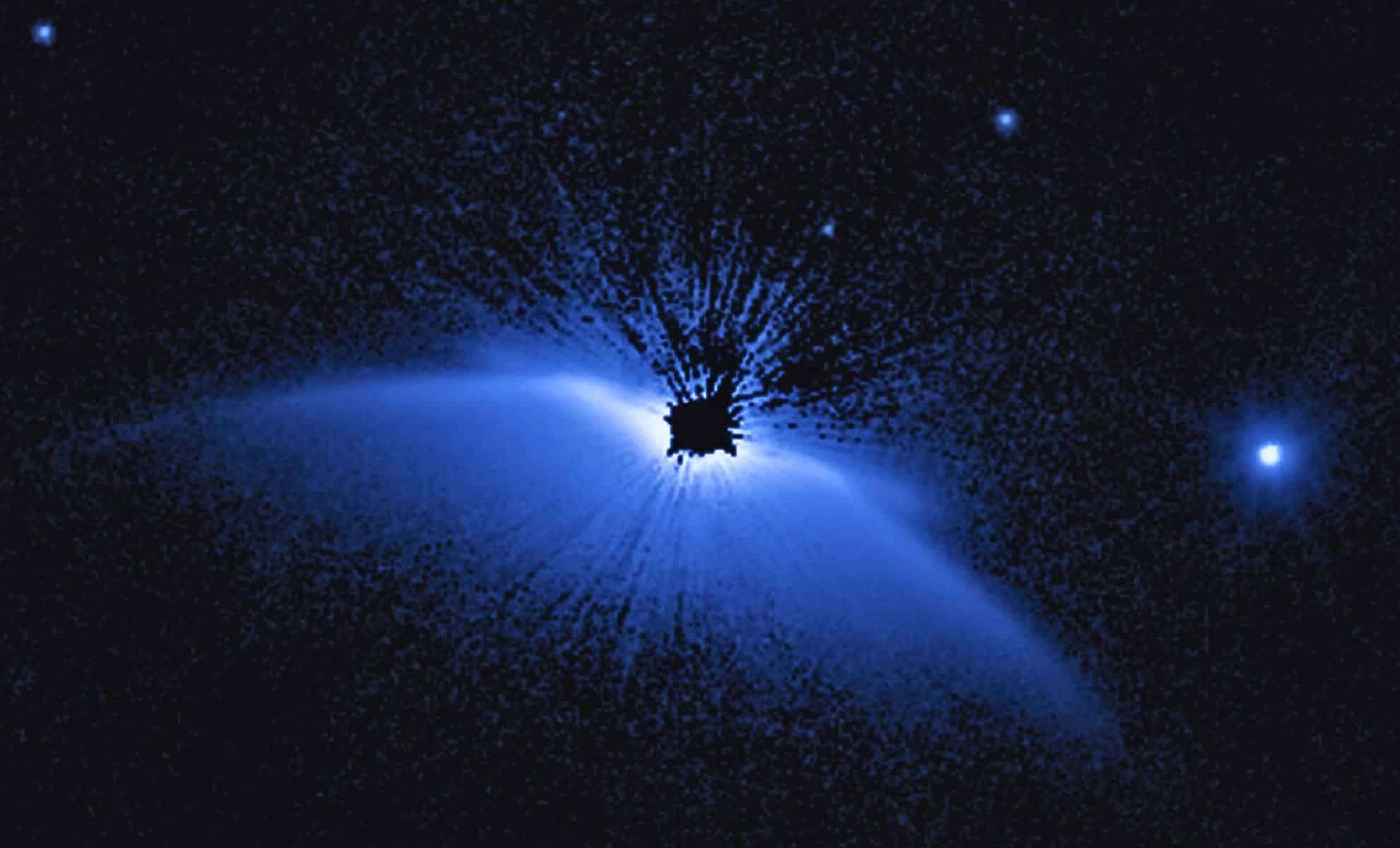
Astronomers have achieved a landmark detection of an astrosphere enveloping a star akin to our Sun. Revealed during the 25 Years of Science with Chandra symposium on December 3, 2024, this finding offers fresh perspectives on the early phases of solar evolution. An astrosphere forms from a star’s stellar wind, a continuous outflow of charged particles that creates a protective bubble of heated gas.
Defining an Astrosphere
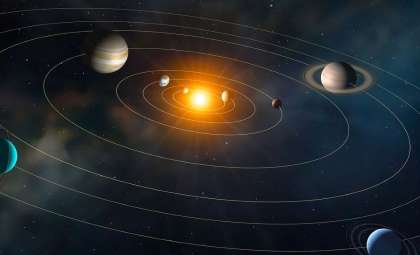
An astrosphere is a vast shell composed of ionized, hot gas generated by the persistent streams of stellar wind—a flow of energetic charged particles expelled by the star. Our own Sun has the heliosphere, which extends well past Pluto's orbit and acts as a shield against galactic cosmic radiation.
Detecting comparable astrospheric bubbles around other stars similar to the Sun has been a challenging endeavor for astronomers. Carey Lisse from the Johns Hopkins Applied Physics Laboratory explains, “These structures have remained elusive around ordinary stars where life might exist. Despite two decades of searching, we hadn’t observed them until now.”

Targeting HD 61005, Nicknamed “The Moth”
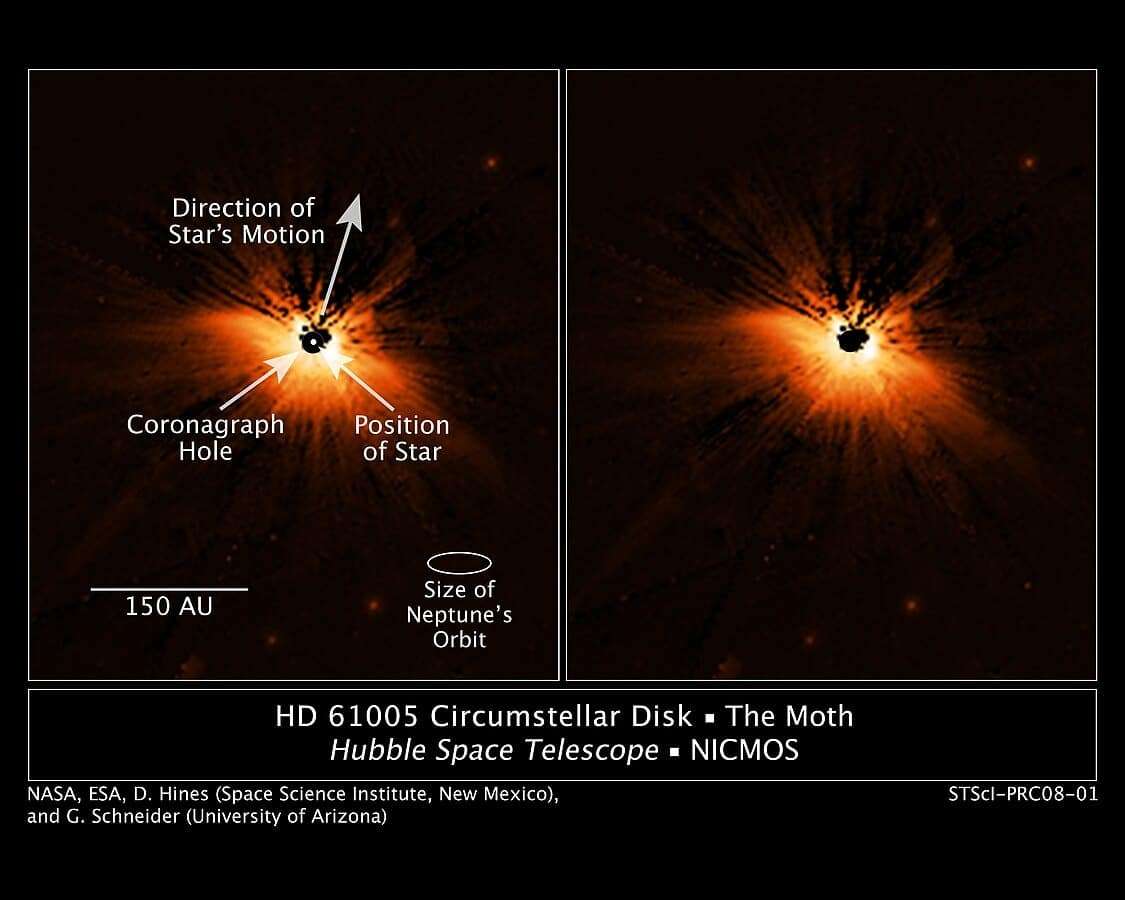
The pivotal star in this discovery is HD 61005, known as “The Moth” because of its distinctive, wing-shaped dust disk. This asymmetric disk is sculpted as the star speeds through an interstellar cloud of gas and dust, distorting the dust into its unique shape at a velocity near 10 kilometers per second. Lisse and colleagues selected HD 61005 due to its striking similarities with the Sun in both size and mass, making it an excellent candidate to investigate stellar astrospheres.
At an age of roughly 100 million years, the Moth is quite young compared to our 4.5-billion-year-old Sun. Younger stars usually display greater activity levels and generate more intense stellar winds. This heightened activity, coupled with the star's rapid traversal through a dense interstellar region, made it an ideal object for this study.
High-Energy X-ray Insights
The research team employed the Chandra X-ray Observatory to detect emissions of high-energy X-rays from the star’s surroundings. Their observations uncovered a luminous X-ray halo encasing the Moth, extending to distances around 100 times larger than our Sun’s heliosphere. This marks the first instance of detecting such a feature enveloping a solar-type star.
Surprisingly, the detected astrosphere exhibited a rounded shape instead of the anticipated wing-like form expected due to the star’s motion through the interstellar medium. According to Lisse, “The strength of the stellar wind pushes outward so forcefully that it dominates over the interstellar gas pressure, like a thick balloon moving through thinner air.”
Consequences for Understanding Our Sun
This groundbreaking detection of the Moth’s astrosphere opens a new path for exploring the early environment of our own Sun. Lisse highlights its significance: “The Sun once shared these characteristics. The astrosphere is revealing insights into our star’s formative years.”
Studying stars like the Moth helps scientists comprehend how stellar winds influenced the early solar system’s development and contributed to shielding the young Earth from cosmic radiation.
Beyond broadening stellar physics knowledge, this research advances our understanding of life-supporting conditions around stars similar to our Sun, as their astrospheres likely serve critical protective roles for orbiting planets.
The findings have been published in the journal Sciencenews.
- Categories:
- Astronomy ,
- Space









0 comments
Sign in to Comment