

Astronomers have made a revolutionary observation by identifying two separate pairs of supermassive black holes on the brink of merging. This unique event, found in two distant dwarf galaxies, offers fresh insights into galaxy formation and evolution during the universe’s early epochs.
A Rare Celestial Event: Two Sets of Black Holes
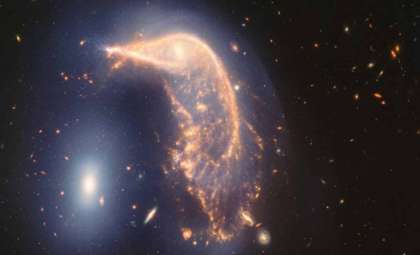
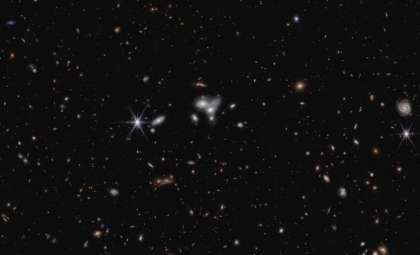
Using NASA’s Chandra X-ray Observatory, scientists captured remarkable images of the dwarf galaxies Mirabilis and Elstir & Vinteuil, situated approximately 760 million and 3.2 billion light-years from Earth, respectively. These findings uncover an extraordinary cosmic phenomenon: each galaxy contains two distinct supermassive black holes residing at their centers.
The identification of these black hole pairs relied on detecting X-rays emitted from their surrounding accretion disks. As gas and dust spiral inward, they heat up and generate X-ray radiation, which observatories like Chandra can detect.

The discovery has been detailed in a recent publication in The Astrophysical Journal and ArXiv, highlighting its importance for understanding the sequences of galactic growth. This breakthrough could shed light on how massive galaxies, such as the Milky Way, came to be.
Dwarf Galaxies: The Seeds of Larger Galactic Structures
Dwarf galaxies, which typically host fewer than a billion stars, are considered fundamental components in the cosmic assembly line. Experts believe these smaller systems are the precursors to larger galaxies. Through repeated merging events spanning billions of years, these primitives combine to form the grand spiral and elliptical galaxies we observe today.
Here is a comparison to illustrate this:
Galaxy Classification Star Count Dwarf Galaxy < 1 billion Milky Way (large galaxy) 200-400 billion
Brenna Wells, who co-authored the study, commented, “The majority of black holes and dwarf galaxies in the early universe have probably grown significantly larger through mergers over cosmic time. In essence, dwarf galaxies serve as our cosmic progenitors, evolving gradually into massive galaxies like the Milky Way.”
Unlocking New Perspectives on Galaxy Formation
This unprecedented finding of dual black hole pairs in merging dwarf galaxies paves the way for deeper exploration of galactic evolution. Researchers are particularly hopeful that these systems will provide critical clues about the very earliest phases of galaxy assembly.
The interactions of these black holes and their host galaxies promise to enrich our understanding of:
- The influence of black holes on galaxy growth
- How galaxies merge and interact dynamically
- The origins and buildup of supermassive black holes
- Connections between black hole mass and the size of their galaxies
Jimmy Irwin, a co-author involved in the research, stresses the value of ongoing study: “Continued observations of these paired systems will give us a window into crucial processes involved in the early evolution of galaxies and their central black holes.”
Ongoing Investigations and Broader Cosmic Insights
As astronomers keep tracking these merging dwarf galaxies, they expect to collect vital data that could reshape our knowledge of cosmic growth. The coalescence of dwarf galaxies and their supermassive black holes likely represents a pivotal stage in galactic life cycles, helping to explain the universe’s transformation from its primordial state into the complex structure we witness today.
This groundbreaking detection of two black hole pairs nearing collision stands as a significant achievement in the field of astronomy. It offers a rare perspective on how galaxies develop and interact and sets the foundation for future breakthroughs that could unlock deep cosmic secrets.
Exploring the depths of space continually reveals the universe’s dynamic, evolving nature. Observing these black holes and their host galaxies merging allows humanity to peer into a cosmic time capsule, witnessing processes that helped shape the galactic environment billions of years ago.
- Categories:
- Astronomy ,
- Science










0 comments
Sign in to Comment