

NASA’s Perseverance rover has successfully reactivated a critical instrument after a six-month hiatus, bolstering its mission to uncover signs of ancient microbial life on Mars.
This achievement represents a major step forward in Perseverance’s exploration of Jezero Crater, a region once thought to harbor a lake and conditions favorable for life.
Understanding the SHERLOC Instrument
The SHERLOC (Scanning Habitable Environments with Raman & Luminescence for Organics and Chemicals) instrument, located on the rover’s robotic arm, was disabled when its lens cover became stuck, obstructed by the accumulation of Martian dust. This protective cover is essential for SHERLOC’s operation, which is designed to detect organic molecules and chemical signatures that could indicate past life using sophisticated spectroscopy.

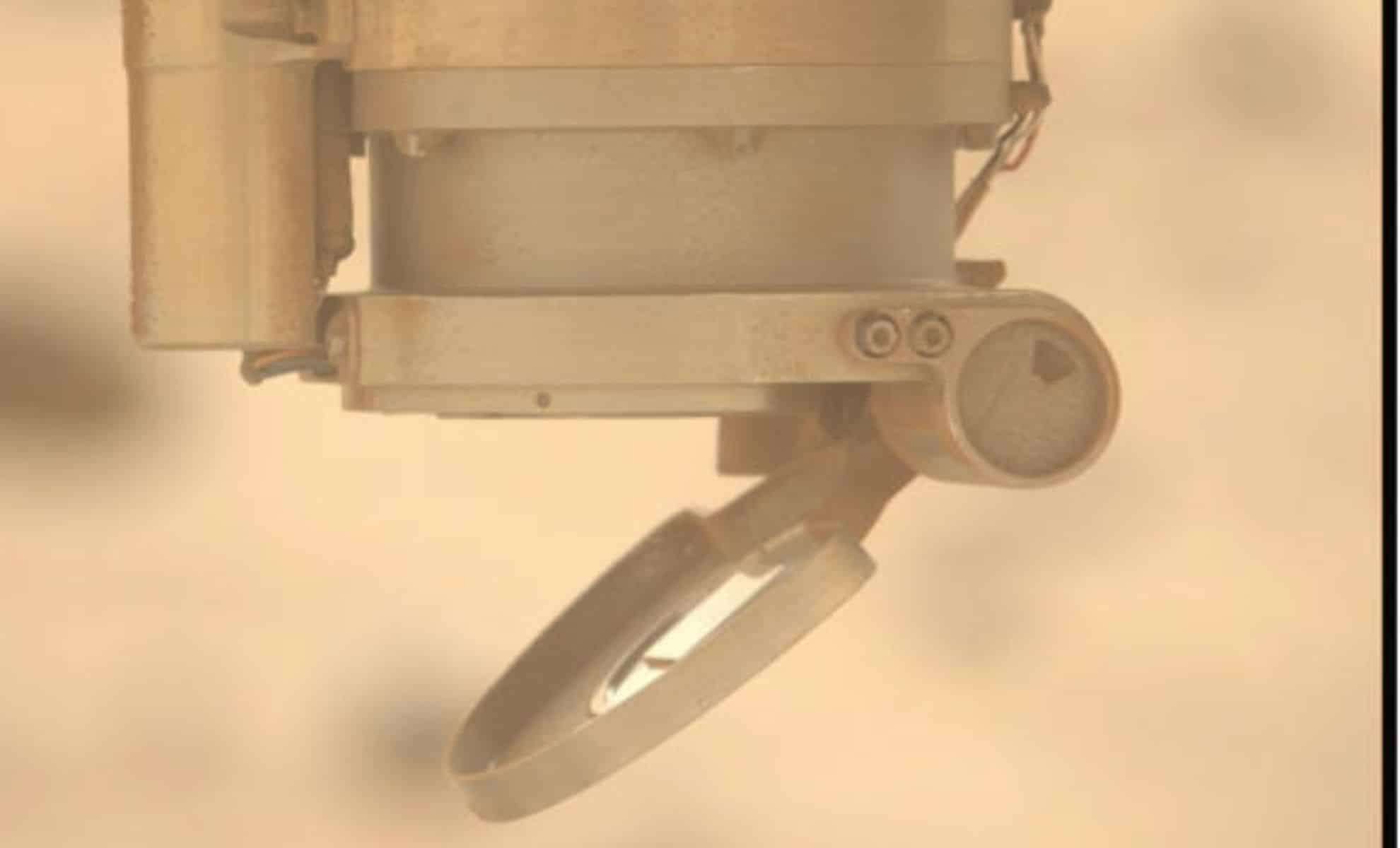
SHERLOC operates by targeting Martian rocks and soil to search for organic compounds linked to ancient microbial life. It uses Raman spectroscopy, where an ultraviolet laser illuminates a sample and the scattered light is analyzed to identify molecular vibrations and chemical makeup.
Additionally, the instrument utilizes fluorescence spectroscopy. When the UV laser stimulates organic materials, their molecules emit light at specific wavelengths, which SHERLOC then detects and studies.
Restoration Efforts by Engineers
Specialists at NASA’s Jet Propulsion Laboratory (JPL) tried several approaches to free the jammed lens cover, including warming the motor, repositioning the robotic arm, and tapping the rover’s drill. By March, they succeeded in opening the cover protecting SHERLOC’s Autofocus and Context Imager (ACI) camera, restoring its clear view. These efforts highlighted the ingenuity and resilience of the JPL team.
By mid-June, SHERLOC was confirmed to be fully functional again. Kyle Uckert, SHERLOC’s deputy principal investigator at JPL, praised the rover’s precise robotic arm, which can be maneuvered in tiny increments to optimize SHERLOC’s focus and enable accurate targeting. This precision is vital for conducting in-depth analysis of Martian samples.
SHERLOC’s Capabilities and Contributions
With SHERLOC fully operational, the instrument continues its search for biosignatures—indicators of past life—on Mars. Its advanced techniques are crucial for detecting organic compounds that provide clues about the planet’s ancient habitability. Since becoming active again, SHERLOC has helped reveal that the ingredients for life may have existed on Mars for an extended period.
By employing Raman and fluorescence spectroscopy methods, SHERLOC identifies molecular fingerprints in Martian materials, invaluable for recognizing possible biosignatures.
Ongoing Exploration and Future Goals
After landing in Jezero Crater in February 2021, Perseverance is currently engaged in its fourth science campaign, investigating regions rich in carbonate and olivine minerals along the crater’s inner rim. These discoveries will deepen understanding of Mars’ historical environment. The successful repair of SHERLOC guarantees that the rover remains equipped to search for signs of ancient life, advancing knowledge of the Red Planet.
Key to the mission is collecting rock and soil samples, which may one day be brought back to Earth by subsequent missions for comprehensive examination. SHERLOC’s ongoing functionality is essential for identifying the best samples to prioritize for return.
By revitalizing SHERLOC, NASA ensures that Perseverance can continue probing Mars’ ancient landscapes and hunting for biosignatures. The data returned will be critical for planning future exploration, including potential crewed missions to the Red Planet.
- Categories:
- Astronomy ,
- Space ,
- Nasa ,
- Aircraft









0 comments
Sign in to Comment