
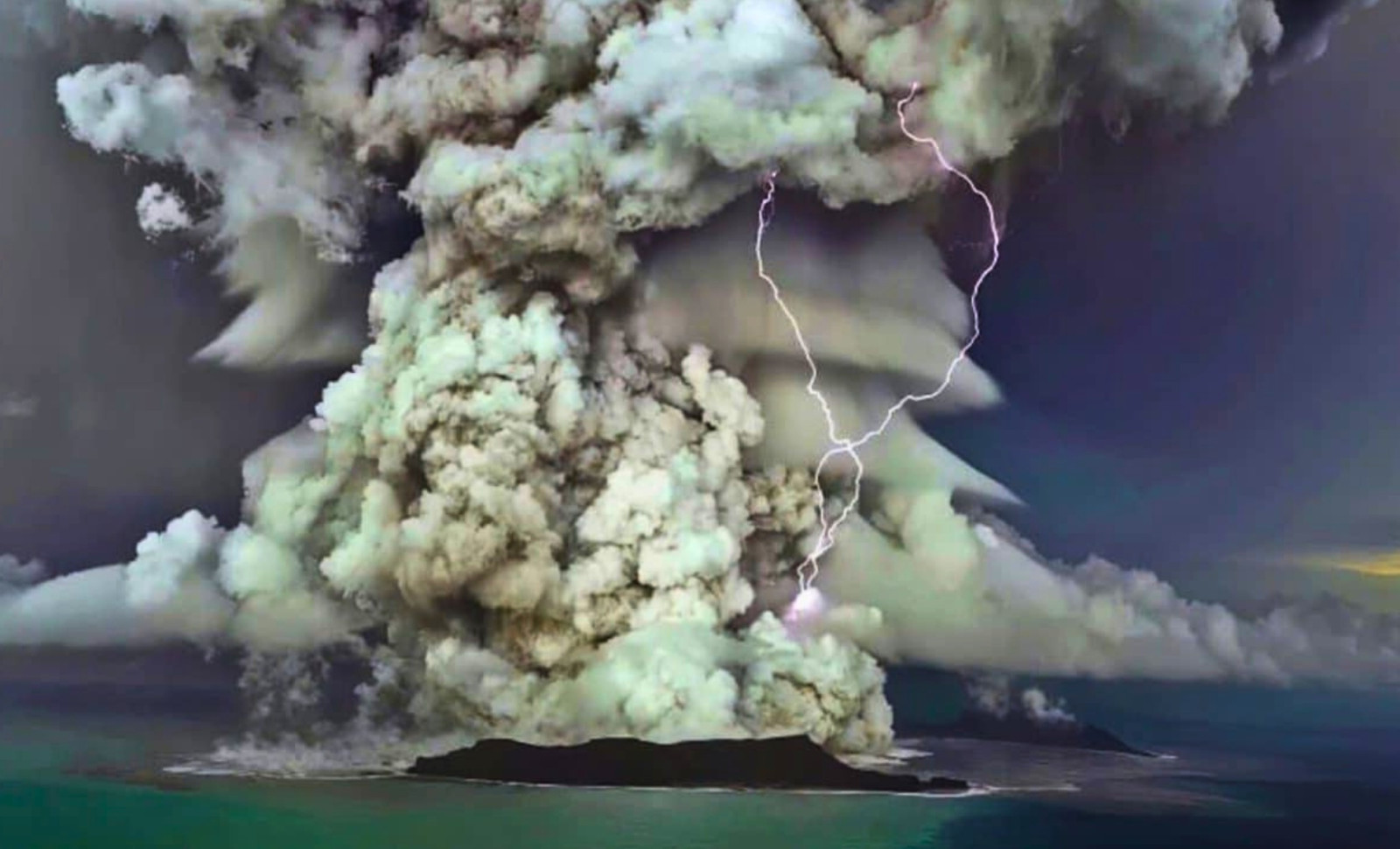
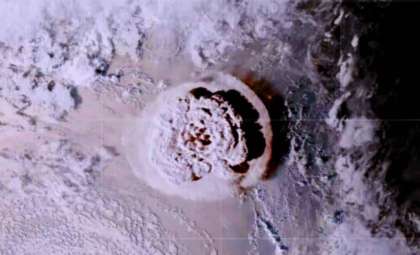
On January 15, 2022, an undersea volcano in the South Pacific unleashed an explosive force that propelled a plume soaring 35 miles above the Earth’s surface. Scientists anticipated the standard aftermath: sulfur aerosols rising into the stratosphere, slight warming there, and short-term global surface cooling. However, the atmosphere instead experienced cooling where warming was expected, prompting three years of international study to unravel the mystery.
Recent research has confirmed that the Hunga Tonga-Hunga Haʻapai eruption caused stratospheric cooling instead of warming, left no noticeable impact on global temperatures in 2023 and 2024, and injected more water vapor into the upper atmosphere than any other volcanic eruption ever recorded by scientists.
The key figure is 146 teragrams, representing the amount of water vapor the eruption propelled into the stratosphere—equivalent to about 10% of the existing moisture in that atmospheric layer. According to NASA Jet Propulsion Laboratory’s atmospheric scientist Luis Millán, in a study published in Geophysical Research Letters, this quantity is nearly four times the water vapor released by the 1991 Mount Pinatubo eruption, previously considered the benchmark for volcanic influence on the atmosphere.

The Crucial Role of the Caldera's Depth
The uniqueness of this eruption largely stems from one fact: the Hunga caldera was situated approximately 490 feet below sea level. This precise depth placed it in a rare range—deep enough for erupting magma to instantly vaporize large amounts of seawater but shallow enough for the pressure not to suppress the explosion. Had it been just a few hundred feet deeper or shallower, the eruption likely would have been much less extraordinary.
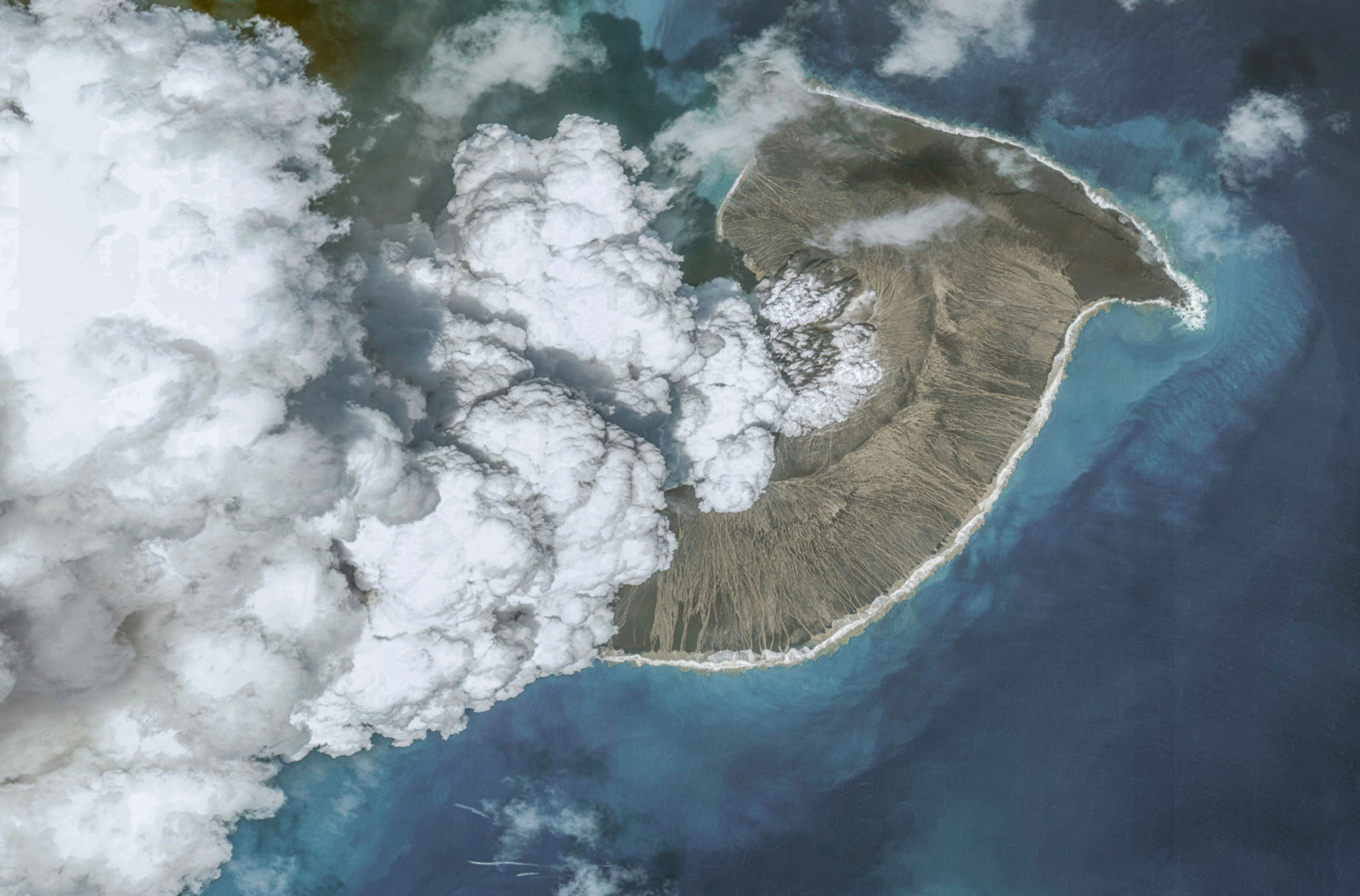
The abundance of seawater fueling the eruption also played a crucial role in altering its atmospheric effects. Normally, large eruptions propel sulfur dioxide into the stratosphere, creating sulfate aerosols that capture solar radiation and warm the stratosphere from within. At Hunga Tonga, the water intercepted much of the sulfur dioxide before it could ascend, resulting in a sulfate aerosol signal nearly negligible compared to Pinatubo’s. Instead, the eruption deposited a record-breaking amount of water vapor into the stratosphere.
A Journal of Volcanology and Geothermal Research paper suggested this event involved gas-driven hydraulic failure, where the forceful expansion of gas shattered surrounding rock and rapidly vaporized seawater. Surveys by New Zealand’s National Institute of Water and Atmospheric Research estimated the blast excavated around 2.3 cubic miles of seafloor rock.
Why Water Vapor Cools the Stratosphere
This phenomenon explains why the eruption’s outcomes defied expectations. Sulfate aerosols trap heat in the stratosphere, acting like a thermal blanket that raises its temperature. Conversely, water vapor at these altitudes radiates heat outward into space, drawing energy away from the stratosphere instead of retaining it.
Consequently, the eruption produced stratospheric temperatures dropping by 0.5 to 1 degree Celsius across wide regions of the upper atmosphere, states the scientific assessment. Researchers at the University of Colorado Boulder highlighted that such behavior has no clear analogue in the history of modern volcanic eruptions. At Earth’s surface, temperature changes were minimal—around 0.05 degrees Celsius cooler, compared with Pinatubo’s 0.25 to 0.5 degree surface cooling effect.
Amanda Maycock, a professor at the University of Leeds, confirmed that the event did not contribute measurably to the record-setting heat waves in 2023 and 2024, resolving a key question for climate scientists examining temperature anomalies from those years.
The Plume That Broke Records by Reaching the Mesosphere
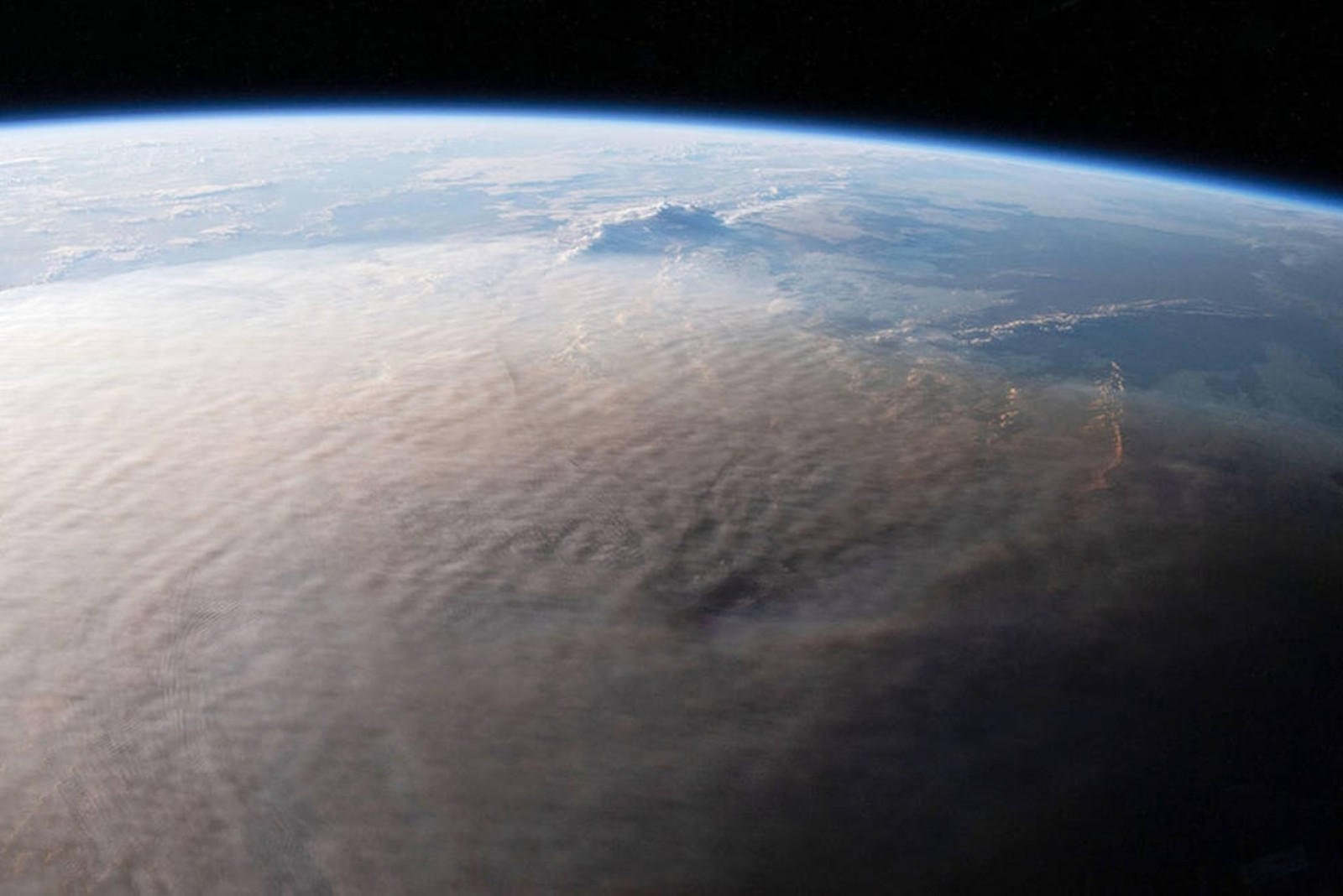
National Geographic reported the explosive column rose 35.4 miles, setting the record for the highest volcanic plume ever observed. Remarkably, the plume extended beyond the stratosphere into the mesosphere, an atmospheric layer where the air is so rarefied that meteors typically burn up on entry.
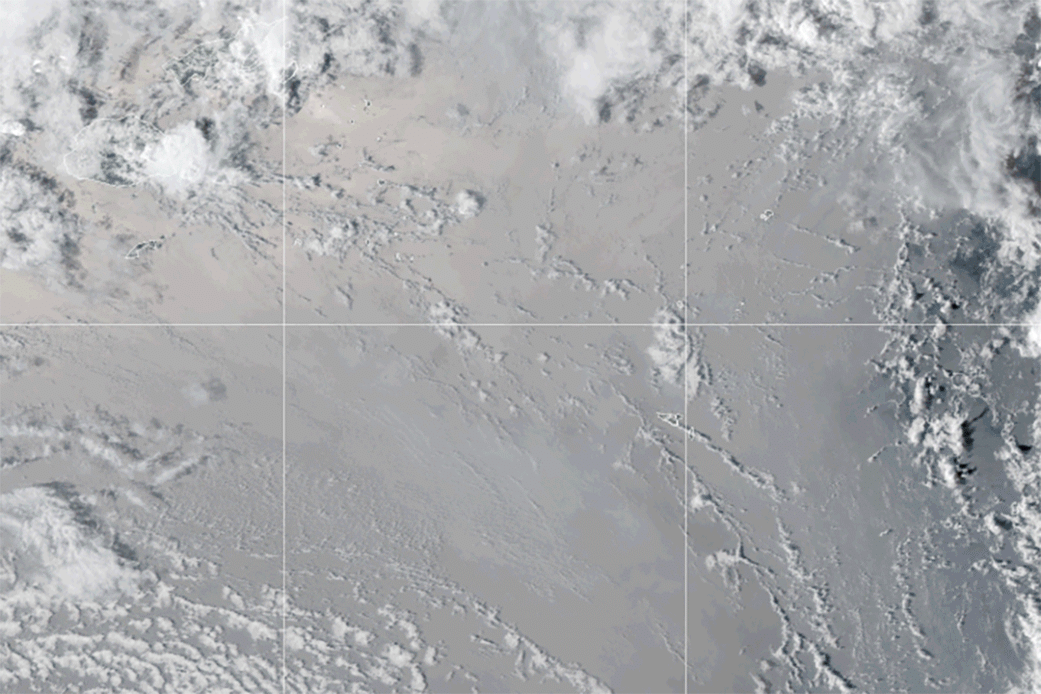
The eruption also generated atmospheric pressure waves that circled the globe four times within six days. These waves were intense enough to briefly lift ocean waters thousands of miles away. In the Mediterranean Sea, water levels sharply rose by nearly one foot, creating a meteo tsunami induced by atmospheric forces rather than seismic activity. The last event of this kind was linked to the 1883 Krakatau eruption.
Close to Tonga, the caldera floor collapse triggered a traditional tsunami. In some locations, waves reached heights exceeding 50 feet. This simultaneous occurrence of both atmospheric and oceanic tsunami effects from a single volcanic event is unmatched in modern instrumental records.
Persistent Atmospheric Effects Years After the Eruption
As of late 2025, elevated water vapor levels remain detectable in the stratosphere due to this eruption. Dr. Sandip Dhomse from the University of Leeds noted this moisture will likely persist longer than sulfate aerosols usually do after volcanic events. In several Southern Hemisphere regions, short-lived ozone depletion was observed following the eruption, attributed to changes in air circulation patterns rather than direct chemical destruction of ozone. Antarctic ozone levels stayed within expected seasonal limits.
Dr. Yunqian Zhu, senior research scientist at the University of Colorado Boulder, explained that this eruption highlighted limitations in current models for volcanic events rich in water vapor and their influence on stratospheric chemistry. The enhanced moisture levels from Hunga Tonga are forecasted to continue influencing atmospheric processes into the late 2020s.
- Categories:
- Science





0 comments
Sign in to Comment