
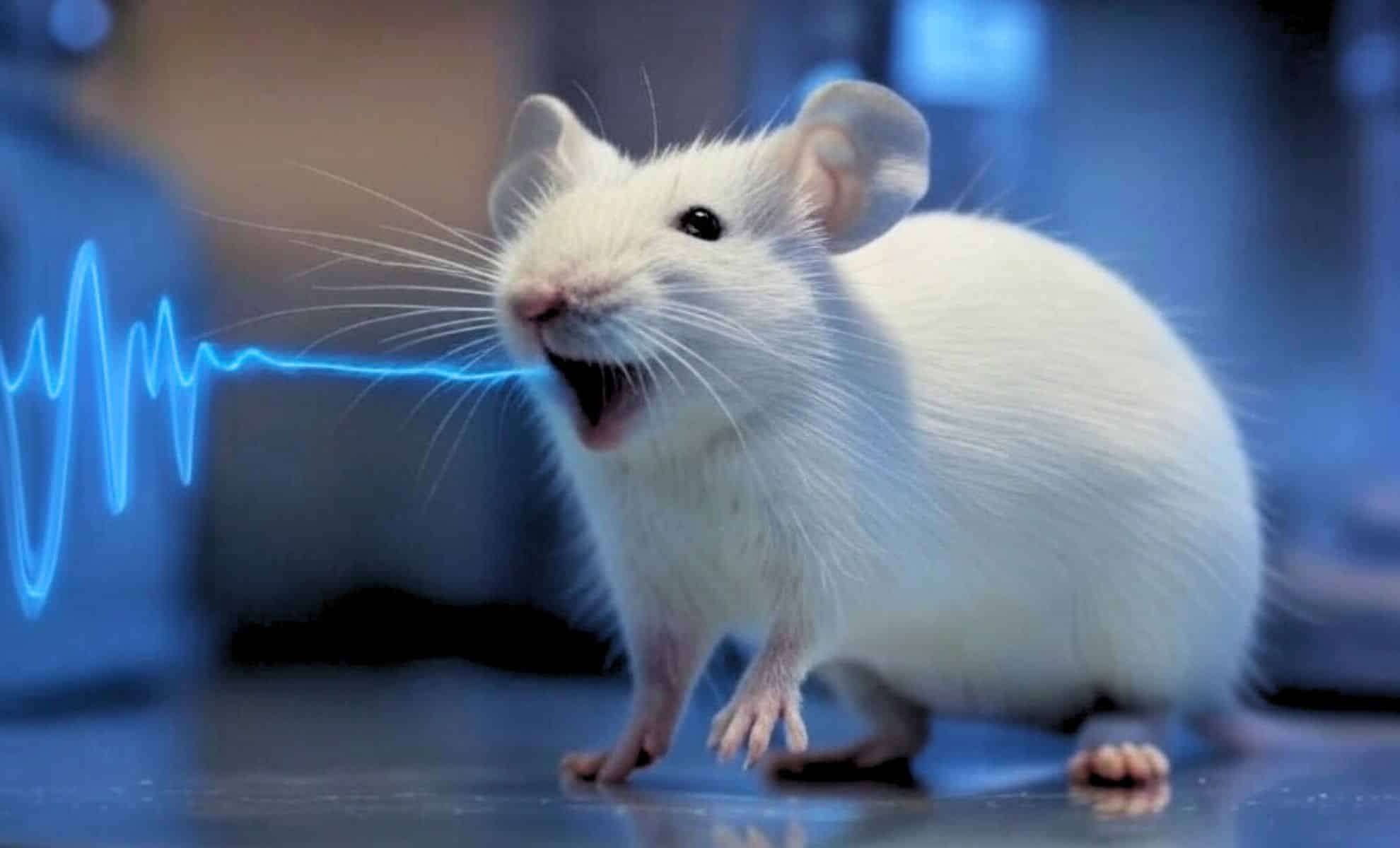
Recent research has identified a single genetic alteration exclusive to modern humans that may have influenced the emergence of speech and language capabilities. Published in Nature Communications, the study demonstrates that mice modified to carry the human variant of this gene exhibited more intricate vocal patterns compared to typical mice, pointing to a genetic connection with human communication.
The Genetic Feature Distinguishing Humans
The gene at the center of this discovery is NOVA1, vital for brain function as it controls numerous other genes. Neuroscientist Robert Darnell from Rockefeller University first discovered NOVA1 three decades ago while researching a neurological movement disorder. Subsequent investigations have hinted at its involvement in speech processes.
In contrast to Neanderthals and Denisovans, virtually all modern humans possess a unique mutation in NOVA1. This subtle change, altering just one amino acid in the protein, emerged within the last half a million years and became widespread, indicating it gave a significant evolutionary benefit.

Mice Exhibit Enhanced Human-Like Vocal Behavior
To investigate the mutation's effects, neuroscientist Yoko Tajima and her team applied CRISPR gene-editing techniques to insert the human NOVA1 gene into mice. Observations revealed that these genetically altered mice showed notable differences in their vocal expressions.
Infant mice pups carrying the humanized gene emitted distinctive distress calls when separated from their dams, while adult males created more sophisticated mating signals upon exposure to females. These results hint that NOVA1 influences vocal communication, shedding light on the genetic roots of human speech.
Genetic Influence on Speech Development
Scientists propose that the mutation modifies alternative splicing, a mechanism enabling one gene to generate various protein forms. Some of these variants contribute to vocal communication, supporting the idea that this genetic modification might have been instrumental in humans developing spoken language.
However, questions remain about how this mutation impacts neural circuits related to speech and whether Neanderthals and Denisovans communicated in a manner different from contemporary humans. Some researchers argue that these extinct hominins possessed similar cognitive capacities and could have employed complex communication forms.
Evolutionary geneticist Wolfgang Enard draws comparisons between NOVA1 and the widely studied “language gene” FOXP2. His 2009 work involved inserting the human FOXP2 variant into mice, revealing subtle yet intriguing behavioral changes. As Enard notes, “It’s just an amino acid difference, and you try to figure out what’s going on. It requires some courage to do that.”
Advancing Understanding of Speech Origins
While this research does not definitively classify NOVA1 as a “language gene”, it underscores how minute genetic shifts may have shaped the distinct communicative abilities of humans. Upcoming studies aim to explore how this mutation influences individual neurons and its broader role in the evolution of speech and language.
The investigation leaves scientists pondering an exciting possibility: Did a single genetic modification play a pivotal role in enabling human speech?
- Categories:
- Science











0 comments
Sign in to Comment