

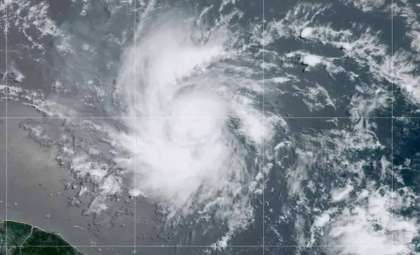
Storm Beryl is advancing toward the Texas coastline and is predicted to regain hurricane strength prior to making landfall early Monday morning.
Having already caused severe destruction and fatalities across the Caribbean, the storm threatens to unleash hazardous weather upon reaching Texas.
Storm Development and Forecast
Beryl, which holds the record as the earliest Category 5 hurricane recorded in the Atlantic basin, lost strength after crossing Mexico’s Yucatan Peninsula. Yet, as it moves over the Gulf of Mexico’s warm waters, experts forecast it will intensify again. Analysts at the National Hurricane Center (NHC) and AccuWeather anticipate Beryl will attain at least Category 1 hurricane status, with sustained winds ranging from 75 to 95 mph. There remains potential for rapid escalation, possibly reaching Category 3, with maximum winds near 129 mph.

According to AccuWeather’s lead hurricane specialist Alex DaSilva, "The storm is currently organizing itself. It has the environment favorable enough to strengthen to Category 2 or even a low chance to reach Category 3."
Predicted Effects on Texas
The Gulf Coast of Texas is preparing for intense rainfall, strong winds, and dangerous storm surge. Regions stretching from Corpus Christi to Galveston have active hurricane warnings and storm surge advisories. Governor Greg Abbott has declared a state of disaster affecting 40 counties, urging inhabitants to ready themselves for severe weather.
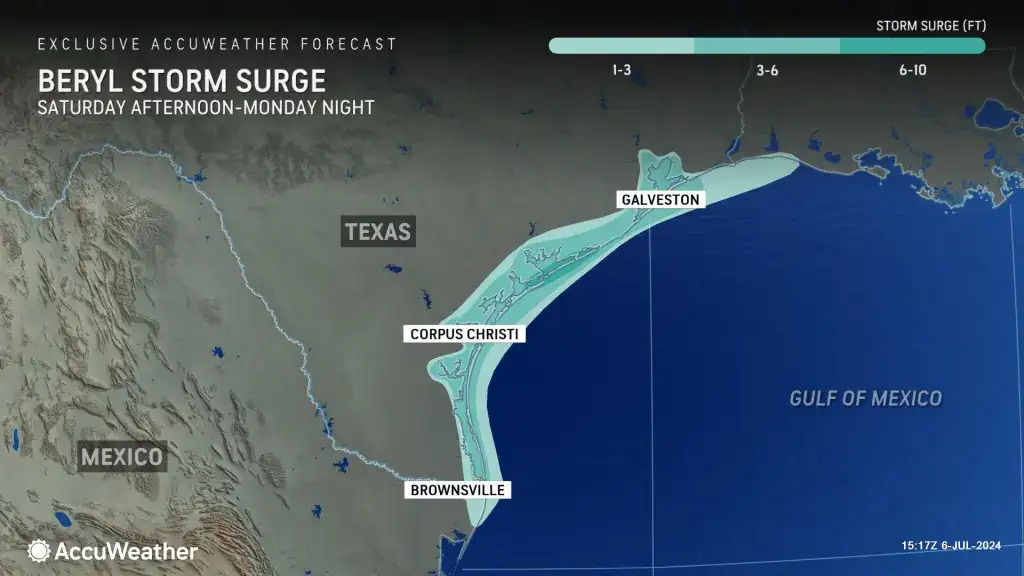
The NHC reports that Beryl could deliver heavy rainfall, with totals between 6 and 12 inches in impacted areas, and Houston possibly receiving 4 to 8 inches. These precipitation levels raise the threat of flash floods, particularly given the area's vulnerability from recent storms. Additionally, tropical storms are capable of triggering tornadoes, with Houston and Galveston potentially facing such hazards on Sunday and Monday.
DaSilva pointed out the significant danger posed by flooding, stating, "Water—be it from storm surge or rain—is the leading cause of fatalities in hurricanes, not wind. It’s critical for everyone, even away from the coast, to exercise caution."
Safety Measures and Alerts
Authorities are mobilizing comprehensive efforts to mitigate Beryl’s impact. Corpus Christi’s Mayor Paulette Guajardo has enacted a local emergency declaration to speed up resource deployment. She encouraged the community to take the threat seriously and act accordingly, saying, "Please continue to prepare and embody the spirit of support that defines Corpus Christi and the region."
Both the NHC and local meteorologists advise residents to reinforce their homes and comply with evacuation orders if issued. They warn of potential extensive damage to buildings, including roofs and power lines, which may lead to widespread outages.
The Devastation Left by Beryl
Beryl has already wrought significant destruction. As the earliest Category 5 hurricane documented in the Atlantic, it inflicted heavy damage across Caribbean islands prior to weakening. The storm was responsible for 11 fatalities and substantial harm to infrastructure and residences. Beryl’s forceful winds and torrential rains caused serious flooding, especially in low-lying zones, and disrupted utilities for many thousands.
Following its Caribbean passage, Beryl weakened to a tropical storm after impacting the Yucatan Peninsula, but still produced heavy rains and high winds, contributing further harm. Its effects across these regions highlight the potential severity as it nears the Texas shoreline.
Context and Season Prospects
Beryl’s early-season rise to Category 5 status is historic, marking a new benchmark for Atlantic storms. This event follows closely on Tropical Storm Alberto, which induced flooding and damage in Texas and Mexico just last month. The frequency of strong storms emphasizes the importance of readiness and effective emergency response plans.
Forecasting agencies anticipate a highly active 2024 Atlantic hurricane season, with NOAA projecting as many as 25 named storms. Of these, eight to thirteen could become hurricanes, and four to seven may intensify into major hurricanes.
As Beryl nears landfall, Texas residents are strongly advised to remain updated through official channels and implement necessary safety steps. Continuous monitoring by the NHC and local authorities will provide timely updates on the storm’s path and strength.
- Categories:
- News ,
- Climate change












0 comments
Sign in to Comment