
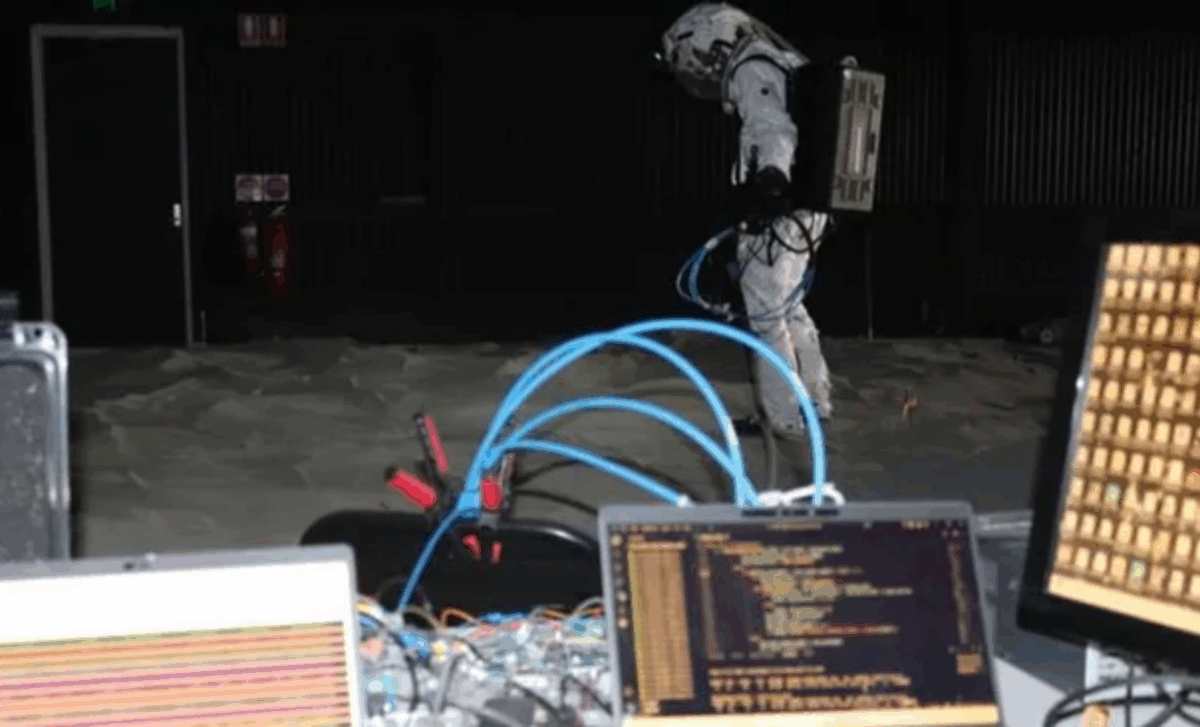
Astronauts often struggle with restrictive movements caused by their pressurized spacesuits. A revolutionary new exosuit, trialed in a lunar-like setting, aims to overcome these challenges. Equipped with groundbreaking artificial muscles, this suit promises to improve astronauts' agility during expeditions on the Moon and Mars. Recent research emphasizes its role in advancing wearable robotics for space travel.
Advancing Spacewalks with the Robotic Exosuit
Space explorers have continuously battled the cumbersome nature of spacesuits. Despite offering vital protection in space, these suits limit movement and quickly tire wearers. The newly developed exosuit, designed to be worn beneath a spacesuit, represents a potential breakthrough in enabling astronauts to carry out surface operations more efficiently. Tested in Australia during a space analog mission, its artificial muscles actively assist movement, combating the stiffness typically imposed by traditional suits.
Created by Dr. Emanuele Pulvirenti, a University of Bristol research associate, this exosuit is a practical response to the physical challenges faced in extraterrestrial environments. As Pulvirenti stated,

“The hope is that this technology could pave the way for future wearable robotic systems that enhance astronaut performance and reduce fatigue during extravehicular surface activities.”
Such advancements are essential for upcoming missions where astronauts will engage in demanding tasks over long durations under extreme conditions on the Moon and Mars.
Examining the Exosuit During the ADAMA Mission
The exosuit underwent rigorous trials in the ADAMA simulation mission, a two-week event held in Adelaide, Australia. This simulation is part of the larger effort to replicate the conditions astronauts will face on lunar and Martian surfaces. Researchers monitored how the suit affected astronaut mobility when worn beneath their standard spacesuit during this controlled test.
According to the University of Bristol, the exosuit incorporates artificial muscles made from advanced materials such as nylon and thermoplastic layers that offer both flexibility and airtight performance, reinforced by Kevlar straps for durability. This setup was assessed for its efficiency in supporting walking, climbing, and carrying activities vital for extraterrestrial exploration.
The trials took place at the CRATER facility in Roseworthy, Australia, which simulated lunar lighting and terrain characteristics. Results demonstrated that astronauts equipped with the exosuit moved with greater ease and experienced notably less fatigue compared to controls, representing a significant development in astronaut gear technology.
Artificial Muscles Empowering the Exosuit
The exosuit's core innovation lies in its artificial muscle system, engineered to replicate human body movements while providing enhanced support. This design couples naturally with the astronaut’s motions, amplifying strength and reducing the energy needed for physically demanding tasks. The suit’s construction features an outer nylon layer for flexibility and an inner thermoplastic membrane ensuring airtight integrity essential for space operations.
Kevlar-reinforced components, including knee straps and waistbands, add resilience against the stresses encountered while navigating uneven planetary rock formations. Comfort and durability were key priorities during development. Astronauts who tested this exosuit reported better joint comfort and reduced muscle fatigue, crucial for performing extended surface explorations on the Moon and Mars.
Beyond Space: Potential Earthly Benefits of the Exosuit
Though designed for extraterrestrial use, Dr. Pulvirenti envisions broader applications for this technology. Future versions could assist individuals with mobility impairments on Earth by switching between aid and resistance modes. This adaptability might provide personalized support for those requiring rehabilitation or enhanced mobility.
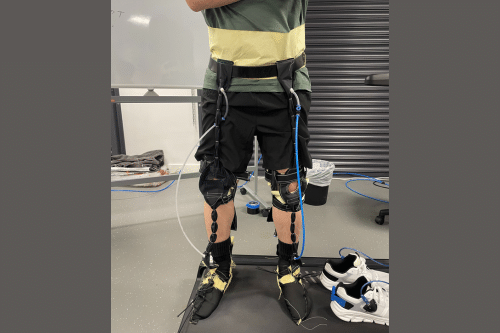
The potential use of this exosuit extends from space missions to significant medical and everyday applications. As Pulvirenti expressed,
“Our next goal is to create a hybrid suit that can switch between assistance and resistance modes as needed, which could be of great benefit for people in need of support with mobility, going through physical rehabilitation.”
This flexible design opens new horizons for wide-ranging practical uses beyond astronautics.
- Categories:
- Space











0 comments
Sign in to Comment