
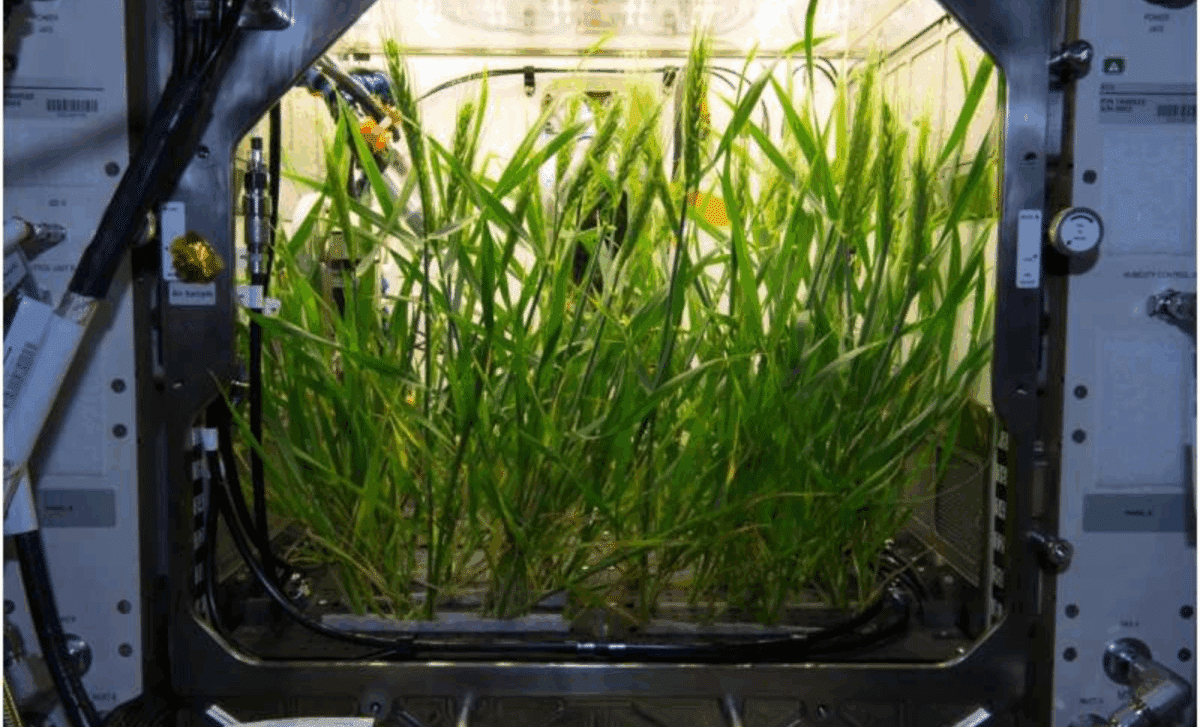
Picture the possibility of picking fresh greens and strawberries while gazing at the desolate lunar plains or the crimson Martian terrain. This vision is steadily becoming a reality due to pioneering efforts by the University of Melbourne in partnership with NASA. Their recent publication in New Phytologist highlights advancements that are essential for growing plants beyond Earth, a cornerstone for supporting prolonged space voyages and establishing human presence on other worlds.
Why Plants Are Essential for Space Habitats
Plants serve purposes that extend well beyond nourishment; they are central to ensuring human survival during extraterrestrial exploration. As humanity prepares to explore the Moon and Mars, plants will be indispensable for more than just food. A collaborative group of over 40 researchers from the Australian Research Council Centre of Excellence in Plants for Space (P4S) has devised an integrative plant science framework tailored for space missions. Their findings, featured in New Phytologist, introduce the “Bioregenerative Life Support System (BLSS) Readiness Level” framework, designed to enhance the efficiency of plants in recycling vital resources like oxygen, water, and nutrients in space habitats.
This is crucial for sustaining astronauts on extended missions, where stable food sources, healthy living conditions, and psychological well-being hinge on a self-sufficient system. Plants contribute by cleaning the air, producing oxygen, reducing waste, and offering fresh, nutrient-rich food. This research goes beyond simply nourishing space travelers; it focuses on creating a fully self-supporting living environment.

Overcoming Obstacles to Space Agriculture
Growing plants beyond Earth’s atmosphere presents unique challenges. Microgravity and unstable environmental conditions impede normal plant development. The absence of gravity alters how water and nutrients move to roots, and the lack of natural convection disrupts air flow and temperature regulation, all of which negatively affect plant health and growth.
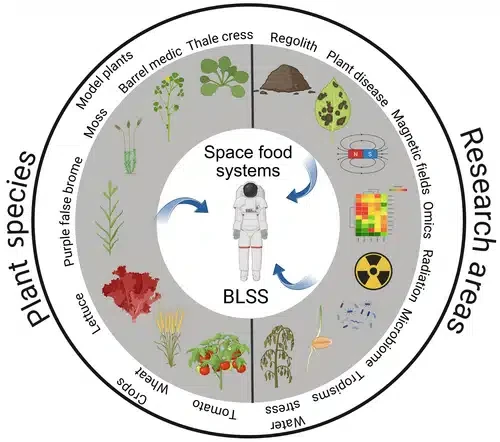
Researchers are concentrating on gravitropism—the mechanism by which plants sense and respond to gravity variations—to tackle these challenges. Gaining insights into how plants adjust to zero gravity environments may lead to groundbreaking methods for cultivating crops in space. This work is essential for upcoming missions like NASA’s Artemis program, aiming to return humans to the Moon by 2030.
Historic Plant Growth Trials Set for the Moon
In 2027, the Moon will host its first-ever plant growing experiment, symbolizing a significant breakthrough in space exploration. As part of NASA’s Artemis III mission, the Lunar Effect on Agricultural Flora (LEAF) experiment will cultivate three fast-growing plant species within a controlled climate chamber on the lunar surface. After one week, 500 grams of plant material will be returned to Earth for detailed analysis, focusing on gene activity, the impact of reduced gravity, and the effects of increased cosmic radiation on growth.
This initiative is a pivotal step to decipher how plants fare under the Moon’s extreme environment and will supply critical information to aid planning for future Mars expeditions and other missions. Scientists worldwide, including those in Australia, will study these samples to better understand space-induced alterations in plant biology.
Harnessing Advanced Tech: AI and Omics in Space Cultivation
The evolution of space agriculture is accelerated by revolutionary technologies such as artificial intelligence (AI) and omics sciences. By creating ‘digital twins’—computer-generated plant models—researchers can simulate and fine-tune plant growth under a variety of extraterrestrial conditions. These simulations enable predictions on how factors like water availability, temperature shifts, and radiation influence plant development.
AI also enhances crop quality and astronaut dining experiences by analyzing feedback from crew members, ensuring the space-grown produce remains both palatable and nutritious. Such innovations promise to transform space farming, guaranteeing astronauts on lengthy journeys access to diverse and wholesome fresh food options.
- Categories:
- Space






0 comments
Sign in to Comment