
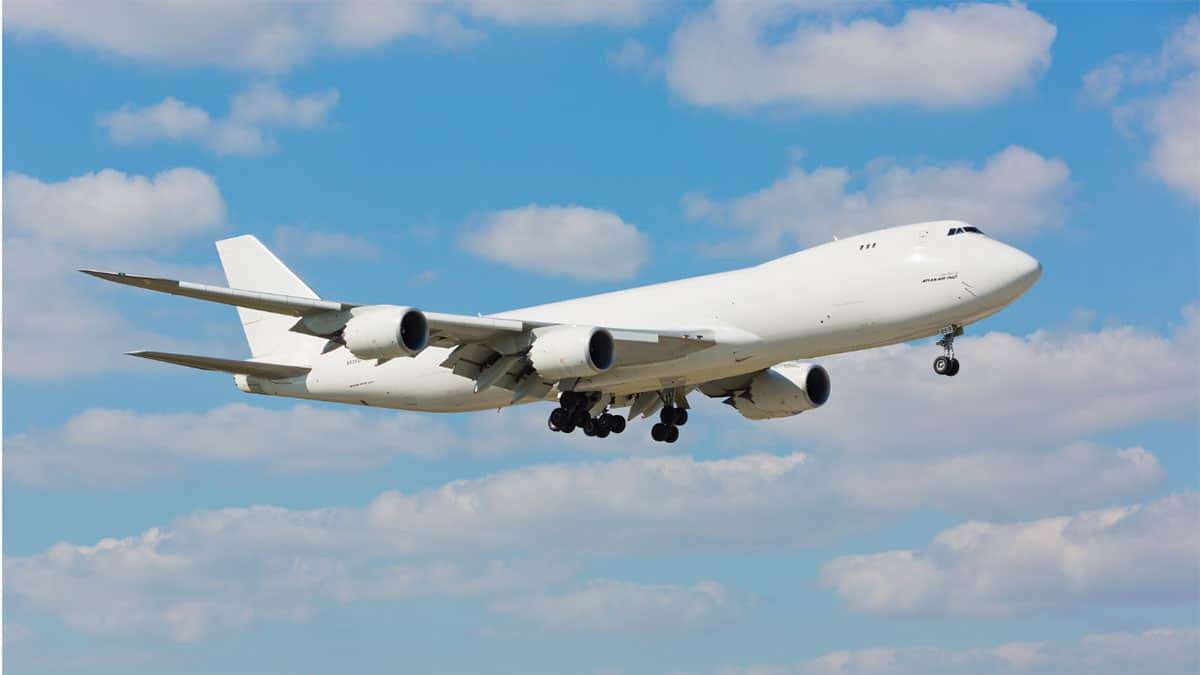
The Boeing 747-8 commands attention not only for its remarkable length but also for its stunning dimensions. Here’s a detailed look at its key measurements:
- Overall length: 76.3 meters
- Wing tip to wing tip: 68.4 meters
- Vertical height: 19.4 meters
To grasp the magnitude, the 747-8 surpasses its predecessor, the Boeing 747-400, by almost five meters in length. This extension enhances both passenger capacity and cargo space, making it a favored choice for airlines running extensive international routes.
Although the 747-8 holds the record for length, other aircraft overshadow it in different ways. The Airbus A380-800, for example, features a broader wingspan of 79.8 meters and stands taller at 24.1 meters. Nonetheless, the 747-8’s elongated form and streamlined profile create a silhouette that remains unmistakable in the sky.

Model Length (m) Wingspan (m) Height (m) Boeing 747-8 76.3 68.4 19.4 Boeing 747-400 70.66 64.44 19.4 Airbus A380-800 72.73 79.8 24.1
A Legend in Aviation History
The Boeing 747 series has an illustrious heritage tracing back to its inaugural flight on February 9, 1969. Easily identified by its signature front fuselage “hump,” the 747 earned legendary nicknames like “Queen of the Skies” and “Jumbo Jet,” becoming a symbol of aviation achievement.
For almost forty years, the 747 dominated as the passenger aircraft with the highest seating capacity. The 747-400 and 747-8 variants could transport at least 410 travelers per flight, a record unchallenged until 2007 when the Airbus A380-800 elevated the number to 500 passengers.
Besides commercial aviation, the Boeing 747 gained widespread recognition as the model selected for Air Force One, the official aircraft transporting the U.S. President. This distinction reinforced the 747’s status as a technological and cultural icon.
The Cost of Supersized Flight
As expected, designing an aircraft of this scale involves significant expense. The price of a Boeing 747-8 depends on its configuration:
- Cargo version: $293 million to $308 million (prices as of 2010)
- Passenger variant: Starting from $400 million (updated March 2024)
Due to these substantial costs, the 747-8 is frequently acquired by government entities and high-profile customers. For everyday airline operations, many carriers choose the more budget-conscious 747-400, which still delivers impressive performance and capacity.
This high valuation reflects cutting-edge materials, engineering, and technology integrated into the airplane. Operators carefully weigh the balance between investment and long-term operational efficiencies before committing to such aviation giants.
Looking Ahead: The Future of Long-Distance Travel
Though Boeing concluded 747 production with its final delivery on January 31, 2023, the aircraft remains an essential player in intercontinental air travel. Still, the aviation sector faces new hurdles and shifts.
Recent safety concerns involving Boeing’s newer fleet, such as the 787 Dreamliner, have drawn attention and regulatory review following whistleblower reports. These issues underscore the importance of stringent safety oversight in an increasingly complex industry.
As aviation advances, questions loom about which next-gen aircraft will claim the mantle of flagship long-haul travel. While modern planes emphasize fuel efficiency and technical innovations, the 747-8’s unparalleled combination of size and reliability remains a challenging benchmark.
The Boeing 747-8’s reputation as the longest passenger aircraft ever built is firmly established, but aviation continues evolving. Technological progress and changing passenger demands promise fresh trailblazing designs destined to push the limits of flight, carrying forward the pioneering spirit the 747 has embodied for over five decades.
- Categories:
- Aircraft












0 comments
Sign in to Comment