
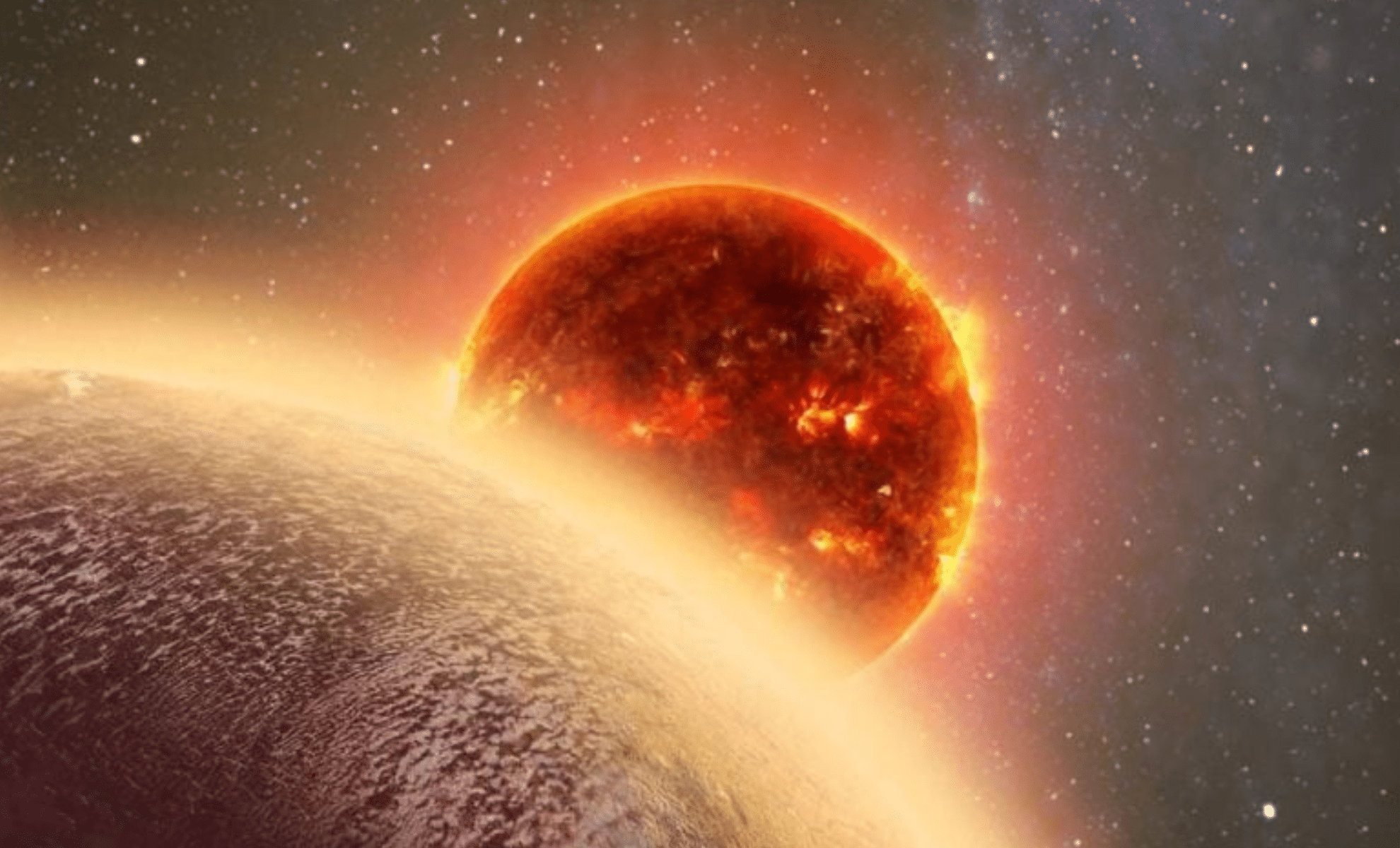
New research leveraging data from the James Webb Space Telescope (JWST) alongside in-depth analysis, published in The Astrophysical Journal, confirms that the Earth-size exoplanet GJ 1132 B, despite its similarities to Earth in radius and density, does not retain a significant atmosphere. This outcome settles longstanding debates about the planet’s atmospheric makeup and reveals the harsh environmental factors affecting rocky worlds orbiting near active small stars.
Examining the Challenging Environment Surrounding GJ 1132 B
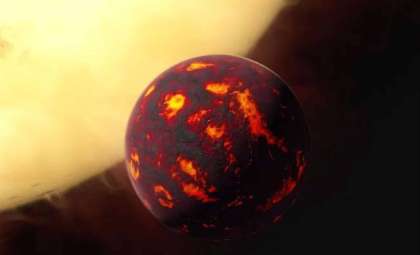
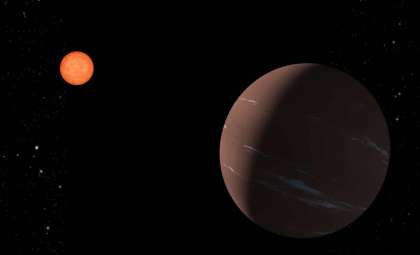
GJ 1132 B is a rocky planet approximately 1.6 times Earth's diameter, orbiting a red dwarf star roughly 39 light-years distant. The planet’s close proximity to its star exposes it to intense stellar radiation and solar wind, which severely undermine atmospheric stability. Prior to JWST observations, researchers speculated the planet might have a thin atmosphere, possibly composed of water vapor or hydrogen. However, the NIRSpec instrument aboard JWST detected no spectral signatures indicating any gaseous envelope around the planet.
The conditions on GJ 1132 B parallel the intense radiation levels similar to Venus, but with a crucial difference: the absence of detectable greenhouse gases. This suggests any original atmosphere was stripped away early in the planet’s history. These insights enhance our understanding of atmospheric erosion mechanisms, especially for planets orbiting low-mass stars, the most prevalent stellar type in our galaxy. The findings also have implications for the search for habitable worlds, indicating that planets closely orbiting M-dwarfs may be far less amenable to life than once hoped.

JWST’s Instrumental Role in Probing Exoplanet Atmospheres
The James Webb Space Telescope has transformed exoplanet research by providing exceptional infrared sensitivity, enabling the examination of atmospheres around small, rocky planets. Using transmission spectroscopy, astronomers analyzed how starlight filters through the vicinity of GJ 1132 B. The absence of absorption features corresponding to water, methane, carbon dioxide, or hydrogen confirmed the planet’s lack of an atmosphere.
This result showcases JWST’s capability to differentiate between planets with substantial atmospheres and those effectively stripped bare, even for relatively small planets. The telescope’s observations reinforce earlier hints from Hubble and ground-based data and establish a new standard for studying terrestrial planets beyond our solar system.
Consequences for Planetary Evolution and Potential for Life
The absence of an atmosphere on GJ 1132 B provides valuable insights into how planets form and retain volatile compounds. One prevailing theory proposes that planets forming near low-mass stars initially develop atmospheres that are then swiftly removed due to intense stellar emission. This aligns with the concept that many Earth-sized planets orbiting red dwarfs might be barren and inhospitable despite their Earth-like attributes.
Regarding habitability, no atmosphere means no stable surface liquid water, a critical ingredient for known life forms. These findings highlight that planet size alone does not guarantee habitability; the surrounding stellar environment and atmospheric dynamics are equally crucial. Future explorations will likely examine the interplay between stellar radiation, planetary magnetic fields, and atmospheric retention to better identify worlds capable of sustaining life.
Enhancing the Hunt for Life-Supporting Exoplanets
The investigation of GJ 1132 B illustrates the importance of integrating precise astronomical measurements with advanced theoretical models. Understanding which planets inevitably lose their atmospheres allows scientists to pinpoint the most promising targets for habitability. JWST’s ability to confirm the absence of an atmosphere emphasizes the essential role of cutting-edge telescopes in refining the catalog of potential habitable planets.
Moreover, these conclusions motivate the development of specialized atmospheric evolution models for planets around active stars. Such models can forecast how quickly atmospheres are stripped, what residual gases might remain, and the prospects for secondary atmospheres emerging from volcanic activity or comet impacts. This combined observational and modeling strategy is poised to drive exoplanet research forward in the coming years.
- Categories:
- News





0 comments
Sign in to Comment