
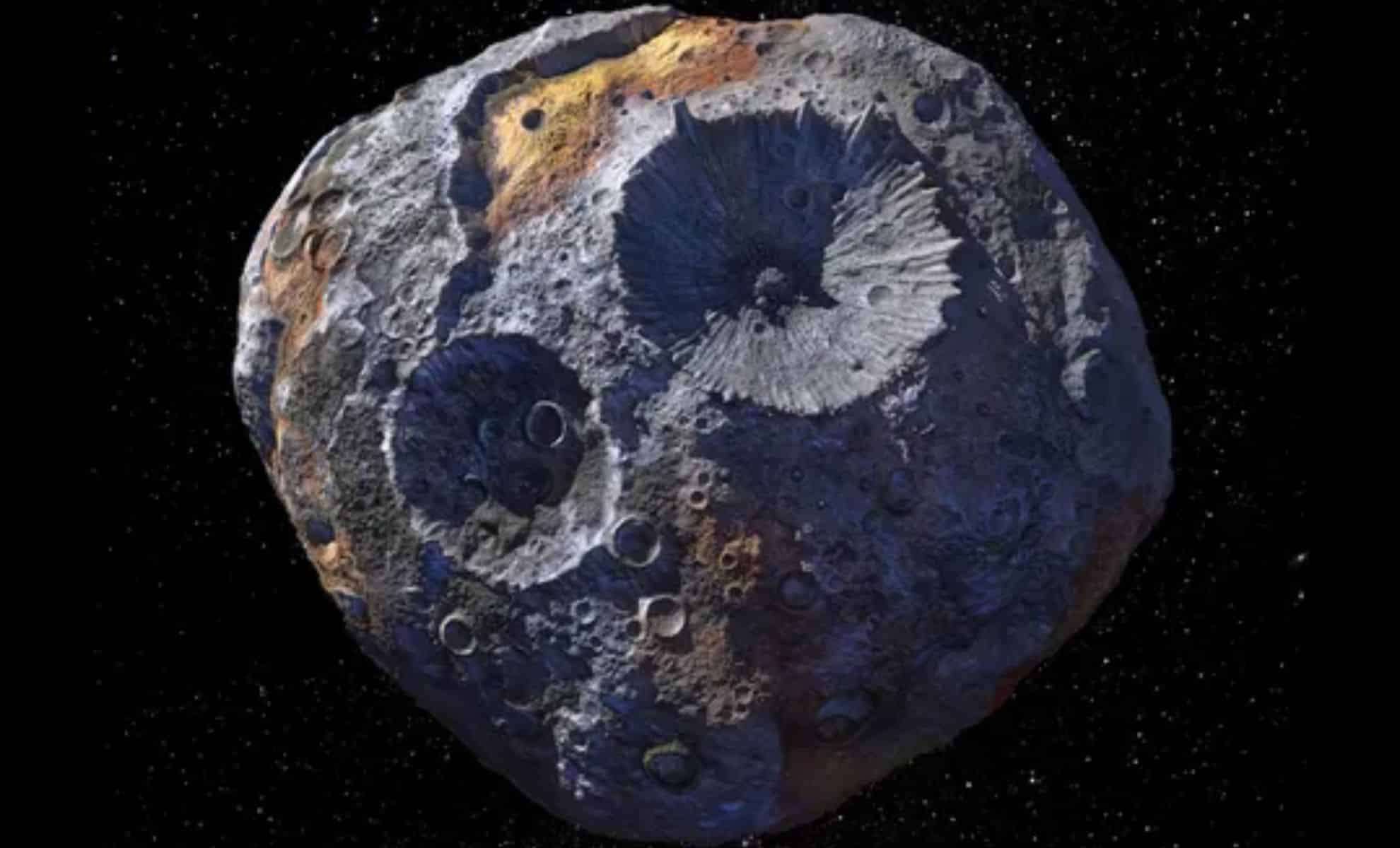
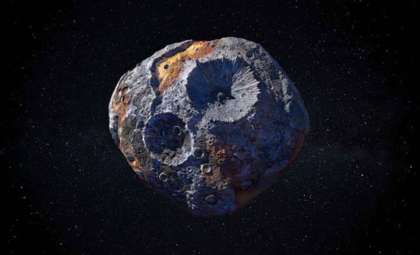
New research leveraging data from the James Webb Space Telescope (JWST) has revealed unexpected characteristics on asteroid 16 Psyche, previously assumed to be mainly a metallic core fragment of an early planetesimal. Evidence of hydration on its surface suggests a far more intricate formation history. These results illuminate the asteroid’s evolution and provide deeper insights into early solar system processes. The study, published on Arxiv, identifies hydroxyl groups on Psyche’s exterior—chemical markers often linked to rust. This discovery challenges previous notions, indicating Psyche is likely a hybrid of metal and silicate materials, potentially shaped by collisions with water-rich bodies. Ongoing investigations continue to refine our understanding of this enigmatic space object.
Detecting Water-Related Compounds on Psyche
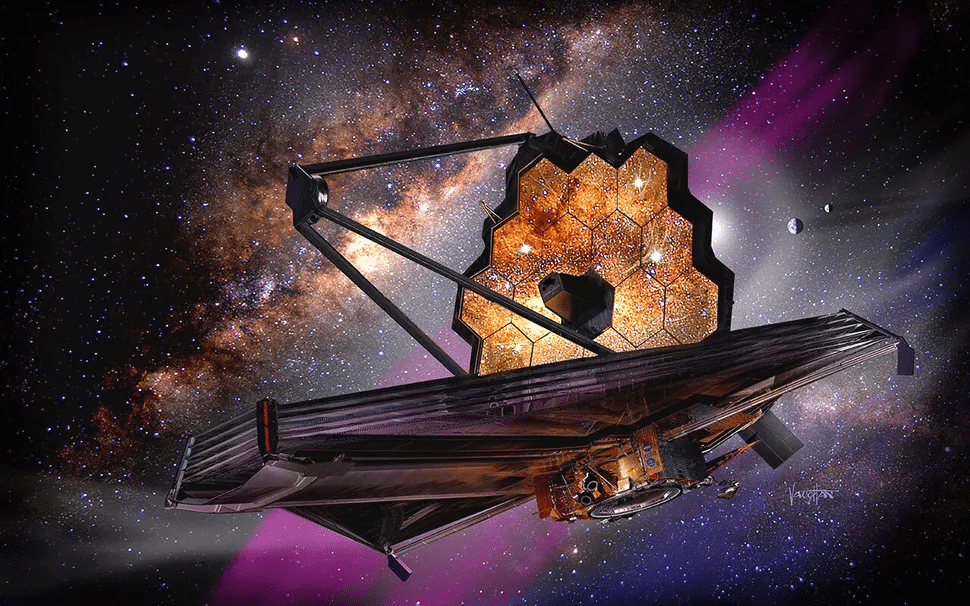
In March 2023, JWST’s infrared sensors, including the Near Infrared Spectrograph (NIRSpec) and Mid-Infrared Instrument (MIRI), targeted Psyche’s northern hemisphere. Analysis found evidence of hydroxyl groups, implying that water in the form of rust exists on the asteroid’s surface. NIRSpec confirmed the presence of these hydroxyl features, which are typically associated with hydrated minerals or water molecules. Stephanie Jarmak, a planetary expert at Harvard and the Smithsonian Center for Astrophysics, explained that although JWST has previously detected molecular water on the Moon, this represents the inaugural detection on an asteroid, marking a milestone in planetary science.
Despite NIRSpec’s positive findings, MIRI did not register a clear water signature at longer infrared wavelengths. However, Jarmak suggests that this could be due to water concentrations being too sparse for MIRI’s sensitivity. Examining Psyche’s southern pole in future studies may provide additional clarity on the distribution and abundance of hydrated materials on its surface.

Reevaluating Psyche’s Formation History
Situated in the main asteroid belt, Psyche stands out due to its remarkable size, spanning about 173 miles (280 kilometers) across. Early theories posited it as the exposed iron core of a primordial body shattered during violent solar system events. However, accumulating evidence now points towards a more nuanced composition than initially claimed.
The JWST findings reinforce the concept that Psyche’s make-up includes both metallic and silicate elements. The hydroxyl presence hints at surface hydration processes, possibly triggered by impacts with water-bearing asteroids. This phenomenon implies that Psyche underwent alteration events similar to those experienced by terrestrial planets, offering valuable clues on how such mixed-material asteroids evolved and contributed to the solar system’s architecture.
Next Steps in Unraveling Psyche’s Secrets
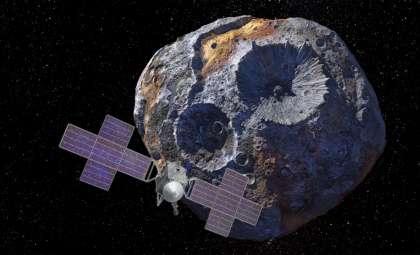
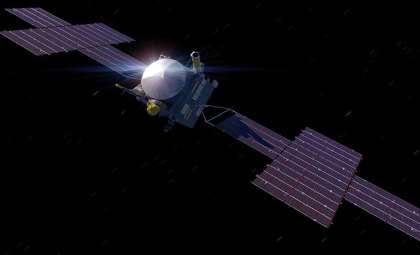
Detecting hydroxyl and rust-like signatures initiates a new phase in studying Psyche’s origins. NASA’s Psyche mission, launched in 2023, is scheduled to arrive at the asteroid by 2029, setting the stage for detailed investigations. Researchers are preparing targeted analyses to map hydrated metal locations across Psyche’s terrain. Jarmak emphasized that future efforts will focus on the south pole region, home to a significant crater that may have resulted from a collision with a hydrated impactor, helping clarify the asteroid’s surface evolution.
Psyche’s relative closeness to Earth and its atypical nature make it an intriguing subject for ongoing exploration. While immediate resource extraction is currently impractical owing to its distant orbit beyond Mars, a clearer understanding of its composition could inform the future of space mining. The presence of water-bearing minerals alongside metal could one day facilitate extraction strategies, though substantial challenges remain before such aspirations can be realized.
- Categories:
- News






0 comments
Sign in to Comment