
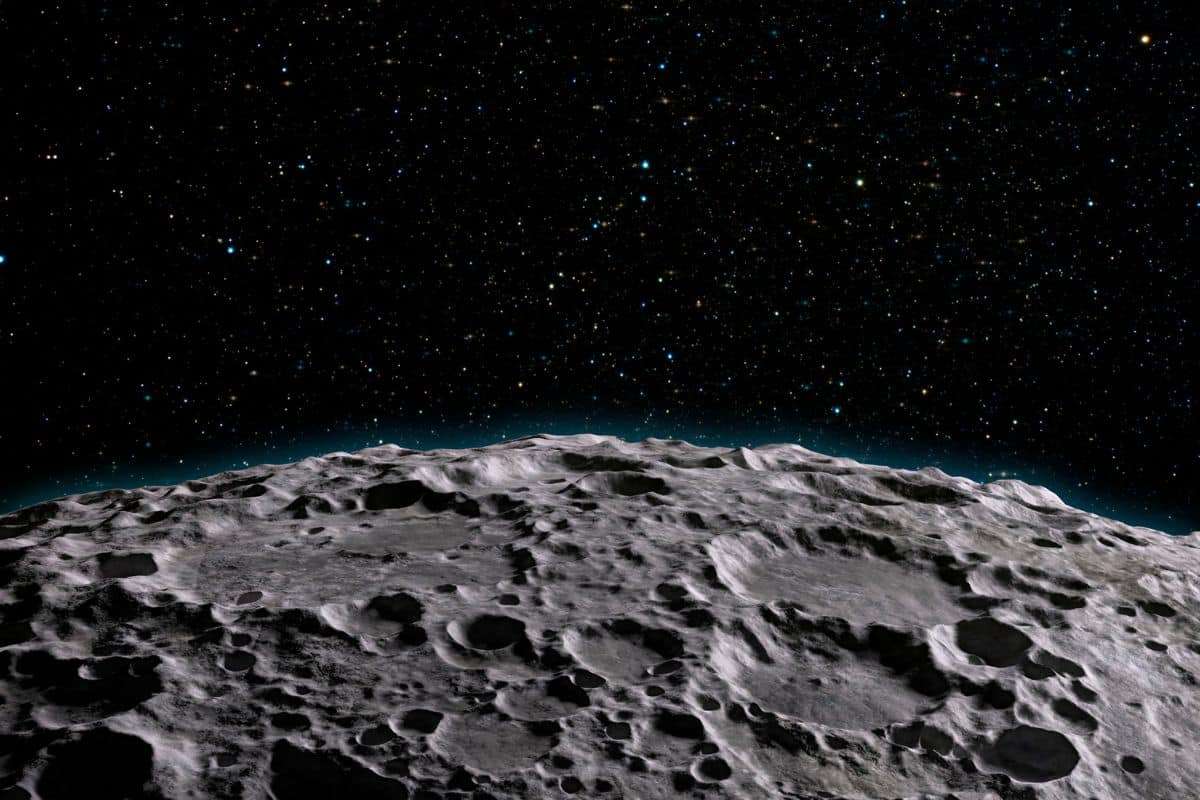
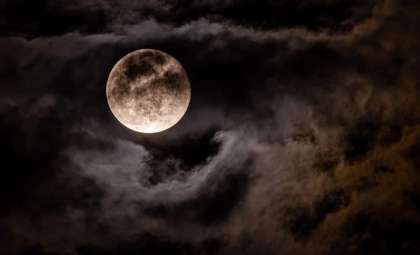
Kurdish astrophotographer Darya Kawa Mirza has set a new benchmark in lunar imaging by producing the sharpest and most detailed photograph of the Moon to date. By combining an astounding 81,000 individual frames into a single composite, Mirza achieved an impressive 159.7-megapixel image that uncovers surface features with extraordinary precision.
Four Days of Lunar Monitoring
Over a period of four days, Mirza meticulously observed the Moon, capturing images during optimal phases. His technique involved blending four distinct lunar phases to assemble a composite revealing the Moon’s terrain more comprehensively, including shadowed areas that are difficult to discern in conventional photos.
Mirza described his method as “merging 4 different moon phases and merging the shadow area, it reveals an interesting topography of Lunar surface.”

In a post on Instagram, he stressed that no AI technology was used during image processing. “This is what the moon looks like if it was a flat disk with mountains on it,” he explained.
Cutting-Edge Equipment Choices
Capturing such a remarkable image required specialized hardware. Mirza employed a Skywatcher Flextube 250p Dobson telescope mounted on an NEQ 6 Pro equatorial mount. He used a ZWO ASI 178mc camera to capture intricate lunar surface details, while a Canon EOS 1200D helped emphasize the Moon’s mineral diversity, linking the visual data to geological composition on the Moon’s surface.
Stacking those 81,000 images significantly reduced interference caused by Earth's atmosphere, a common obstacle in astrophotography. This stacking process enhances image sharpness and diminishes noise, enabling a level of detail seldom witnessed in lunar imagery, highlighting craters, ridges, and basins with remarkable clarity.
Color Adjustments Reveal Geological Features
An integral part of Mirza’s composite involved color enhancement techniques that bring out subtle mineral signatures on the lunar surface. These vivid colors, though not visible to the naked eye under natural conditions, help scientists and astronomy fans differentiate between elemental compositions of the Moon.
After Mirza’s image was shared, a lively discussion unfolded on Reddit regarding the authenticity of the colors. One commenter questioned if these hues accurately represent the Moon’s minerals, while another clarified that “the saturation has been increased to highlight geological differences on the lunar surface.”
They elaborated that “reddish regions indicate areas rich in iron and feldspar, whereas bluish tones suggest higher titanium content.”
Rather than seeing the coloration as “real or fake,” it should be regarded as an interpretative tool that simulates enhanced sensory perception of lunar soils.
Advancements in Moon Imaging
Mirza’s work demonstrates the potential of advanced astrophotography techniques available to passionate amateurs. His success shows that capturing breathtaking, ultra-high-resolution photos of celestial objects can be accomplished without relying on costly observatories or AI-assisted methods.
This endeavor underscores the continued relevance and innovation of manual photographic practices in an era increasingly dominated by automated processes and artificial intelligence.
- Categories:
- Space



0 comments
Sign in to Comment