
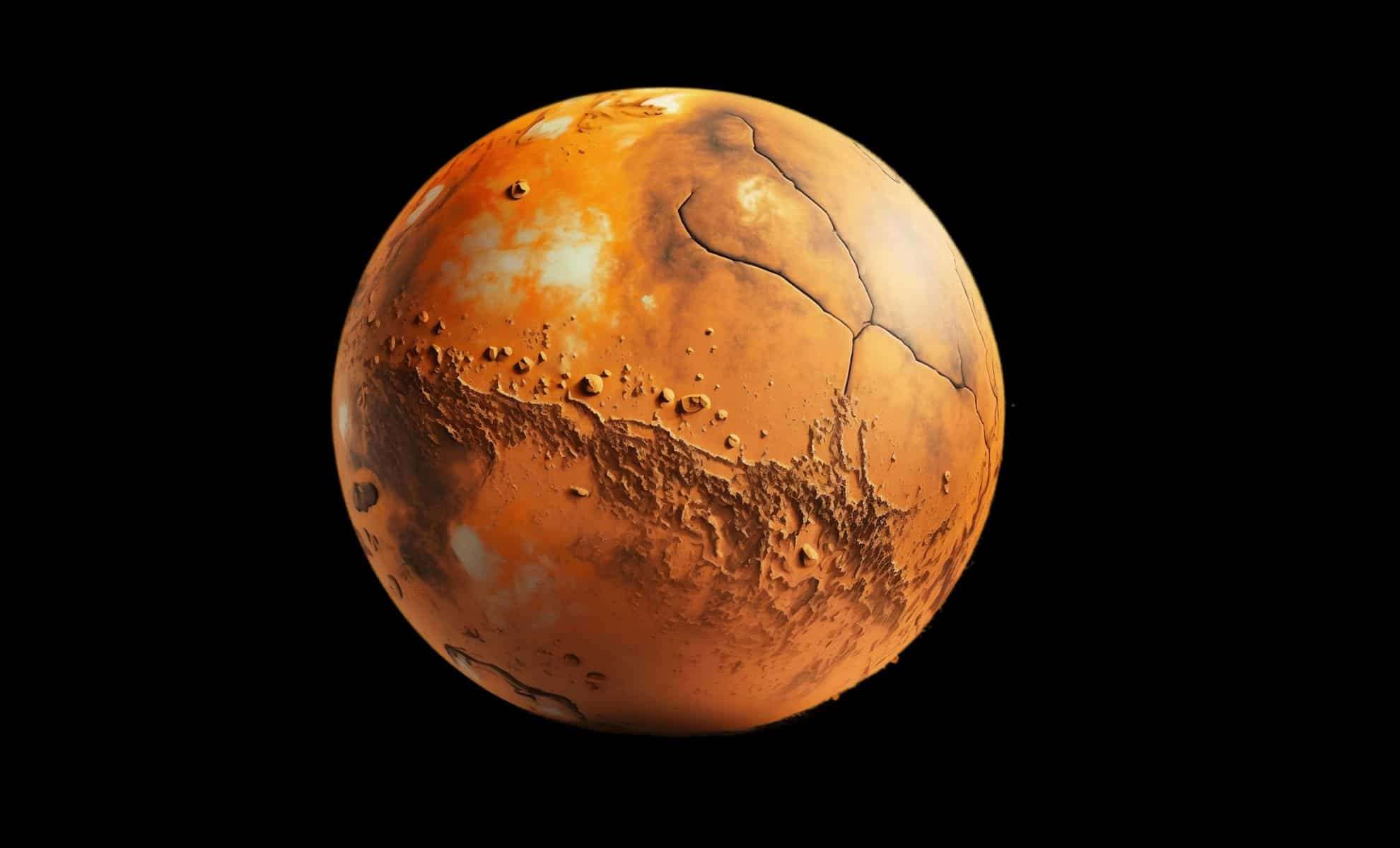
The latest research into Martian geology reveals compelling evidence of past subsurface water activity, hinting at the possibility that Mars once harbored microbial life. This investigation, spearheaded by scientists from the Queensland University of Technology (QUT), was published in Science Advances.
Dual Mineral Formations Reveal Mars’ Hydrated History
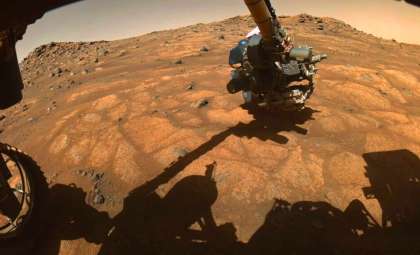
NASA's Perseverance rover, exploring the Jezero Crater since 2021, has provided more than geological samples—it’s illuminating the red planet's hidden narrative. Researchers led by Dr. Michael Jones at QUT identified two chemically distinct layers of calcium-sulfate minerals within the area known as the Shenandoah formation, marking a key discovery.
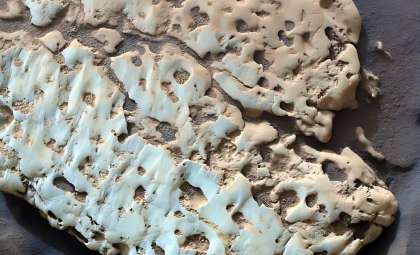
Located in both Hogwallow Flats and Yori Pass, these sulfate deposits are indicative of water presence during their formation. One set appears to have crystallized just beneath the planetary surface, while the other was formed at depths exceeding 80 meters. Such stratification hints that water existed over extended periods rather than isolated episodes.

Dr. Jones remarked, “The variety of depositional environments found in the Shenandoah formation suggests multiple phases when life could have thrived on Mars.”
An Innovative Technique in Martian Crystal Study
This discovery is notable not only for its findings but also due to the novel methodology. Conventional crystal analysis typically requires instruments unavailable on Mars.
To address this, the research team at QUT adapted X-ray Backscatter Diffraction Mapping (XBDM), a technology originally developed at the Australian Synchrotron, for use with the PIXL instrument on Perseverance. This instrument was initially designed by QUT alumna Abigail Allwood.
Utilizing this method enabled precise in situ measurements of the minerals’ internal crystal alignment, offering insights comparable to assessing tree ring patterns, thereby reconstructing the environmental conditions present during their formation.
Dr. Jones emphasized this breakthrough was once considered “unachievable on Mars’ surface.”
Window Into Ancient Martian Water Systems
The crystals emerged from the Shenandoah formation, believed to be remnants of an ancient lakebed and delta system. Since its arrival in February 2021, Perseverance has examined everything from volcanic basalt to water-formed layered sediments.
The discovery of these minerals strengthens the theory that Jezero Crater maintained a stable body of water in the past and bolsters the prospect that conditions suitable for microbial life once existed on Mars.
Impact on Astrobiology and Upcoming Mars Efforts
A key mission of Perseverance is to identify habitats and gather samples for eventual retrieval to Earth. Finding mineral deposits formed at multiple depths offers scientists well-defined timelines and target zones for future sample-return missions.
The QUT research group also contributes to the Planetary Surface Exploration Research Group, working alongside NASA and the Australian Space Agency. This collaboration is enhancing Australia’s role in space ventures, especially in robotics, automation, data analytics, and astrobiology.
Associate Professor David Flannery, involved in long-term planning for Perseverance, noted, “Experience gained by QUT scientists in these pioneering technologies could stimulate growth in Australia’s space sector.”
Necessity for Deeper Exploration and Advanced Technologies
This finding highlights the importance of deploying advanced drilling systems and sustaining extended surface exploration missions to delve deeper into Mars’ geological record.
Accessing strata tens of meters below the surface holds promise for uncovering more diverse and ancient evidence—possibly even traces of past life.
- Categories:
- Space







0 comments
Sign in to Comment