
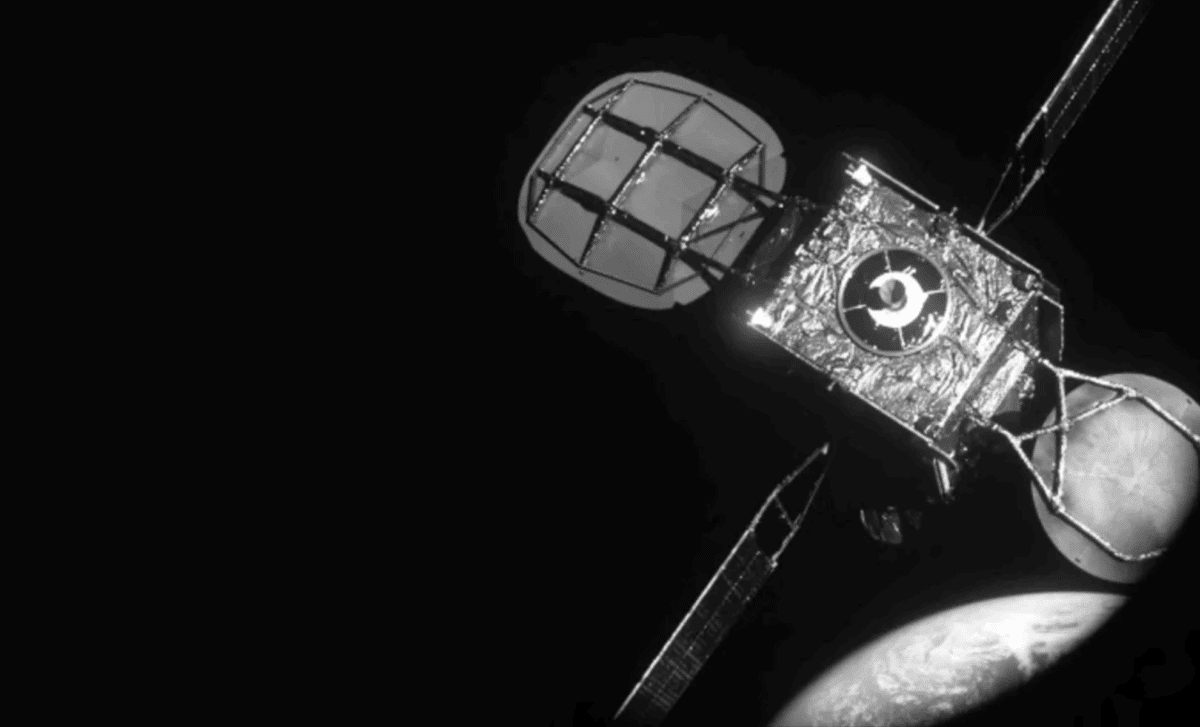
Amid growing concerns over space debris, one satellite has drawn attention due to its baffling orbital changes. Skynet-1A, launched in 1969 as a British military communications platform, had been inactive for decades. Yet recent observations reveal that its orbit has dramatically shifted. This puzzling development has left aerospace experts perplexed and is explored in a recent report by The Global Network on Sustainability in Space, which investigates the intriguing Skynet-1A phenomenon and its significance for space sustainability.
The Origins of Skynet-1A: A Milestone in UK Military Satellites
As one of the UK’s earliest military satellites, Skynet-1A was launched to ensure secure communications among British forces. Positioned in a geostationary orbit above East Africa, it served as a critical relay for military data. Unfortunately, hardware failures halted its operations within two years. Although officially retired, Skynet-1A remained in orbit, becoming part of Earth's growing collection of space debris.
For years, the satellite was essentially a silent presence—nonfunctional but unremoved. Its placement in the geostationary belt, where satellites maintain fixed positions relative to Earth's surface, should have made its trajectory predictable. However, over time, Skynet-1A started exhibiting irregular behavior, prompting unresolved questions about its movement.

Orbit Anomaly: Skynet-1A's Unexpected Position Change
The crux of the mystery centers on the satellite’s abnormal drift. Initially stationed near 40° East longitude, Skynet-1A’s orbit was expected to remain largely stable. Natural gravitational influences from celestial bodies like the Sun, Earth, and Moon typically produce only minor deviations. Satellite engineer Dr. Stuart Eves explains,
“If Skynet-1A had failed at its operational location of around 40 East, we would now expect it to be oscillating by +/- 35 degrees either side of 75 East.”
This suggests that, had it drifted naturally, the satellite would cover a wider section of the geostationary orbit range.
“Except that it isn’t,” Dr. Eves continues. “According to the UK Registry, Skynet-1A is currently sitting very close to the bottom of the other well at 105 West, oscillating by just a couple of degrees.”
This unexpected relocation near 36,000 kilometers (22,369 miles) above the Americas is highly unusual for an inactive satellite. The pressing question is: who altered its orbit, and for what reason?
Possible Movers: Investigating the Shift in Skynet-1A’s Orbit
Speculation surrounds the entity behind this orbital modification. The UK Registry, responsible for cataloging satellites, hasn’t provided clear insights. Yet Rachel Hill, a PhD candidate at University College London, suggests an intriguing hint. Although Skynet-1A was developed and partially managed by the UK, it also operated under joint British-American control.
“A Skynet team from Oakhanger would go to the USAF satellite facility in Sunnyvale (colloquially known as the Blue Cube) and operate Skynet during ‘Oakout,’” Hill explains. “This was when control was temporarily transferred to the US while Oakhanger was down for essential maintenance. Perhaps the move could have happened then?”
This control transfer presents compelling scenarios. If the maneuver occurred during a period of US command, was it accidental, intentional, or a consequence of routine operations? The motives and documentation, if any existed, appear to have been lost to time.
Consequences for Space Safety and Responsibility
Beyond the curious case, Skynet-1A’s orbit change raises profound issues concerning the sustainability of orbital environments. Geostationary zones are overcrowded with operational satellites, and any misplaced debris or inactive object can jeopardize critical space infrastructure. With Skynet-1A now near 105° West, it risks interfering with satellites occupying essential service slots.
The potential for collisions in these crowded orbits carries serious ramifications. Should an accident happen, legal questions about accountability would become complex. Would responsibility fall on the UK, the US, or both, given the shared operational history? The absence of transparency surrounding Skynet-1A’s movement adds an extra layer of difficulty in addressing liability in future disputes.
- Categories:
- News











0 comments
Sign in to Comment