
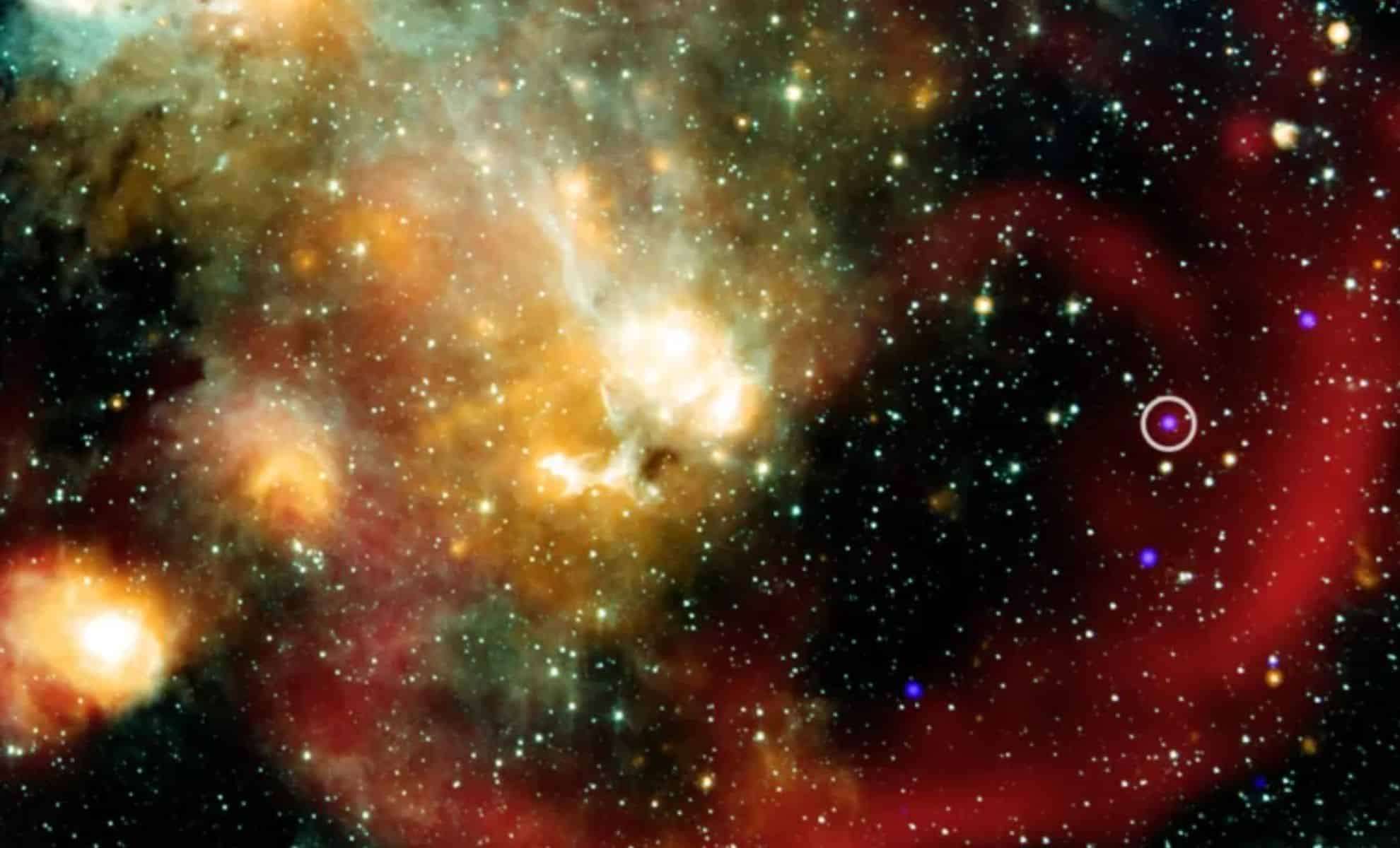
Astronomers have identified a remarkable star-like object named ASKAP J1832−0911 that defies conventional stellar models. Uniquely, it emits pulses in both radio waves and X-rays at a consistent 44-minute cycle.
A Rare Long-Period Pulsar With Unmatched Regularity
ASKAP J1832 is part of a recently discovered group known as long-period radio transients, first recognized in 2022. Unlike typical pulsars—which are rapidly spinning neutron stars flashing multiple times each second—this object’s pulses repeat every 44 minutes, showcasing an unusually slow but steady pace.
This synchronized emission in both radio and X-ray bands contradicts earlier assumptions about the behavior of long-period transient sources, making ASKAP J1832 a distinctive celestial phenomenon. “Their true nature and the mechanism behind their unusual signals remain unclear,” remarked Ziteng Wang, an astronomer at Curtin University in Australia.

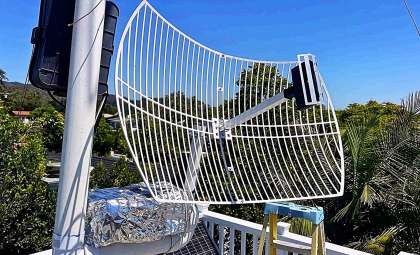
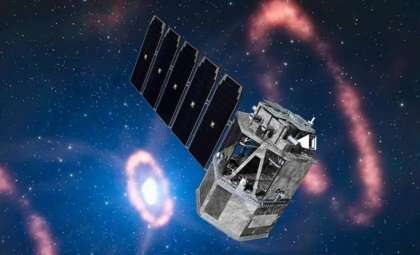
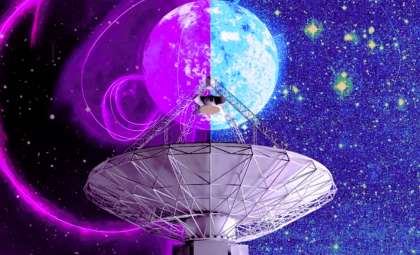
Scientists combined observations from NASA’s Chandra X-ray Observatory and the Square Kilometer Array Pathfinder (ASKAP) radio telescope located in Wajarri Country, Australia. These instruments allowed researchers to capture simultaneous X-ray signals matching the star’s radio rhythm—a first in astronomical studies.
Wang elaborated, “The X-ray signal was a fortunate discovery. Chandra was targeting a different object when it unexpectedly recorded this source during an exceptionally bright phase. Such fortunate timing is extraordinarily rare – akin to discovering a needle in a haystack.”
Does This Star Challenge Our Knowledge of Neutron Stars?
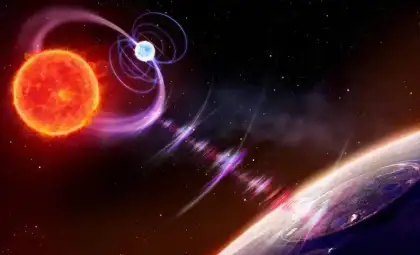
The dual emissions indicate ASKAP J1832 houses a highly potent and intricate magnetic field generating intense high-energy radiation in an unprecedented manner. A feature article by Tech Explorist highlighted a leading scientist’s description of this as “a singular cosmic marvel,” underscoring how these findings “challenge existing neutron star theories and suggest unexplored physics behind their emissions.”
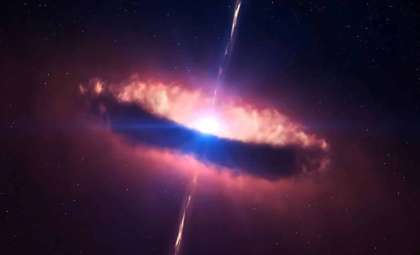
This astonishing discovery raises questions about the fundamental identity of ASKAP J1832. Some experts propose it may be a form of a magnetar—a neutron star with an extraordinary magnetic field—while others believe it might represent a novel category of stellar remnants entirely different from known neutron stars and pulsars.
Shedding New Light on Exotic Stellar Remnants
Future studies using even more powerful telescopes will delve deeper into the nature of ASKAP J1832 and objects like it. The star’s extraordinary and previously unknown emissions could reshape the scientific narrative on how stars evolve, release energy, and end their life cycles.
ANSAP J1832 remains an enigmatic beacon pulsing persistently across vast cosmic distances. As researchers probe further, this mysterious object paves the way toward groundbreaking insights in astrophysics and the lifecycle of stars.
- Categories:
- Space





0 comments
Sign in to Comment