
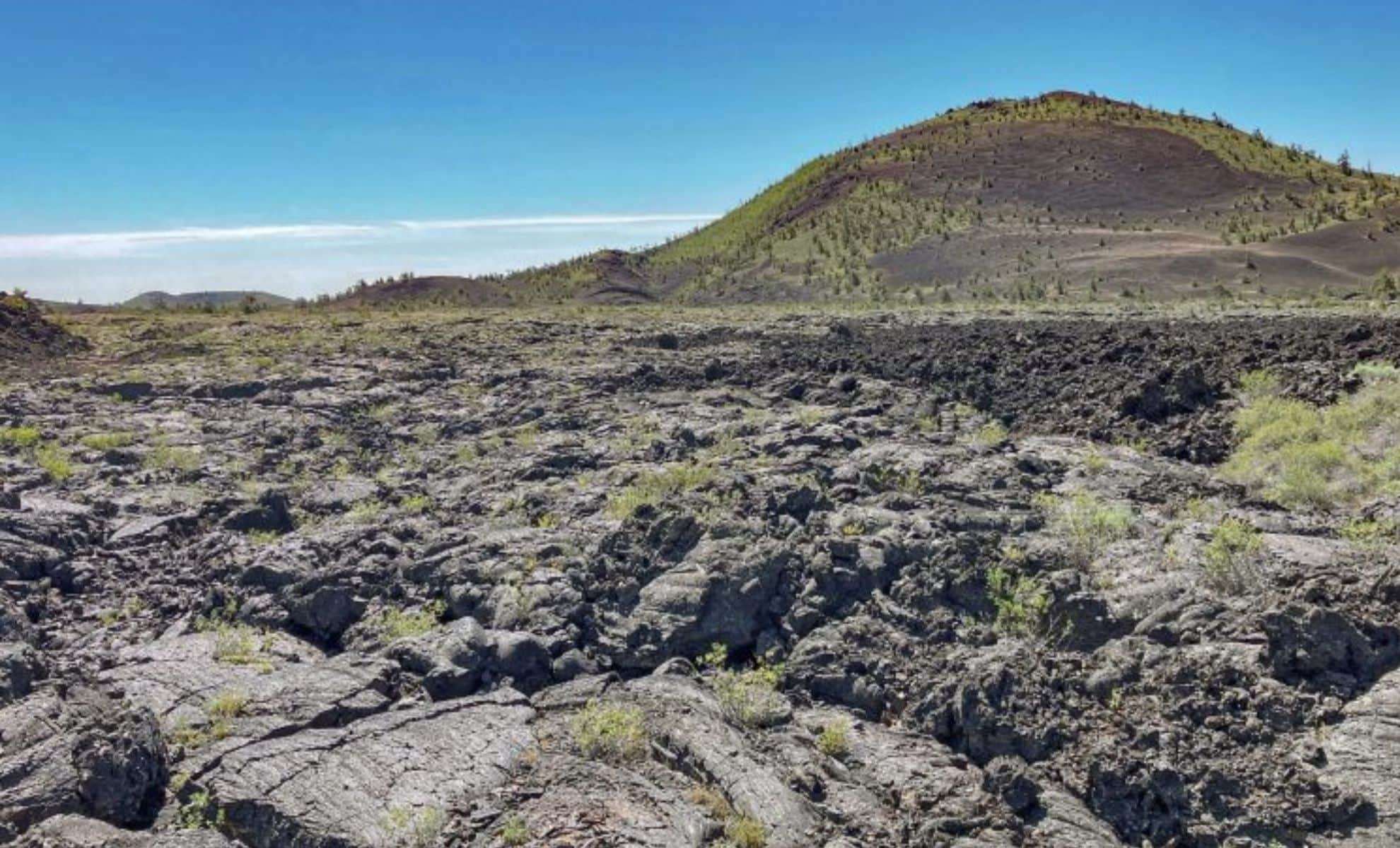
An insightful piece from SciTechDaily reveals how NASA’s Apollo crew honed their lunar exploration techniques within the volcanic landscapes of Craters of the Moon National Monument and Preserve in southern Idaho.
Prior to their historic lunar missions, astronauts developed crucial geological skills in a field resembling the Moon’s rugged features.
Idaho’s Volcanic Terrain as a Lunar Stand-In
The selection of Craters of the Moon as a preparation site was both intentional and essential.

The area’s volcanic landscape, showcasing lava tubes, basalt flows, and cinder cones, provided astronauts a near-lunar environment to develop familiarity with extraterrestrial terrain.
In 1969, astronauts Eugene Cernan and Joe Engle, alongside NASA geologist Ted Foss, undertook hands-on geological exercises at this rugged location.
Unlike the Moon’s ancient volcanic past, Idaho’s lava formations are comparatively young, dating back between 15,000 and 2,100 years. These volcanic features are situated along the extensive Great Rift, a fracture that extends over 50 miles (80 kilometers).
This strikingly fresh volcanic landscape offered a challenging yet accessible site to master crucial observation and sampling methods.
Despite the Moon’s craters being impact-shaped rather than volcanic, the similarity in surface textures made it an invaluable proxy for astronaut preparation.
Observing Seasonal Transitions from Space
Satellite data from the Operational Land Imager (OLI) on Landsat 8 and Landsat 9 show dramatic seasonal contrasts of Craters of the Moon.
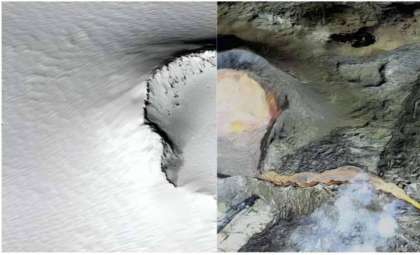
Images from July 2024 reveal the stark black lava fields, while January 2025 shots display snow-covered features like prominent cinder cones.
Although delicate features such as ropy pahoehoe lava flows and narrow lava tubes evade satellite detection, they remain key to understanding volcanic activity both on Earth and other worlds.
This ongoing monitoring supports the site’s continued importance for both historical study and future planetary mission preparation.
Survival of Life Amidst Volcanic Hardship
The initial colonization of fresh lava surfaces by lichens eventually gave way to more complex plants as soil formed in basalt cracks.
An intriguing characteristic of the monument is its kipukas—older landscape islands surrounded by newer lava flows.
These natural refuges, varying from small plots to vast expanses, harbor some of Idaho’s oldest juniper trees.
Human disturbances have altered larger kipukas, contrasting with the smaller, pristine ones.
Situated at about 6,000 feet (1,800 meters), the monument withstands harsh, frigid winters, showcasing the tenacity of its ecosystems. These insights enhance understanding of potential life survival strategies on Mars and beyond.
Relevance of Craters of the Moon for Upcoming Mars Expeditions
The use of Craters of the Moon extends far beyond the Apollo journeys.
Contemporary research highlights this area’s geological parallels with Mars, revealing diverse microbial life thriving inside its lava tubes.
Since Martian lava tubes offer protection from radiation and extreme temperatures, they are promising sites in the quest for alien life.
Studying Earth’s volcanic caves improves the design of instruments and mission plans aimed at discovering life elsewhere.
Earth’s Volcanic Fields Inspire Lunar and Mars Exploration
Craters of the Moon National Monument and Preserve is more than a geological wonder; it connects our planet with cosmic exploration.
It has been pivotal in prepping astronauts for lunar missions and now plays an instrumental role in shaping humanity’s plans for Mars habitation.
- Categories:
- News






0 comments
Sign in to Comment