
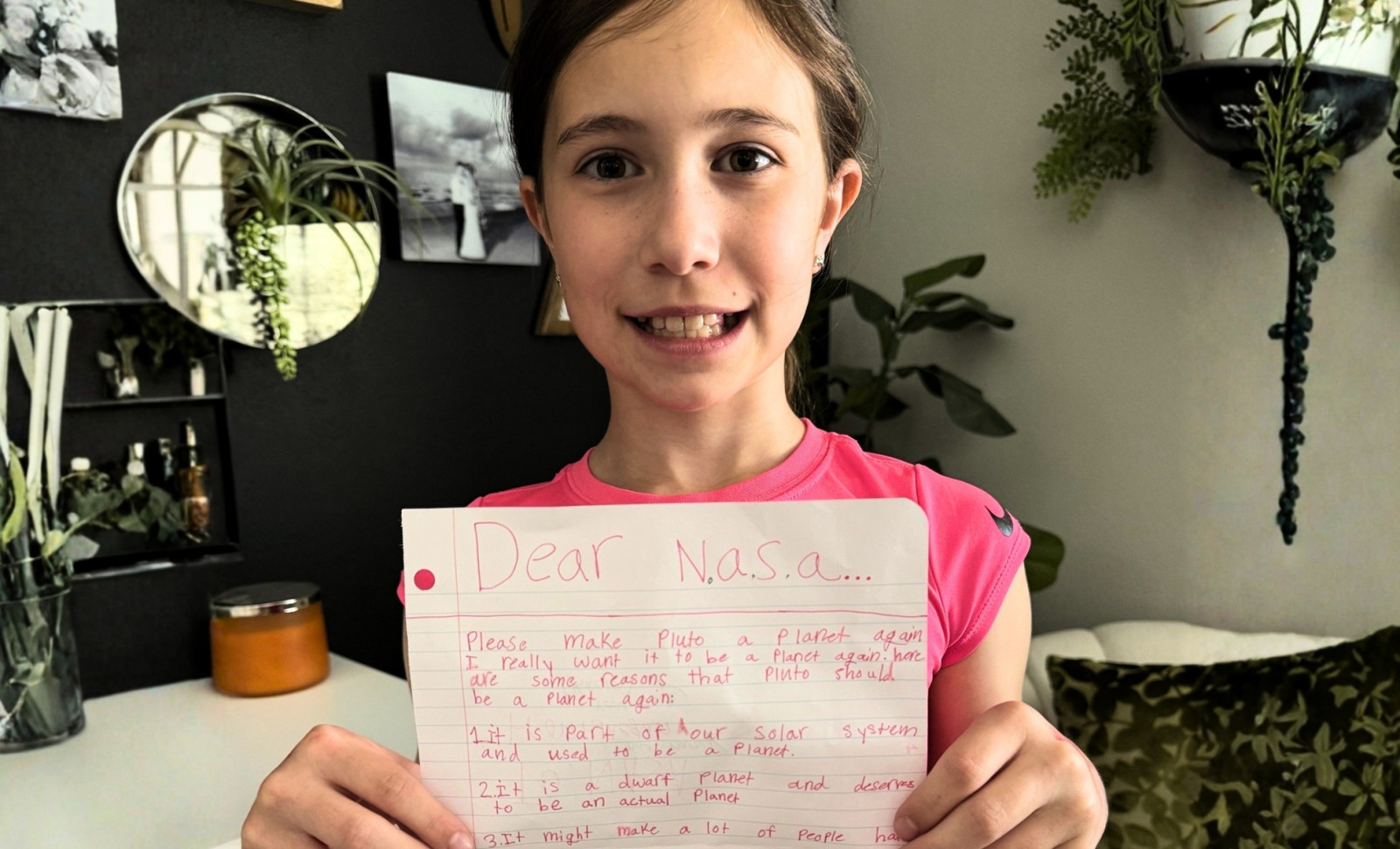
During a visit to Tampa’s Museum of Science and Innovation, Kaela Polkinghorn, a curious fourth grader, observed the sun surrounded by eight planets— noticeably missing was Pluto, which appeared isolated and left out of the cosmic lineup.
“It’s really tiny, but so adorable,” Kaela shared with Mashable. “Like a little newborn.”
That experience inspired Kaela to take decisive action. Alongside classmates including her friend Zoey Mead, she penned a heartfelt letter to NASA urging the agency to restore Pluto’s classification as a planet. Her mother, Brandy Polkinghorn, discovered the handwritten note and passed it along to Mike Boylan, a local Tampa weather broadcaster with a significant online presence. Boylan then shared the letter on X.


Shortly thereafter, NASA Administrator Jared Isaacman responded directly. "Kaela, we are looking into this," he wrote on April 9, coinciding with the return of the Artemis II mission from the moon. A NASA representative later affirmed Isaacman’s personal endorsement of reinstating Pluto’s planet status, a stance he had expressed weeks earlier in an interview with the Daily Mail.
However, the power to redefine Pluto’s planetary status lies with another organization. The International Astronomical Union (IAU), the authority in assigning names and classifications of celestial bodies, alone has the jurisdiction to reverse the 2006 decision designating Pluto as a dwarf planet. The IAU confirmed it has received no correspondence from NASA or Isaacman about reclassifying Pluto.
The Ongoing Debate Over Pluto’s 2006 Reclassification
In 2006, the IAU established three requirements for an object to be deemed a full-fledged planet: it must orbit the sun, be massive enough to form a nearly round shape, and clear its orbital path. While Pluto passes the first two tests, it falls short on the third because its orbit overlaps with many other icy objects in the Kuiper Belt.
This reclassification lowered the number of recognized planets from nine to eight, sparking decades of public debate. The state of Arizona, in particular, maintains a special connection to Pluto, as Clyde Tombaugh discovered it from the Lowell Observatory in Flagstaff in 1930. Reflecting ongoing local pride, Governor Katie Hobbs designated Pluto as Arizona’s official state planet in 2024.
Expert Insights on Pluto’s Planetary Status
Philip Metzger, a planetary physicist at the University of Central Florida, has explored planetary definitions in multiple studies. In 2019, he published research in the journal Icarus tracing asteroid classification history, noting that these bodies were once broadly classified as planets until geophysical distinctions prompted a reclassification in the mid-20th century—not because of orbital crowding.
Metzger’s 2022 follow-up study, also published in Icarus, argued that large moons demonstrate geological activity similar to that of planets, challenging existing classifications. He told Mashable that NASA’s position might influence a broader scientific rethink.
“Some researchers argue Pluto qualifies as a planet due to its active geology and complex surface, despite sharing its orbit with other icy bodies,” Metzger explained. “NASA’s involvement could be pivotal in shifting the consensus away from the IAU’s original definition.”
Discoveries from NASA’s New Horizons Mission
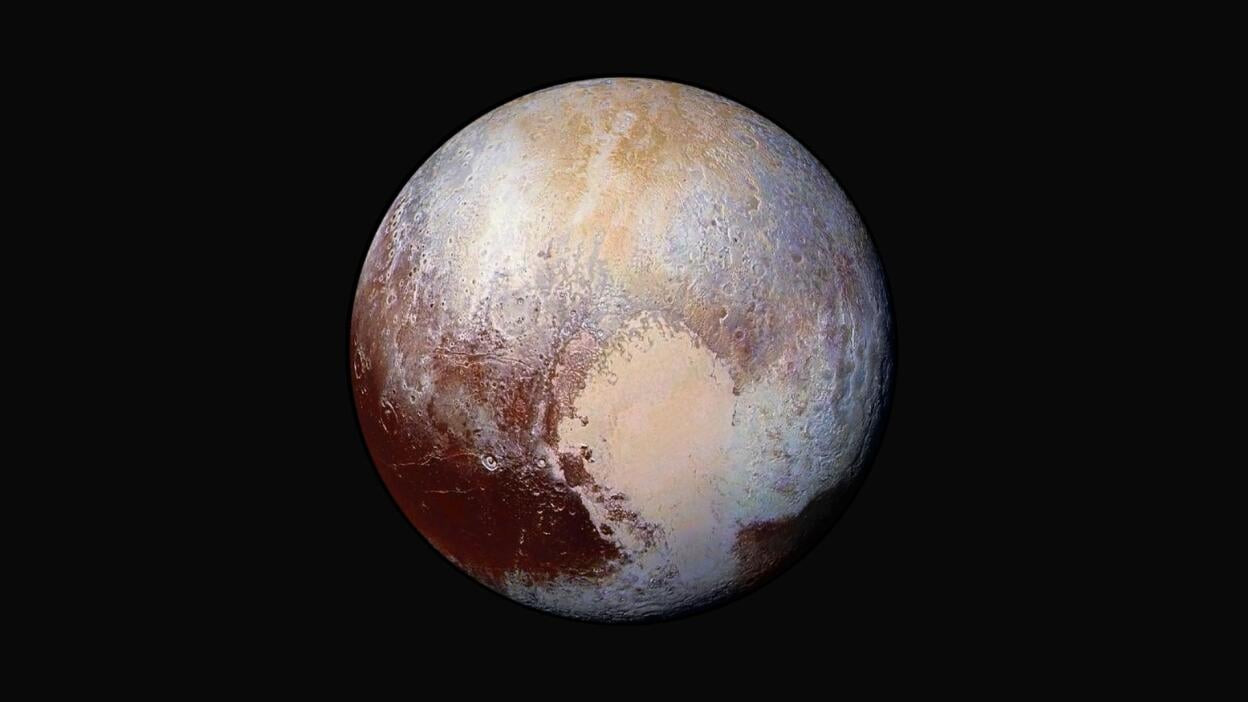
When NASA’s New Horizons probe passed Pluto in 2015, it captured images that revolutionized our comprehension of the distant dwarf. The spacecraft revealed a bright, heart-shaped surface feature, towering ice mountains, and signs of recent geological processes, supporting arguments that Pluto is more akin to a planet than a dormant space object.

Kaela pointed to the heart-shaped region as part of her fascination with Pluto. Her interest in space exploration runs deep in her family: her parents had their first date at the same Tampa museum in 2004, and the family often watches rocket launches nearby. Her younger brother Austin avidly follows Elon Musk’s space projects, while Kaela dreams of traveling to Pluto herself in the future.
The IAU emphasizes that although Pluto’s classification remains a sensitive topic, scientific categorizations rely on international consensus and empirical data. Modifications can occur if new evidence arises, but no single agency can unilaterally make such changes. Thanks to a thoughtful letter from one determined fourth grader, a long-standing solar system debate has reached the desk of the country’s highest-ranking space official.
- Categories:
- News











0 comments
Sign in to Comment