
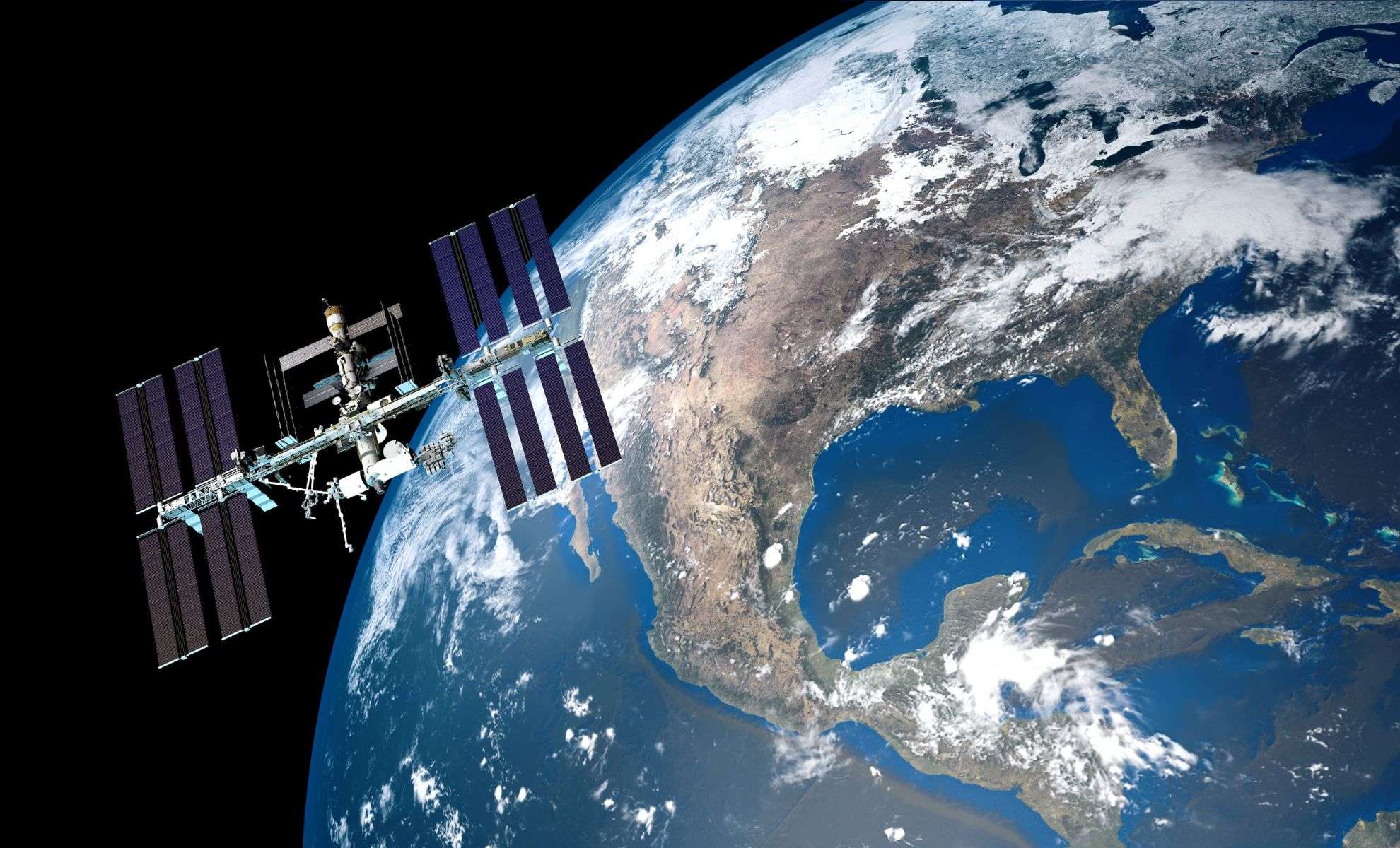
NASA and Axiom Space have indefinitely postponed the Axiom-4 mission to the International Space Station (ISS) due to concerns about an ongoing air leak in the Russian PrK vestibule within the aging Zvezda module. This delay underscores the complexities involved in sustaining the long-serving orbital outpost.
Challenges with Air Leak in the Zvezda Module
The Zvezda module, launched in July 2000 on a Russian Proton rocket, plays a critical role on the ISS. It operates as the control hub for Russian cosmonauts, containing essential living spaces, docking ports, and research labs.
Detected first in 2019, the leak’s steady air loss—approximately 1 to 2 pounds per day —has become a significant concern, attracting continuous scrutiny from engineers.

NASA and Roscosmos, the Russian space agency, continue collaborative discussions regarding the leak’s origin and associated risks. Despite multiple repair attempts by Russian engineers, the source of the air loss remains unidentified, prompting the postponement of the Axiom-4 launch to provide additional time for thorough evaluation.
Conflicting Theories on the Leak’s Cause
NASA's assessment of the air leak contrasts with that of Roscosmos. Bob Cabana, a former astronaut and NASA manager, highlighted a disagreement between the U.S. and Russian teams about the leak’s root cause. “The Russian position is that the most probable cause of the PrK cracks is high cyclic fatigue caused by micro vibrations,” Cabana stated. Conversely, NASA attributes the cracks to a mix of mechanical stress, material degradation, and environmental factors.
The different perspectives complicate joint decision-making. While Roscosmos insists the ISS remains safe to operate, NASA voices concern over the PrK’s long-term structural soundness and the risk of a possible failure.
Additional Time Allocated for Safety Evaluations
In line with NASA’s precautionary measures, a hatch separating the American and Russian sections of the ISS remains closed during operations when the PrK hatch is open. This protocol safeguards astronauts while investigations continue. Astronaut Mike Barratt said, “We’ve taken a very conservative approach to close a hatch between the US side and the Russian side during those time periods.” Though not optimal, this strategy balances safety concerns from both agencies.
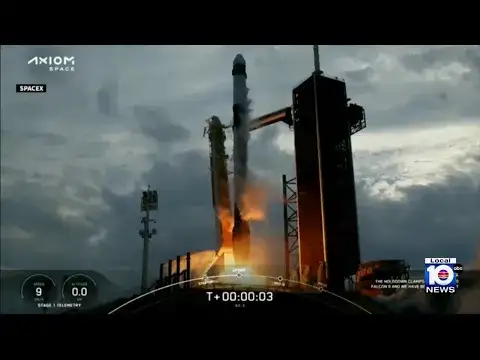
The rescheduling of the Axiom-4 flight, which was to ferry crew members to the station, grants NASA and Roscosmos vital extra time to analyze the leak's impact and decide on potential fixes. This is critical as the Zvezda module ages, showing increased signs of strain from constant pressure and mechanical fatigue.
Being one of the ISS’s oldest components, the Zvezda module’s aging is becoming an increasing operational challenge, despite its continued functionality.
- Categories:
- News




0 comments
Sign in to Comment