
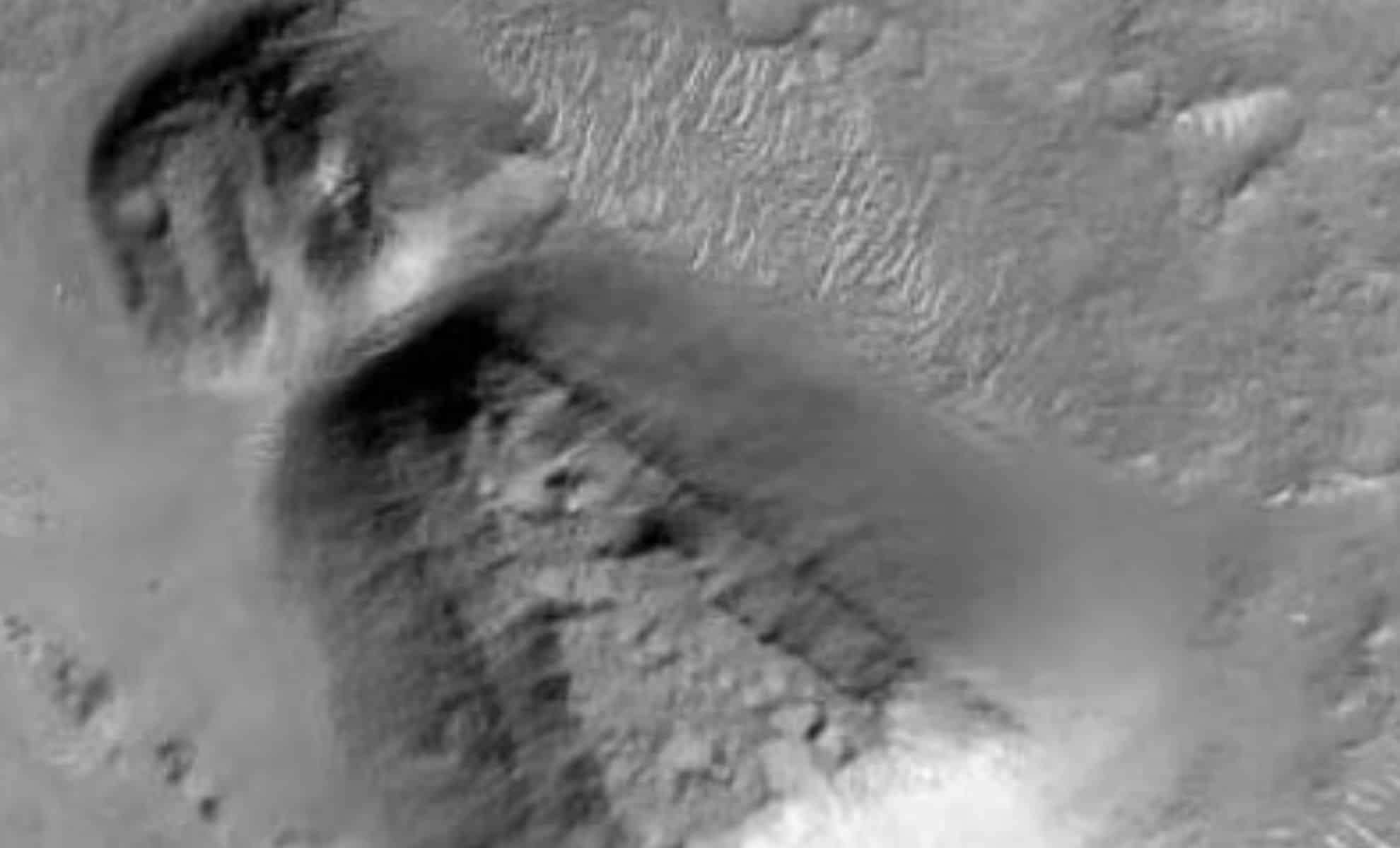
NASA’s Mars Reconnaissance Orbiter (MRO) has recently transmitted images showcasing enigmatic formations on Mars, igniting intense discussion among scientists regarding the possibility that these shapes may indicate past life on the planet. George J. Haas, a leading researcher at the Cydonia Institute, suggests that some of these features—including pyramid-like geometrical forms, a unique keyhole shape, and an impressive parrot-shaped geoglyph—might be relics of a bygone alien civilization.
In his book The Great Architects of Mars, Haas presents an in-depth review of numerous NASA images. He argues that these structures are too precise and orderly to have arisen without intelligent intervention. Drawing upon over three decades of investigation, Haas proposes that these geometric patterns point to intelligent origins, suggesting Mars once harbored an advanced civilization.
Keyhole Formation: Possible Indication of Extraterrestrial Intelligence
A particularly fascinating feature is the keyhole-shaped structure located in Mars’ Libya Montes highlands. This elevated formation combines a wedge-like segment with an adjoining circular dome, which Haas contends closely resembles a keyhole—an architectural form commonly seen in Earth’s human-made structures. A comprehensive study published by Haas and his team in the Journal of Space Exploration supports the view that this geometric precision hints at deliberate construction.

“The conjoined wedge and dome configuration is conventionally recognized as a keyhole,” Haas remarked. “Ignoring this possibility leaves no satisfactory natural explanation for the formation.” He emphasizes that while natural geological activity can produce some asymmetrical shapes, the symmetrical exactness of this keyhole formation far exceeds what chance would allow. “The existence of two geometrically complementary shapes strongly suggests purposeful design,” he stated.
The Parrot Geoglyph: Martian Art or Coincidence?
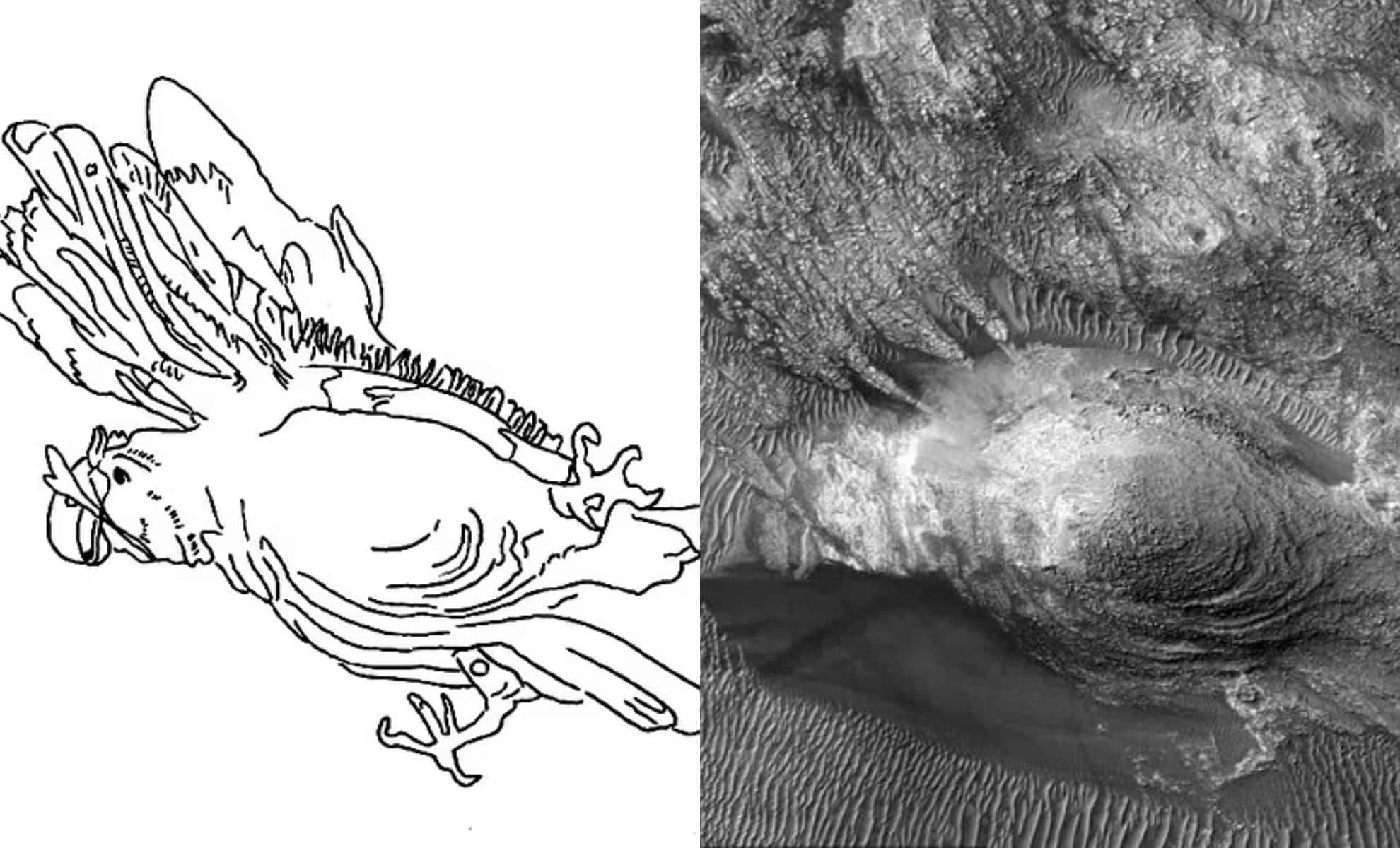
Equally captivating is the parrot geoglyph discovered in the Argyre Basin. First noted by Wilmer Faust in 2002, this feature has been further analyzed by Haas’ group, who identify it as a remarkably accurate parrot depiction. They highlight 22 distinct anatomical traits—including eyes, wings, and feet—that imply this figure was sculpted intentionally.
“Typical cloud formations are mere outlines, lacking intricate details such as eyes, irises, eyelids, or eyebrows,” Haas explained. “[But] the parrot image possesses these secondary and tertiary traits.” Haas insists that this geoglyph transcends random patterning, qualifying as a genuine artistic creation. Supporting this claim, five veterinarians, including an expert in avian biology, have affirmed the anatomical fidelity of the Martian figure.
Scientific Doubts and The Role of Pareidolia
Despite Haas’ compelling evidence, numerous scientists caution that these formations may reflect pareidolia—a psychological tendency to perceive familiar shapes in random objects. Robin Kramer, a senior psychology lecturer at the University of Lincoln, explains, “Our brains sometimes detect faces in unrelated items, such as charred toast or car fronts.” This effect, called face pareidolia, causes people to interpret ambiguous visuals as meaningful patterns like faces or objects.
Nevertheless, Haas remains steadfast, arguing that the intricate details and structural order found in these Martian features dismiss random chance. He anticipates that ongoing exploration and imaging will further clarify whether these enigmatic shapes provide conclusive proof of past intelligent life on Mars.
- Categories:
- News





0 comments
Sign in to Comment