
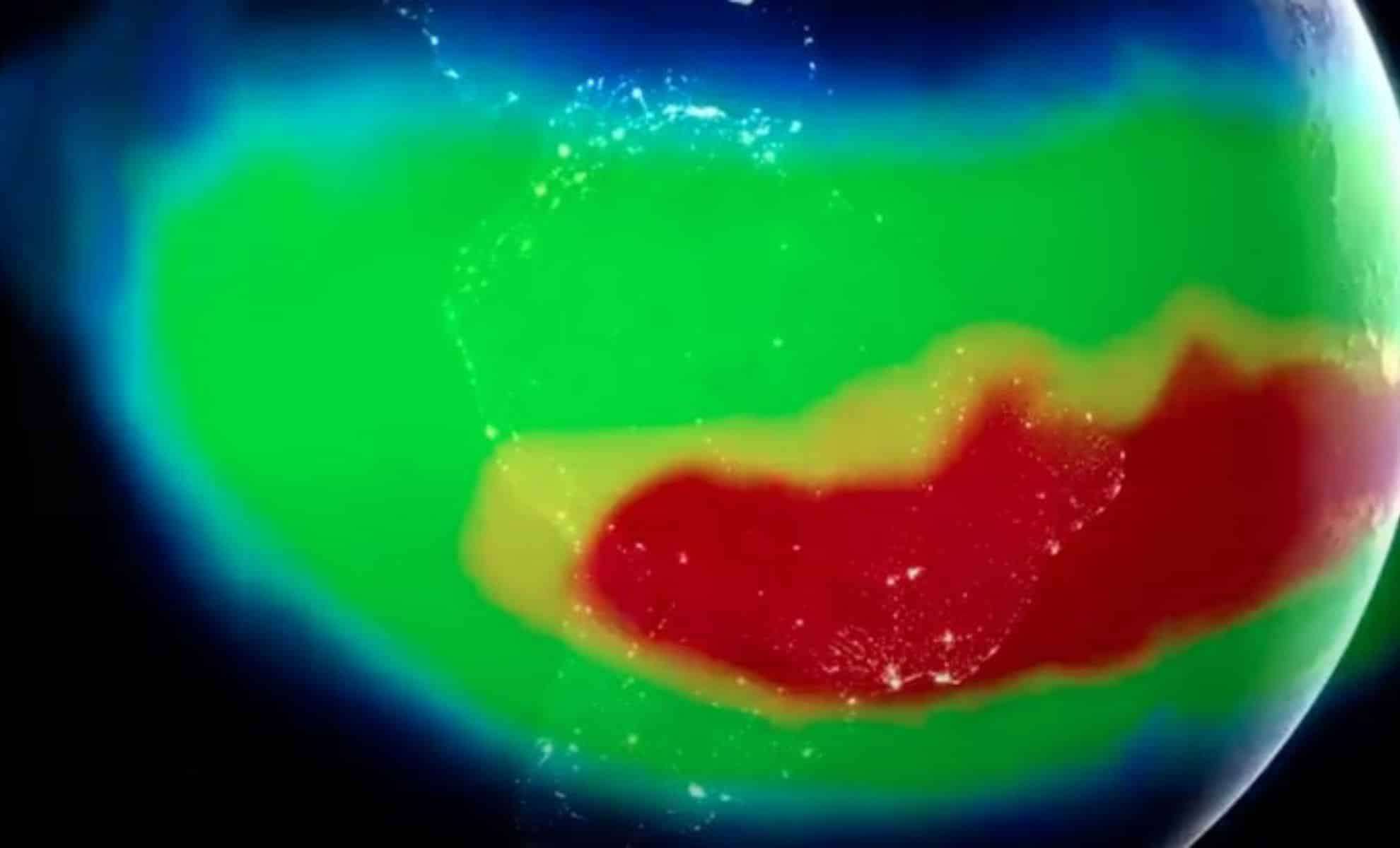
NASA is dedicating extensive research to the South Atlantic Anomaly (SAA), a vast zone where Earth's magnetic protection weakens dramatically, stretching from South America toward southwest Africa. This enigmatic feature has intrigued scientists for years because of the challenges it presents to satellites and space missions. While terrestrial life remains unaffected at present, the SAA threatens the reliability and safety of spacecraft passing through this vulnerable region of our planet’s magnetic field.
Beyond posing technological difficulties, the anomaly offers scientists a rare glimpse into the deep interior forces of Earth’s molten core, helping to unravel how these dynamics influence the magnetic shield—an essential barrier against hazardous solar radiation.
Understanding the South Atlantic Anomaly
The South Atlantic Anomaly is best described as a dip in Earth’s magnetic field strength, where magnetic protection is considerably diminished compared to adjacent areas. This weakening exposes orbiting satellites and spacecraft to a heightened influx of charged particles from the Sun. Systems navigating this zone risk hardware malfunctions, corrupted data, and potential long-term damage to delicate electronics.

To mitigate risks, missions aboard spacecraft such as the International Space Station often power down non-critical equipment while traversing the anomaly. Despite such precautions, the anomaly's increasing severity remains a serious concern for mission planners and scientists alike.
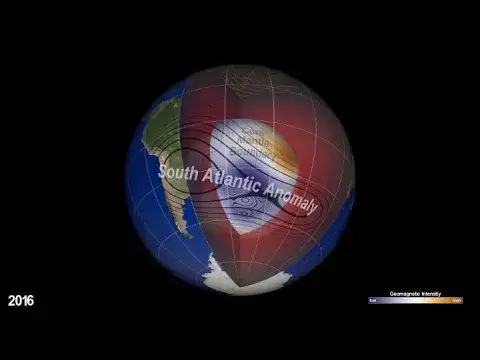
The root cause lies deep beneath Earth’s surface. NASA geophysicist Terry Sabaka explains, “The magnetic field results from the superposition of influences from multiple current sources.” Central to the anomaly is the motion of molten iron in Earth’s outer core, which not only generates the magnetic field but also creates irregularities like the SAA.
Origins of the Anomaly
The SAA arises from the complex behaviors of molten iron flows in Earth’s core, particularly the uneven patterns producing magnetic fluctuations. Researchers have pinpointed a substantial subterranean formation beneath Africa, known as the African Large Low Shear Velocity Province, which plays a pivotal role in disrupting the magnetic field's uniformity, causing localized weakness characteristic of the anomaly.
Weijia Kuang, a mathematician and geophysicist at NASA Goddard, elaborates: “The SAA’s emergence can be attributed to a decline in the dipole field’s dominance in this sector. Specifically, a strongly intensified reversed polarity field develops within the anomaly, lowering the magnetic intensity below neighboring regions.”
These magnetic disturbances, combined with the tilt of Earth’s magnetic axis, contribute to the anomaly’s gradual westward drift.
Changes in the Anomaly’s Structure
A particularly concerning aspect of the SAA is its dynamic nature. Current observations show the anomaly is not only growing in size but also dividing into two separate areas. This splitting adds complexity to a phenomenon already challenging to understand as researchers work to decode the driving forces behind these transformations.
“Although the SAA evolves slowly, its shape and characteristics are changing, making long-term observation essential,” Sabaka stated. “Continuous monitoring enables us to refine our models and improve predictive capabilities.”
NASA relies on a fleet of satellites, CubeSats, and specialized instruments to closely track the anomaly’s development and shifting contours over time.
Consequences for Technology and Planetary Science
While the most immediate effects of the SAA relate to the performance of satellites and spacecraft, the anomaly could also signal broader changes within Earth’s magnetic system. Researchers are exploring whether it might be an early indicator of a future magnetic pole reversal—an event that historically occurs every several hundred thousand years with far-reaching impacts on navigation, communication, and radiation exposure levels.
At present, technological challenges dominate concerns. The main risks associated with the SAA include:
- Satellite Malfunctions: Solar particle exposure can cause disruptions, data loss, or system failures onboard satellites.
- Damage to Spacecraft: Sensitive instruments are vulnerable to permanent harm while passing through the weakened magnetic zone.
- Increased Operational Costs: Protective strategies and risk mitigation drive up the expenses of missions traversing the SAA.
Importance of Ongoing Observation
The South Atlantic Anomaly presents scientists with a dual scenario: it threatens space-borne technology yet simultaneously offers a valuable window into Earth’s magnetic characteristics and inner core processes. By advancing our understanding through continuous monitoring, researchers aim to build better forecasting models and grasp the wider implications of this magnetic anomaly.
NASA’s broad scientific initiatives and observational assets play a crucial role in safeguarding satellites and enhancing foundational knowledge about the behavior of Earth’s deep interior.
- Categories:
- News









0 comments
Sign in to Comment