
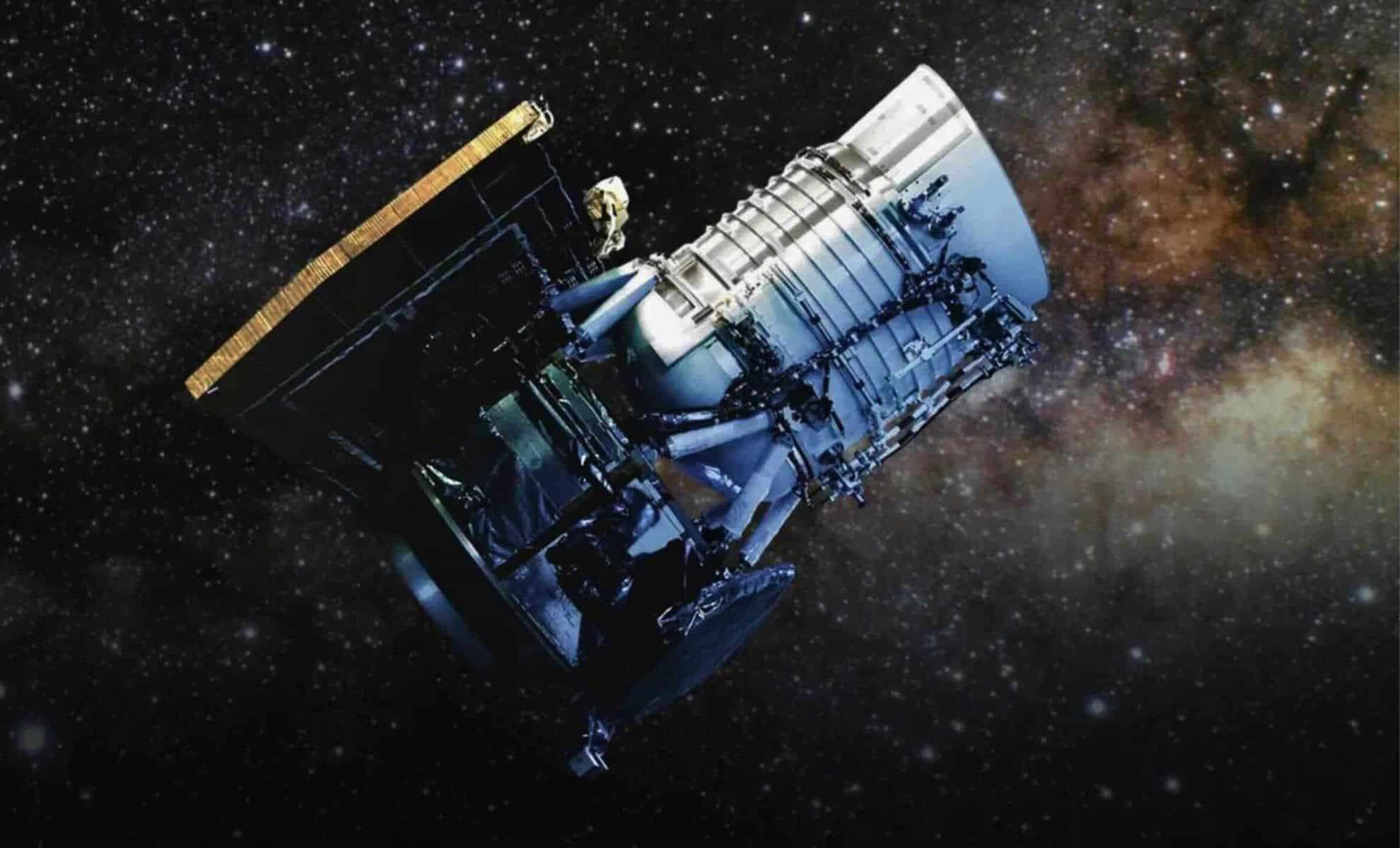
Launched in 2011, NASA’s NEOWISE mission has officially ceased operations after detecting over 3,000 near-Earth objects (NEOs), including asteroids and comets with potential impact hazards. This milestone marked its conclusion on August 8, a key moment in planetary defense efforts.
Monitoring NEOs is crucial for planetary defense, aimed at assessing and mitigating the dangers posed by large space objects that could threaten Earth.
Throughout its operation, NEOWISE contributed invaluable data that enhanced our understanding of these objects, discovering more than 200 previously unknown NEOs and expanding our catalog significantly.

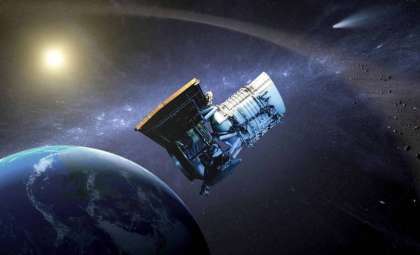
Now defunct, NEOWISE is expected to re-enter Earth’s atmosphere before the year ends, raising important questions about the strategies that will safeguard our planet moving forward.
From Galactic Infrared Survey to Protecting Earth
Originally launched as the Wide-field Infrared Survey Explorer (WISE), the mission’s initial goal was to study infrared light emitted by distant galaxies. Infrared lies just beyond visible light and reveals heat signatures from various sources like the Sun.
Once WISE’s coolant was depleted, NASA repurposed the spacecraft to detect NEOs, using its infrared sensitivity to spot asteroids and comets flying near Earth and the Sun.
This shift highlights NASA’s ability to extend mission lifespans by adapting equipment for new, vital roles, turning WISE into NEOWISE—a powerful planetary defense tool.
Advancing Earth’s Protection Measures
NEOWISE’s pioneering work paved the way for NASA’s upcoming NEO Surveyor mission, scheduled to launch in 2027. The new mission aims to identify about two-thirds of NEOs larger than 140 meters within a five-year timeframe.
This aligns with a U.S. congressional mandate that requires NASA to find 90% of such objects due to their potential to cause massive damage if they strike populated areas.
Although the retirement of NEOWISE may seem abrupt in light of NEO Surveyor’s impending deployment, the overall risk of a catastrophic asteroid impact remains very low, with large impacts occurring roughly once every 20,000 years.
Given that only about 3 percent of Earth’s surface is urbanized, the likelihood of a major hit over a populated area during any short period remains minimal.
The decision to retire NEOWISE was driven mainly by increased solar activity, which thickens Earth’s upper atmosphere, causing greater drag and making it difficult for the satellite to maintain its orbit.
Bridging the Gap with NEO Surveyor
By 2023, NEO Surveyor was under construction and fast-tracked to ensure continuous monitoring of near-Earth objects as NEOWISE phases out.
At the time of its atmospheric re-entry, NEOWISE will weigh nearly 700 kilograms, with some debris expected to reach the ground. Efforts hope to minimize risk by ensuring any remnants fall in sparsely inhabited areas, although past re-entries have occasionally scattered fragments near inhabited regions.
- Categories:
- Astronomy ,
- Space ,
- Nasa







0 comments
Sign in to Comment