

NASA’s CubeSat Radio Interferometry Experiment (CURIE) is slated for launch on July 9, 2024, with a mission to explore the sources of solar radio emissions.
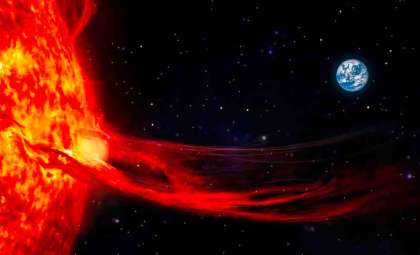
This endeavor aims to deepen scientific knowledge of solar activity and its effects on space weather, marking a major advancement in the study of solar radio waves and pinpointing their origins within coronal mass ejections (CMEs).
Revealing the Sources of Solar Radio Emissions
For many years, researchers have detected radio waves arising from the sun, associated with solar flares and CMEs, yet the exact source locations within these ejections have remained elusive. CURIE seeks to solve this through an unprecedented application of low-frequency radio interferometry in space.

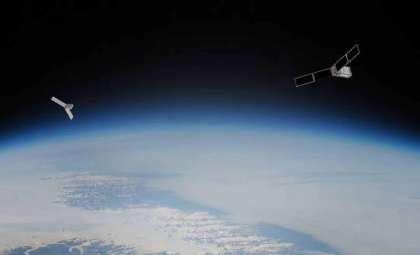
This technique involves deploying two compact satellites, each about the size of a shoebox, orbiting Earth approximately two miles apart. This formation enables the measurement of subtle differences in radio wave arrival times, allowing precise localization of their origins.
David Sundkvist, Principal Investigator from the University of California, Berkeley, called CURIE “a groundbreaking mission,” adding, “This marks the first controlled radio interferometer flown in space, pioneering new frontiers in radio astronomy.”

Data from CURIE will be vital in understanding the mechanisms behind radio waves emitted during CMEs, enhancing forecasts of space weather that can affect satellite operations and terrestrial technologies.
Cutting-Edge Technology and Mission Overview
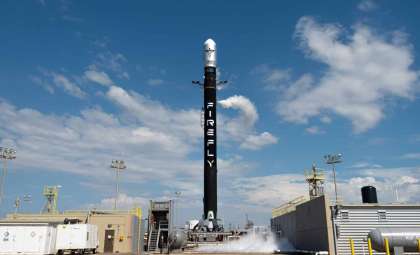
CURIE utilizes low-frequency radio interferometry to detect radio waves spanning 0.1 to 19 megahertz, frequencies that Earth's atmosphere blocks, making space-based observation indispensable. Created by a UC Berkeley team, the twin satellites will launch aboard an ESA Ariane 6 rocket from the Guiana Space Center in French Guiana.
Placed 579 kilometers above Earth, the spacecraft will establish contact with Earth, align themselves, and then separate. Their paired eight-foot antennas will deploy to start capturing solar radio emissions. Sundkvist explained, “This setup will allow CURIE to detect tiny differences in the timing of radio wave arrivals, enabling pinpoint accuracy in identifying their sources.”
Performing such high-precision measurements from orbit is a significant milestone in solar observation. The long development and innovative mission design of CURIE promises to open new windows into understanding solar radio emissions beyond atmospheric interference.
CURIE's Impact on Upcoming Solar Missions
CURIE is the lone payload on NASA’s CubeSat Launch Initiative’s ELaNa 43 mission, serving as a pioneer for the use of radio interferometry with CubeSat technology. The mission lays the foundation for the Sun Radio Interferometer Space Experiment (SunRISE), which will deploy six CubeSats to map solar radio wave origins in two dimensions. CURIE's success will offer critical proof-of-concept and data guiding future mission strategies.
CURIE represents a vital leap forward in solar research and space weather study. By precisely locating solar radio wave sources, it will inform us more about the behavior of the sun and its influence on Earth’s space environment.
This insight is essential in developing effective ways to safeguard technologies susceptible to space weather disturbances. Sundkvist emphasized the wider significance, stating, “Understanding their atmospheric composition will help us answer that question. We want to know how these kinds of planets got there.”
As the CURIE mission advances, it is expected to deliver critical findings that will inform and shape future solar observation efforts and deepen our understanding of the sun’s role within the solar system.
- Categories:
- Astronomy ,
- News ,
- Space ,
- Nasa




0 comments
Sign in to Comment