

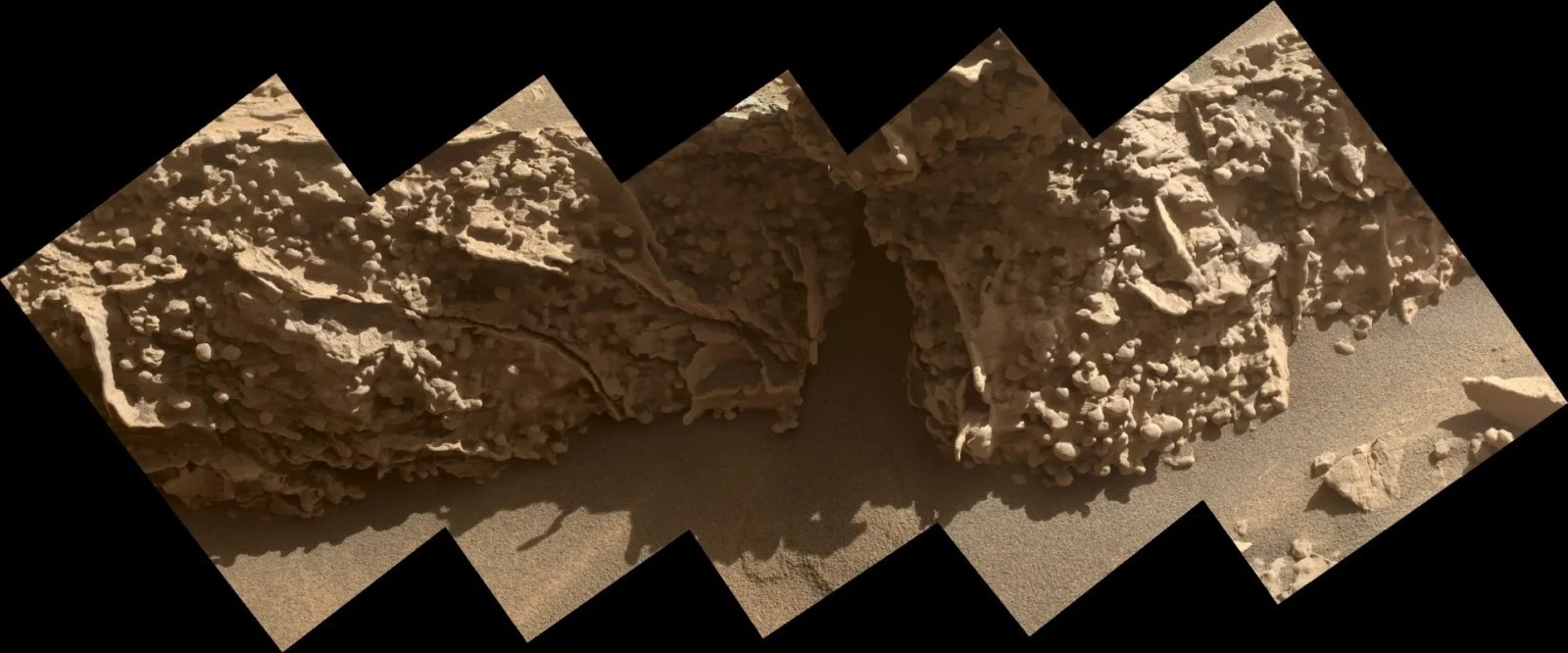
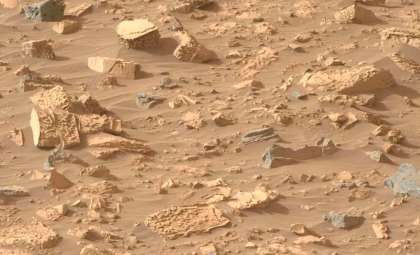
NASA’s Curiosity rover has discovered remarkable geological structures on Mars that resemble vast spiderweb patterns, called boxwork ridges, spanning the planet’s surface. Over the last six months, Curiosity has been examining this area closely, providing insights that challenge our understanding of Mars’ potential habitability millions of years ago, before it transformed into the arid planet we know today.
These boxwork ridges, with heights between three and six feet, are more than just unusual formations. They offer valuable evidence regarding Mars' historical water activity. The findings arrive as researchers seek to reconstruct Mars' watery past and explore its implications for microbial life and environmental conditions.
Insights From the Ridges
Curiosity’s primary objective centers on resolving a critical question: Did liquid water once flow on Mars in a way that could have supported life? NASA reports that Curiosity has been studying a section of Mount Sharp exhibiting these boxwork structures, with data offering surprising revelations regarding this inquiry.

“The formations suggest ancient groundwater flowed on this part of the Red Planet later than scientists expected. This possibility raises new questions about how long microbial life could have survived on Mars billions of years ago.”
Curiosity’s in-depth examination of these ridges has delivered crucial new evidence.
“Seeing boxwork this far up the mountain suggests the groundwater table had to be pretty high,” said Tina Seeger, one of the lead researchers on the project. “And that means the water needed for sustaining life could have lasted much longer than we thought looking from orbit.”
Rover’s Challenge: Maneuvering Narrow Rock Formations
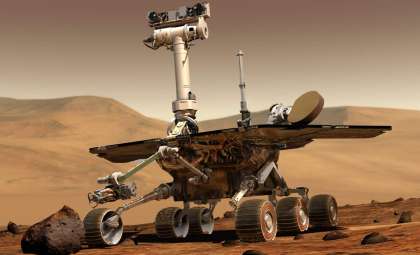
Investigating these structures hasn’t been simple. As an SUV-sized rover, Curiosity is negotiating terrain featuring ridges barely wider than a few feet. NASA’s Jet Propulsion Laboratory team compares this to navigating a tight pathway with precision.
“It almost feels like a highway we can drive on. But then we have to go down into the hollows, where you need to be mindful of Curiosity’s wheels slipping or having trouble turning in the sand,” explained Ashley Stroupe, an operations systems engineer.
Maintaining both safety and data collection efficiency requires constant vigilance to prevent Curiosity from becoming stuck or damaged while studying these captivating Martian landscapes.
Despite these obstacles, the rover has managed to collect rock samples and perform detailed analyses using its advanced instruments.
Decoding the Boxwork Formations
While climbing Mount Sharp, Curiosity is revealing evidence of past climatic shifts between moist and dry phases. The boxwork structures signal periods when liquid water was present on Mars, albeit not in Earth-like abundance. By studying the mineralogy and arrangement of these ridges, researchers are developing a richer narrative of Mars’ environmental evolution.
Discoveries of minerals such as clay and carbonate within the ridges imply that groundwater presence extended far longer than initially assumed.
“We can’t quite explain yet why the nodules appear where they do.” As Seeger suggested. “Maybe the ridges were cemented by minerals first, and later episodes of groundwater left nodules around them,” hinting at the possibility of multiple wet periods across Mars’ history.
- Categories:
- Astronomy








0 comments
Sign in to Comment