
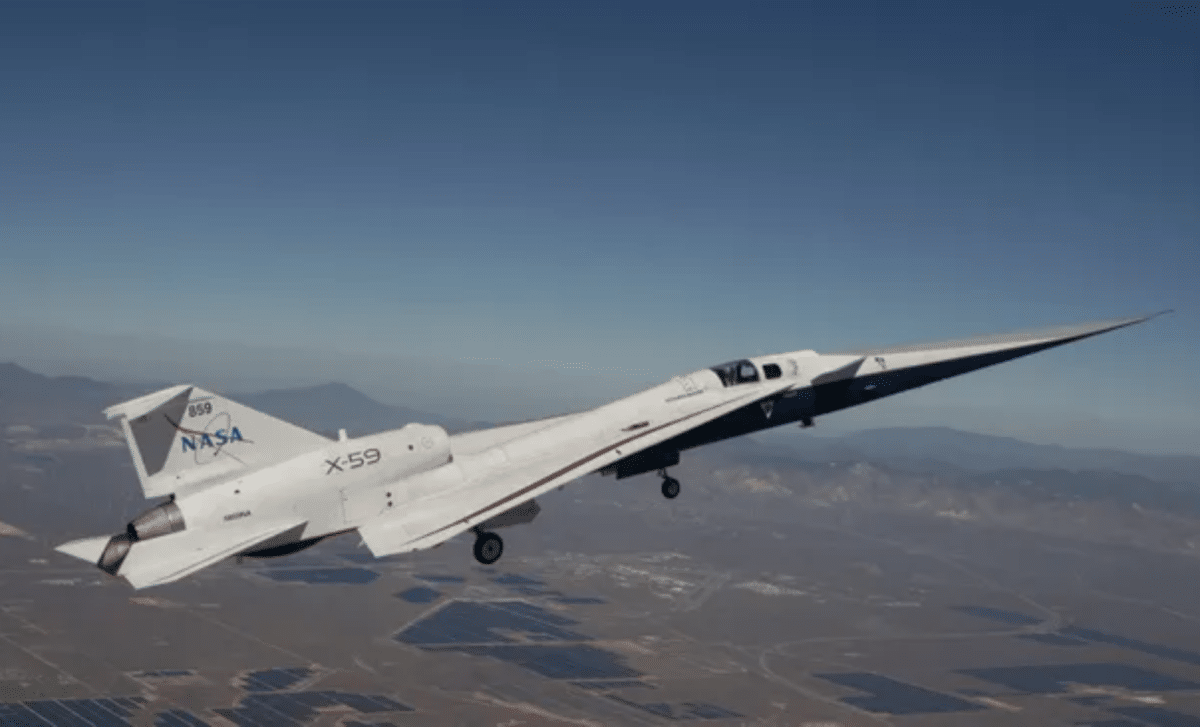
NASA's innovative X-59 supersonic aircraft, part of the Low-Boom Flight Demonstrator initiative, had to cut short its second test flight following an in-flight technical problem, NASA confirmed. The craft, aimed at transforming supersonic travel by minimizing sonic booms, managed to fulfill key goals despite the interruption, marking continued advancement toward future commercial supersonic flight.
Flight Cut Short Despite Strong Initial Performance
The second X-59 test flight commenced with high hopes as engineers sought to extend the aircraft’s operational capabilities. Designed to exceed the speed of sound while creating only a subtle sonic “thump,” this jet embodies years of cutting-edge aerodynamic and acoustic research. During the mission, flight systems were extensively monitored to better understand the jet’s behavior under actual conditions.
Midway through the flight, a technical malfunction required the mission to return early. Details about the exact fault remain limited, but NASA verified that all safety measures functioned correctly. The pilot safely brought the plane back for a controlled landing, underscoring both the robustness of the design and the thorough training of the crew.

“Despite the early landing, this is a good day for the team. We collected more data, and the pilot landed safely,” said Cathy Bahm, project manager for NASA’s Low-Boom Flight Demonstrator at NASA’s Armstrong Flight Research Center in Edwards, California. “We’re looking forward to getting back to flight as soon as possible.”
Although the flight was shorter than planned, engineers obtained essential telemetry data, enhancing their knowledge of the aircraft's operational performance beyond theoretical models.
The Significance of the X-59 for Future Air Travel
The X-59 is more than just a test plane; it represents NASA's vision for reintroducing commercial supersonic flights over land by overcoming decades-old bans tied to loud sonic booms from previous supersonic jets like the Concorde.
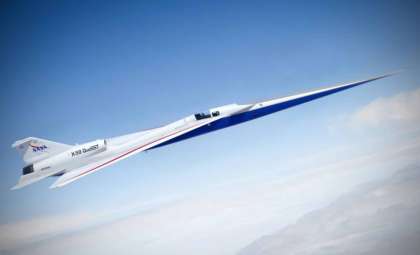
Unlike traditional supersonic aircraft, the X-59 is ingeniously designed to produce a much softer sonic signature. This is accomplished through an elongated nose, specially contoured fuselage, and advanced aerodynamics that diffuse shockwaves to minimize noise impact on communities below.
Future plans include flying the aircraft over select populations to collect feedback on noise perception. This information will assist regulatory bodies such as the Federal Aviation Administration (FAA), potentially leading to new policies that allow commercial supersonic flights over inhabited areas.
Success from the program could redefine international air travel by dramatically reducing journey times while maintaining community-friendly noise levels.
A Rigorous Testing Process Ahead
Although the early landing may appear as a minor setback, NASA views it as a routine step within a detailed, iterative testing process. Each flight contributes valuable data to refine performance and ensure safety.
“As we like to say, it was just like the simulator – and that’s what we like to hear,” Less said. “This is just the beginning of a long flight campaign.”
More test flights are scheduled, gradually increasing in difficulty to push the X-59 toward full operational readiness. Data from this truncated mission will help engineers improve systems and resolve the cause of the technical issue.
- Categories:
- Nasa








0 comments
Sign in to Comment