

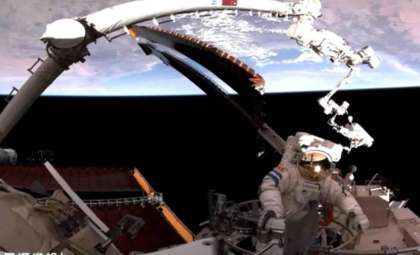
NASA called off a scheduled spacewalk from the International Space Station (ISS) on June 24, 2024, after detecting a coolant leak within one of the astronaut suits. This action demonstrates the ongoing difficulties of guaranteeing astronaut safety during extravehicular activities (EVAs).
Incident Overview
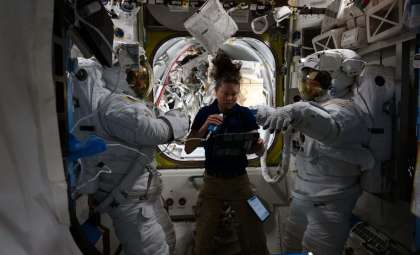
The EVA, which involved routine upkeep, was terminated when a water leak emerged in the cooling apparatus of astronaut Tracy Dyson’s suit. The problem was identified shortly after the suits transitioned to battery power, mere moments before the spacewalk was set to begin.
The cooling system in spacesuits plays a vital role in maintaining a stable temperature for astronauts working in the harsh space environment. Dyson and her fellow astronaut Mike Barratt were preparing to replace a malfunctioning electronics unit on a communications antenna when the leak was detected. NASA reported Dyson’s comment: “Right now, I’m comfortable, but I do feel a little warm,” signaling a compromise in the suit’s temperature regulation.

Rapid Response and Safety Protocols
Once the leak was identified, Dyson raised concerns about possible water intrusion into the electrical components of her suit. She stated, “There’s still water shooting out,” and added, “We can assume that water got into that connector, electrical connector.” Given the circumstances, Mission Control opted to abort the spacewalk to ensure astronaut safety.
Despite the gravity of the situation, NASA confirmed the astronauts were safe and not in imminent danger. Dyson and Barratt were swiftly returned to the ISS, where the airlock was repressurized, allowing them to resume normal station activities. NASA’s prompt intervention and stringent safety procedures played a key role in managing this event effectively.

Recent Interruptions in Spacewalk Schedules
This latest incident marks the second recent EVA delay due to spacesuit complications. Earlier, a June 13 spacewalk was postponed following a “spacesuit discomfort issue” involving astronaut Matthew Dominick. Out of respect for privacy, NASA has withheld additional information regarding the nature of that problem.
NASA has tentatively planned another spacewalk for July 2; however, uncertainties remain given recent setbacks. These delays also affect the schedule for the return of Boeing’s Starliner capsule, which is dealing with its own technical difficulties including helium leaks and thruster malfunctions.
Historical Perspective on Spacesuit Failures
Spacesuit malfunctions have historically posed serious challenges during space missions. In March 2022, an astronaut’s helmet was found to contain water after an EVA, causing a temporary halt to all spacewalks while NASA examined the suit’s systems in detail. A more critical event occurred in 2013 when Italian astronaut Luca Parmitano experienced a helmet filling with water mid-spacewalk, resulting in a dangerous situation that he later described as “like swimming with my head underwater.”
These moments underscore the risks inherent to EVAs and amplify the vital need for dependable spacesuit performance. NASA has since enhanced safety checks and procedures to lower the chances of recurrence.
Challenges Ahead and Spacesuit Development
The recurrence of spacesuit related problems highlights the necessity for stringent evaluation and upkeep practices for EVA gear. NASA remains committed to astronaut safety and is actively pursuing upgrades to improve spacesuit reliability and functionality.
Astronaut Butch Wilmore, commenting on the event, noted, “It was a pretty impressive snowstorm,” referring to the ice crystals formed from the escaping coolant—a reminder of the unpredictable conditions astronauts may confront during spacewalks.
Addressing these technical obstacles is critical for the ongoing success of ISS missions and future ventures beyond Earth. As NASA and its partners prepare for long-duration missions to the Moon and Mars, ensuring the durability and safety of spacesuits continues to be a top priority.



0 comments
Sign in to Comment