
Scientists at Stanford have identified a vital missing factor in understanding Antarctica’s shifting ice by utilizing advanced machine learning techniques alongside detailed satellite observations. Their research, featured in Science, poses challenges to current climate predictions and could influence forecasts of global sea-level rise.
Decoding the Movements of Antarctic Ice
The ice sheet covering Antarctica is Earth’s largest frozen water store, containing enough ice to potentially raise sea levels by up to 190 feet if melted entirely. Understanding its motion and melting patterns is crucial for anticipating future climate impacts, yet existing models often fail to capture the complex behavior of ice flow, resulting in uncertain sea-level rise estimates.
Researchers from Stanford University addressed this by leveraging AI-powered deep learning applied to radar and satellite data gathered between 2007 and 2018. Their method, combining empirical data with physical principles, uncovered mechanisms previously missed that regulate Antarctic ice dynamics.

Unexpected Patterns in Ice Shelf Behavior
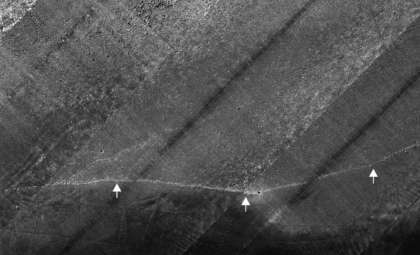
The study from Stanford points out key deficiencies in the current understanding of Antarctic ice flow based on machine learning and high-resolution satellite imagery. Results indicate that ice shelves—critical barriers that stabilize glaciers—demonstrate heterogeneous responses. While ice close to the land remains compressed, most of the ice shelf area—about 95%—shows different behavior.
This important revelation implies that climate models may be underestimating how vulnerable Antarctic ice is and how likely it is to collapse, which carries significant consequences for sea-level rise forecasts. Scientists plan to refine their projections for glacier retreat and iceberg calving to deepen insight into Antarctica's impact on global climate.
Significance for Sea Level Predictions
These new findings have profound consequences. Global sea-level estimations often treat ice features as uniform, but this research reveals the ice is considerably more fragile than previously acknowledged. This suggests Antarctica could be losing ice more rapidly, highlighting the need to update climate models accordingly.
Future work aims to broaden the observational dataset to isolate the causes of the uneven ice shelf behavior. Understanding these factors will improve forecasts of ice fracturing, calving episodes, and the long-term disintegration of glaciers.
Transforming Climate Science with Artificial Intelligence
This study also exemplifies the growing impact of AI in climate research. By merging machine learning with physics, scientists can detect complex patterns that traditional analysis overlooks.
Lead author Ching-Yao Lai noted this combined approach could revolutionize climate modeling. Employing AI alongside physical laws enables discovery of new ice dynamics and fosters deeper comprehension of Earth and planetary processes.
“We are trying to show that you can actually use AI to learn something new. It still needs to be bound by some physical laws, but this combined approach allowed us to uncover ice physics beyond what was previously known and could really drive new understanding of Earth and planetary processes in a natural setting.”
- Categories:
- Science








0 comments
Sign in to Comment