
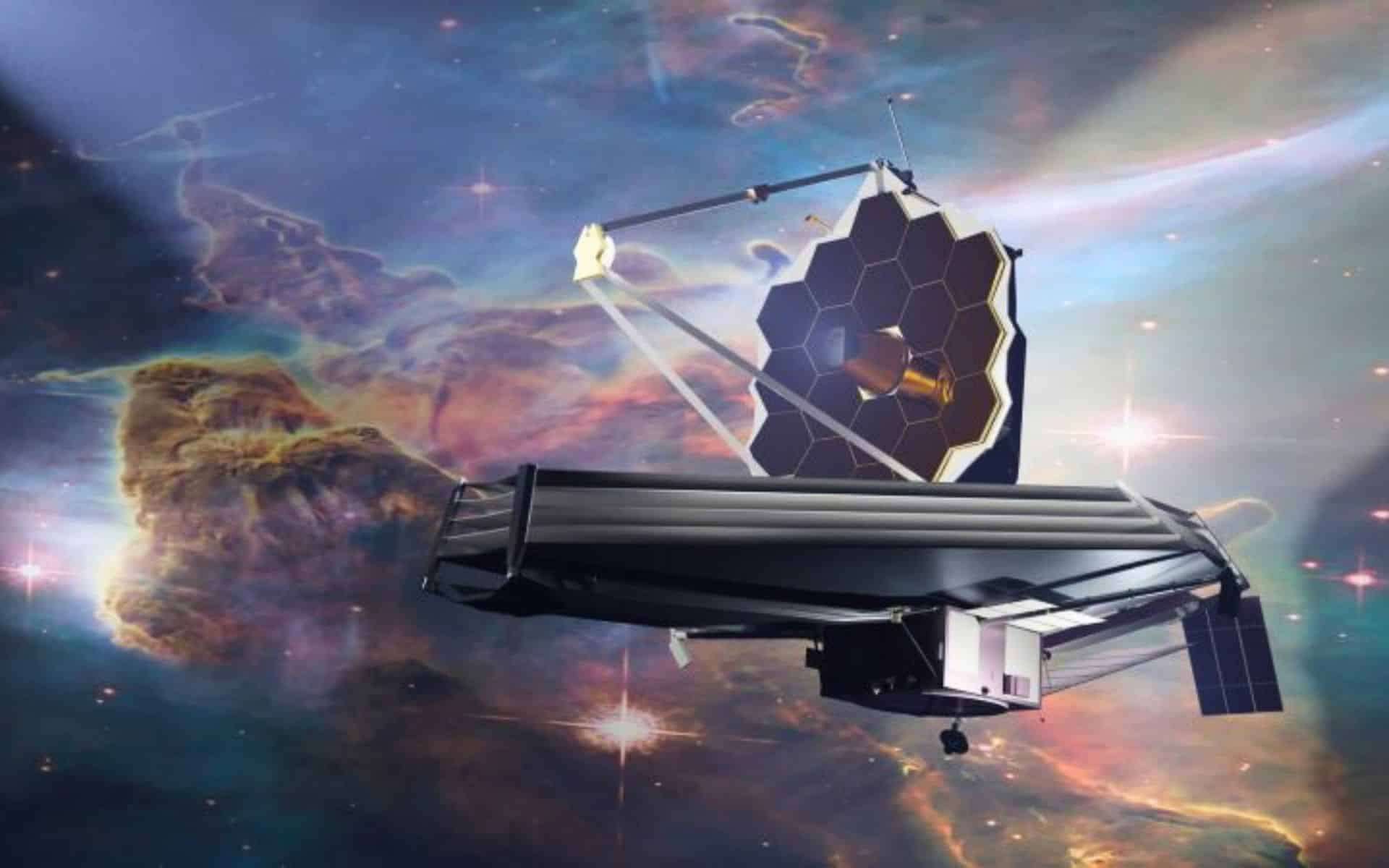
The James Webb Space Telescope (JWST) is revolutionizing our understanding of brown dwarfs, a class of celestial objects long shrouded in mystery. These so-called “failed stars” have puzzled astronomers for years, including whether they could host protoplanetary discs after their birth. Recent Webb observations in the Orion Nebula are starting to unravel these questions.
New Perspectives on Brown Dwarfs
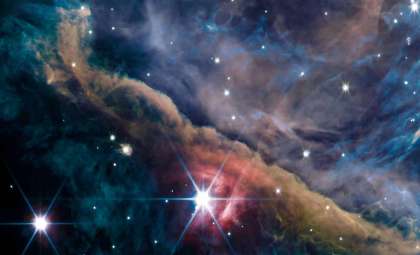
The Orion Nebula, situated approximately 1,300 light-years from Earth, serves as a nearby stellar nursery and has been extensively studied by astronomers. This region’s proximity and abundance of young stars make it ideal for monitoring star formation. The Hubble Space Telescope played a pivotal role during the 1990s, offering detailed views that supported emerging theories about our own Solar System’s origins.
Among Hubble's discoveries were numerous protoplanetary discs—known as proplyds—orbiting young stars, illuminated and ionized by strong ultraviolet radiation. Researchers identified roughly 180 such proplyds, yet many questions remained about their characteristics and the full range of hosts.

Overcoming Hubble’s Infrared Constraints with JWST
While extraordinarily successful, Hubble’s sensitivity was limited, particularly in detecting faint astronomical bodies glowing primarily in infrared wavelengths. This left uncertainty as to whether some proplyds were linked to protostars or brown dwarfs.
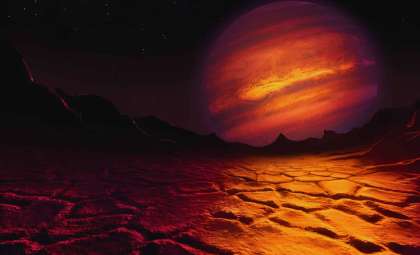
Brown dwarfs occupy a unique category—they are bigger than gas giant planets like Jupiter but too small to sustain steady hydrogen fusion, only briefly igniting deuterium, a rare heavy hydrogen isotope from the Big Bang. Examining these objects demanded more advanced instruments capable of detailed infrared spectroscopy.
Groundbreaking Discoveries by the James Webb Telescope
With its state-of-the-art infrared technology, the James Webb Space Telescope has overcome previous observational limitations. Using the Webb near-infrared spectrograph, astronomers carefully examined several brown dwarf candidates within the Orion Nebula, deriving key findings:
- Twenty bodies were validated as brown dwarfs, the smallest weighing in at just half a percent of our Sun’s mass—comparable to five times Jupiter’s mass.
- Two entities had masses close to the threshold for hydrogen fusion, challenging distinctions between tiny stars and large brown dwarfs.
- The study also pinpointed two dim proplyds previously observed by Hubble in the 1990s, now classified among the least massive and coolest discs detected.
Expanding Our Cosmic Understanding
Kevin Luhman, an astronomy professor at Penn State and lead investigator of the project, emphasized the importance of these JWST observations. He explained that the current findings represent just an initial glimpse. “The nebula harbors hundreds of faint objects that may be brown dwarfs,” Luhman said, highlighting their potential for further exploration through advanced spectroscopy.
Future study with JWST is poised to uncover many more brown dwarfs encircled by protoplanetary discs. This research will significantly enhance comprehension of how brown dwarfs form and their relationship to stars and planets, enabling scientists to better model the processes shaping stellar and planetary development.





0 comments
Sign in to Comment