
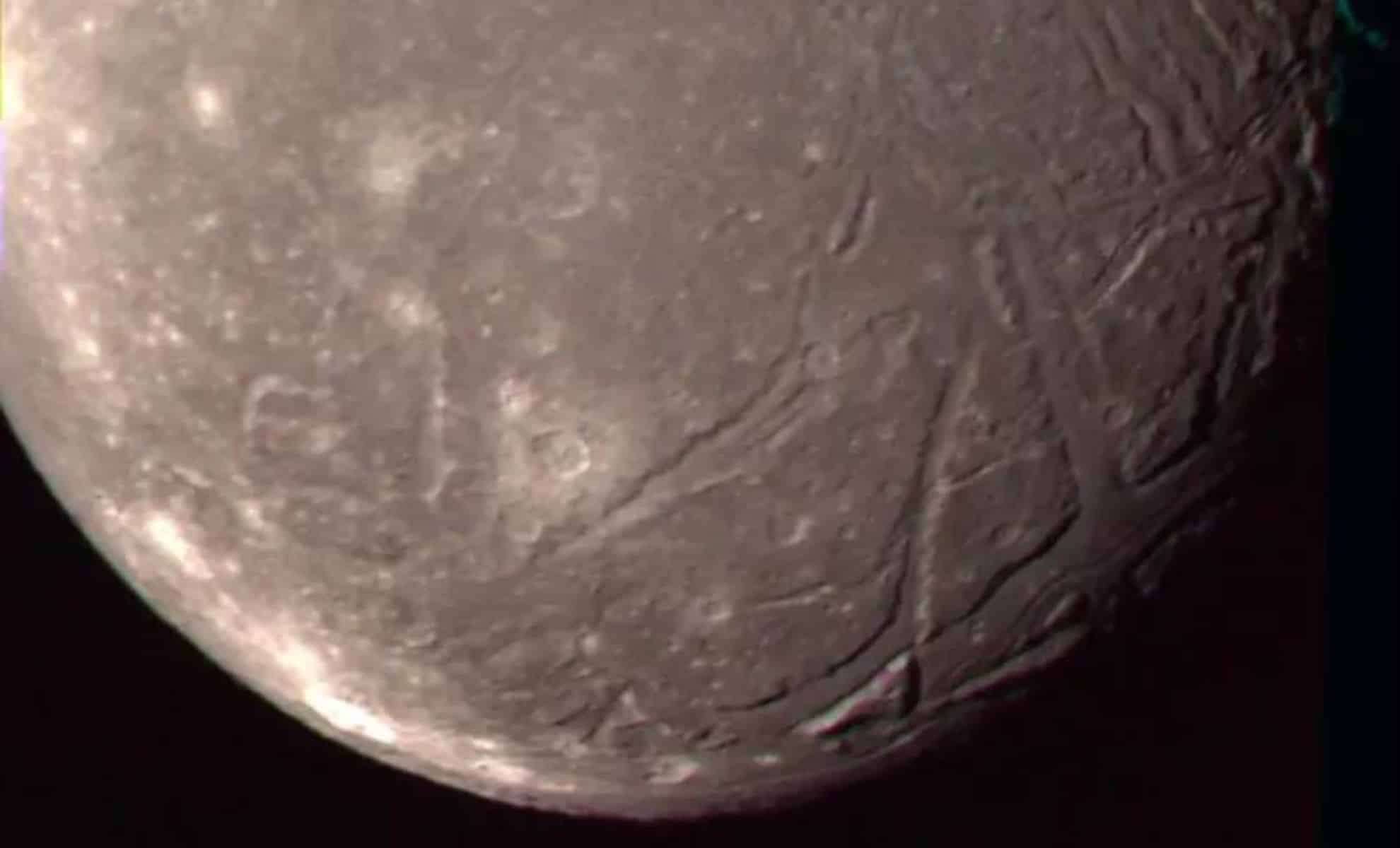
NASA’s James Webb Space Telescope (JWST) has uncovered compelling signs that Ariel, a moon orbiting Uranus, could contain a hidden ocean underneath its icy exterior.
These insights emerged after JWST identified notable amounts of carbon dioxide ice concentrated on Ariel’s trailing side.
The presence of carbon dioxide alongside carbon monoxide spectral signatures suggests to researchers that an internal liquid reservoir might exist beneath the moon’s frozen surface.

Such a subsurface ocean would provide a plausible explanation for the stable presence of these volatile compounds, which would usually evaporate and escape the moon’s atmosphere.
Unraveling the Clues Pointing to Ariel’s Hidden Ocean
The discovery of carbon dioxide ice in unexpected abundance on Ariel caught scientists off guard, since the moon’s distance from the Sun typically leads to gas sublimating rather than freezing. Initial theories considered radiolysis—chemical changes caused by Uranus’ magnetic environment—as a potential source of the CO2.
However, a recent article in the Astrophysical Journal Letters offers an alternative scenario: the ice might originate from an underlying ocean. This is backed by the identification of carbonate minerals on Ariel’s exterior, which usually indicate chemical reactions between liquid water and rock.
Finding that Ariel may possess one of the highest surface concentrations of carbon dioxide in the solar system enhances the theory that moons around gas giants often harbor subsurface oceans, broadening the prospects for habitable zones beyond Earth.
How the James Webb Space Telescope Transformed Our View of Ariel
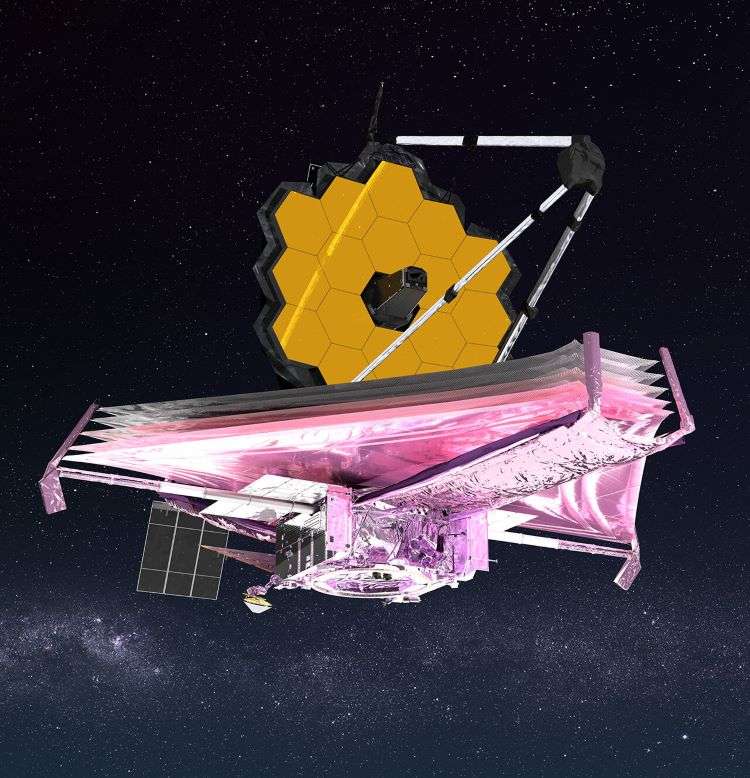
Thanks to its advanced infrared instruments, the James Webb Space Telescope enabled scientists to delve deeply into Ariel’s surface chemistry. It provided the crucial spectral data needed to confirm the presence of carbon dioxide and carbonate deposits, key evidence hinting at liquid water beneath the crust.
These results complement earlier findings of subsurface oceans on moons such as Europa and Enceladus, known for their active geology and cryovolcanic features. JWST’s observations have revived scientific interest in Uranus’ satellite system and emphasize the value of future exploratory missions.
The logical progression involves launching a dedicated spacecraft to Uranus and its moons, paralleling upcoming missions planned for Europa and Titan, enabling direct examination of Ariel’s interior ocean.
Advancing the Search for Life with Future Uranian Missions
The prospect of an oceans beneath Ariel’s ice reshapes our comprehension of its geophysical dynamics and astrobiological potential. Such subsurface water reservoirs could offer a shielded environment with favorable conditions for life’s chemistry.
Exploration plans for Uranus might deploy orbiters or landers outfitted with ice-penetrating radar and sensors to detail the ocean’s scope and composition. These missions would aim to verify the ocean’s existence while probing the broader question of habitability on icy moons at the solar system's frontier.
This breakthrough, enabled by the unparalleled technology of the James Webb Space Telescope, highlights the necessity of continued outer planet explorations to unlock clues about life’s distribution in our cosmic neighborhood.
- Categories:
- Astronomy ,
- News ,
- Space ,
- Nasa








0 comments
Sign in to Comment