
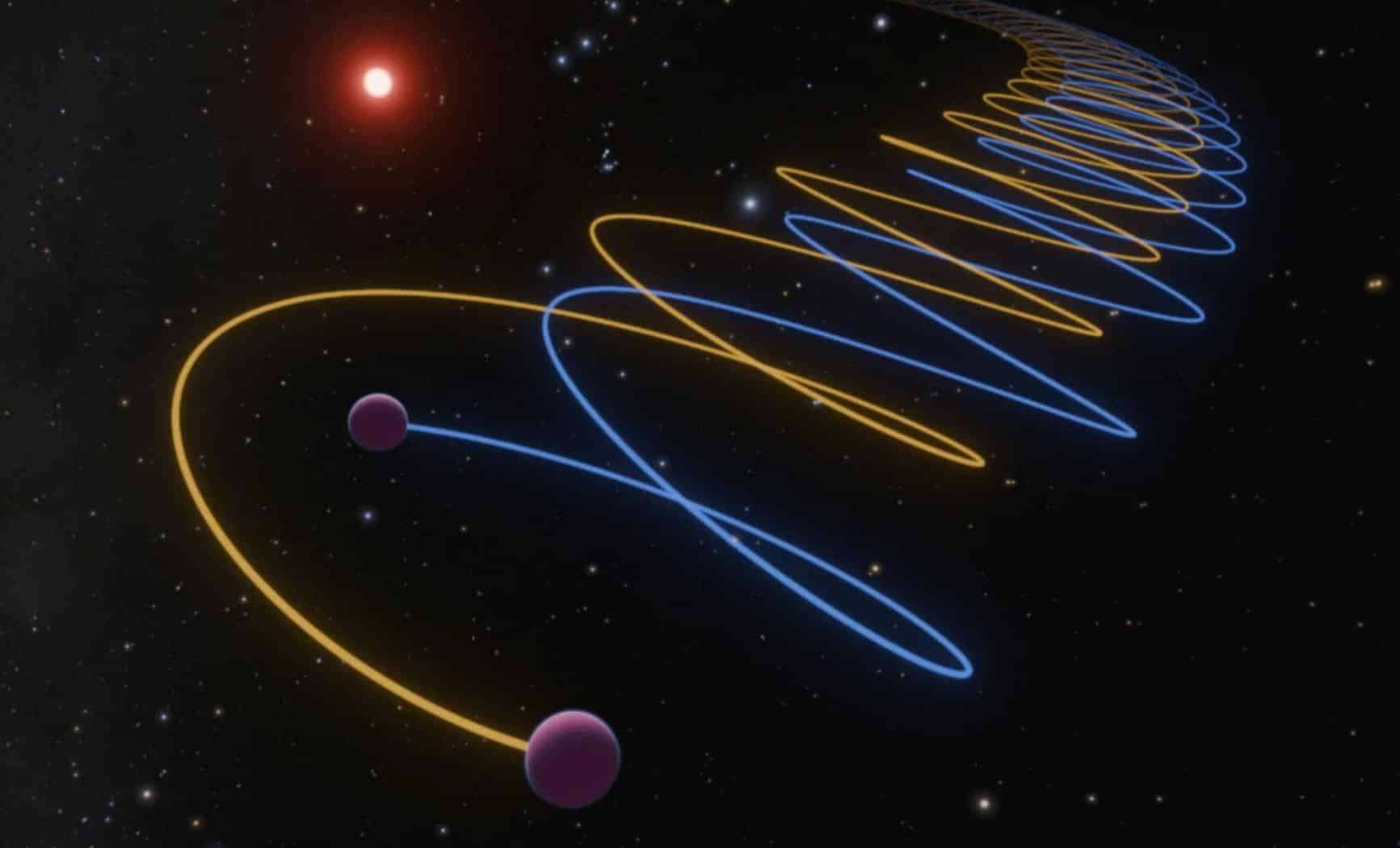
Astronomers have unveiled a remarkable new understanding of Gliese 229B, a famed brown dwarf observed nearly three decades ago. Formerly seen as a solitary “failed star,” it has now been confirmed that Gliese 229B is in fact two brown dwarfs orbiting each other closely. This transformative revelation, documented in Nature, settles longstanding puzzles about the object’s unique traits and sheds light on the formation mechanics of binary brown dwarf systems.
Brown Dwarfs: Celestial Bodies Between Stars and Planets
Brown dwarfs are often described as “failed stars” because they lack the mass needed to ignite sustained hydrogen fusion at their cores. They occupy a niche between true stars and giant planets. Discovered in 1995, Gliese 229B was the first brown dwarf identified, representing a key find bridging stars and planetary objects.
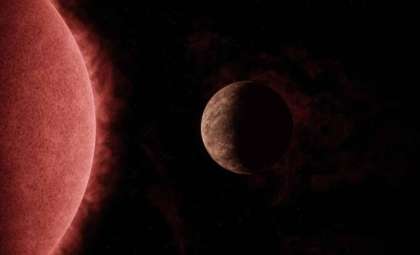
Scientists long observed that Gliese 229B emitted less light than anticipated given its mass, sparking theories it might not be a single entity. Now, using data from the Very Large Telescope (VLT) in Chile, researchers have shown that Gliese 229B consists of two brown dwarfs — Gliese 229Ba and Gliese 229Bb — orbiting at a separation of just 3.8 million miles, roughly 16 times the Earth-Moon distance.

“Uncovering that Gliese 229B is a binary system resolves discrepancies between its mass and brightness and greatly enriches our comprehension of brown dwarfs,” explained Dimitri Mawet, Caltech astronomy professor and co-author of the work.
A Groundbreaking Close Brown Dwarf Binary
This discovery is especially thrilling because the two brown dwarfs circle each other every 12 days at an exceptionally tight distance. While other binary brown dwarf pairs have been spotted, Gliese 229B is the first known instance of such a compact binary, where two objects are so intimately bound that they appeared as one until now.
Rebecca Oppenheimer, study co-author at the American Museum of Natural History, remarked that their tight orbit highlights “the universe’s strangeness and the incredible diversity of solar systems.”
Gliese 229Ba and Gliese 229Bb have masses approximately 38 and 34 times Jupiter’s mass, respectively. This finding alters how scientists perceive the influence of gravity on the formation of these close brown dwarf pairs. They orbit a red dwarf star named Gliese 229, situated 19 light-years from Earth.
Solving a Long-Standing Enigma
This breakthrough clarifies why Gliese 229B’s faint glow puzzled astronomers for decades. Its observed brightness never aligned with mass estimates until advanced tools like the GRAVITY interferometer and CRIRES+ spectrograph at the VLT allowed the light from each component to be distinguished, confirming binary status.
“Known as the prototypical brown dwarf, Gliese 229B has now been revealed as two objects, previously unresolved due to their extremely close proximity,” said Jerry Xuan, lead Caltech author.
This advance opens possibilities for uncovering additional brown dwarfs in hidden binaries. Xuan emphasized that finding such a pair “is a promising sign for current searches aimed at identifying more of these close companions across the Milky Way.”
Future Directions in Brown Dwarf Research
Recognizing Gliese 229B as a binary system paves the way for further study into how brown dwarfs form and evolve, particularly in close pairs. Upcoming observations using tools like the Keck Planet Imager and Characterizer (KPIC) may reveal more tight binary brown dwarf systems and enhance our knowledge of their dynamics over time.
Oppenheimer described the find as “one of the most thrilling discoveries in substellar astrophysics in decades,” underscoring its significance both for studying brown dwarfs and expanding our understanding of stars and planets.
As research continues to identify hidden binaries in space, the revelation of Gliese 229Ba and Gliese 229Bb exemplifies how familiar celestial objects can still surprise us, providing fresh cosmological insights.
- Categories:
- Astronomy ,
- News ,
- Science







0 comments
Sign in to Comment