
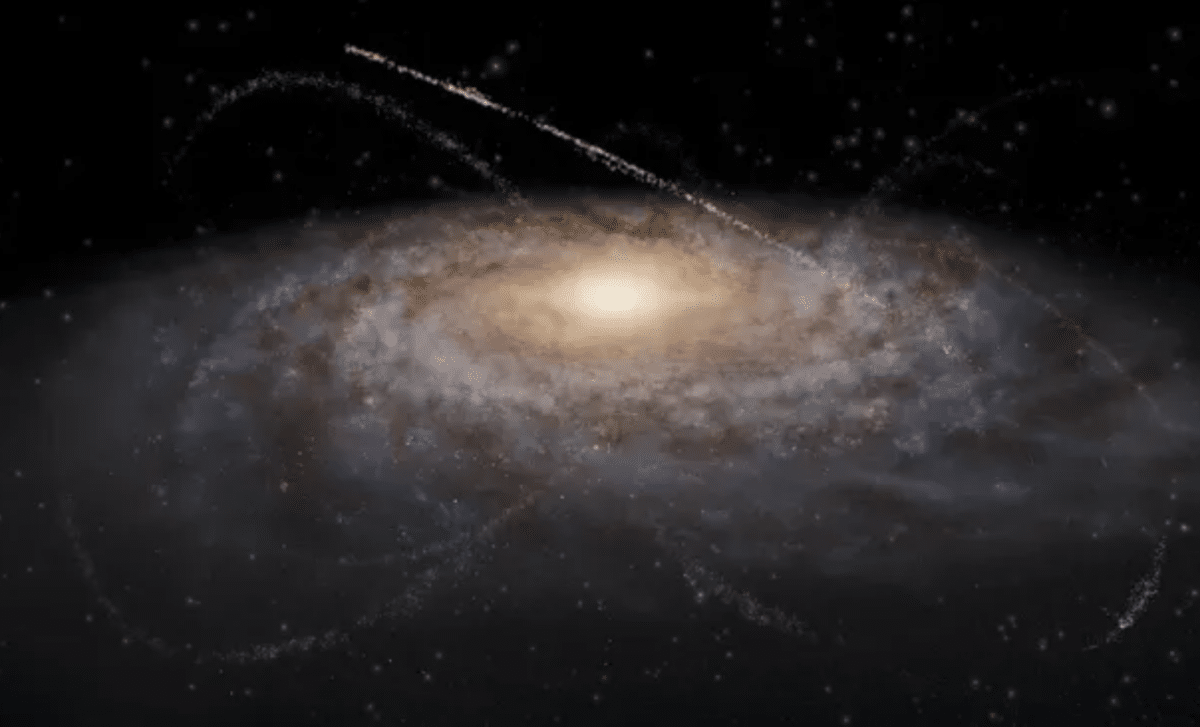
Researchers have uncovered numerous previously undetected stellar streams in the Milky Way’s outer halo. These elongated star formations, remnants of ancient star clusters and dwarf galaxies, offer vital clues about our galaxy's past and the invisible dark matter shaping it. Spearheaded by Yingtian “Bill” Chen at the University of Michigan, the study employs cutting-edge algorithms to deepen our understanding of the Milky Way's complex structure.
Revealing the Galaxy’s Hidden Star Streams
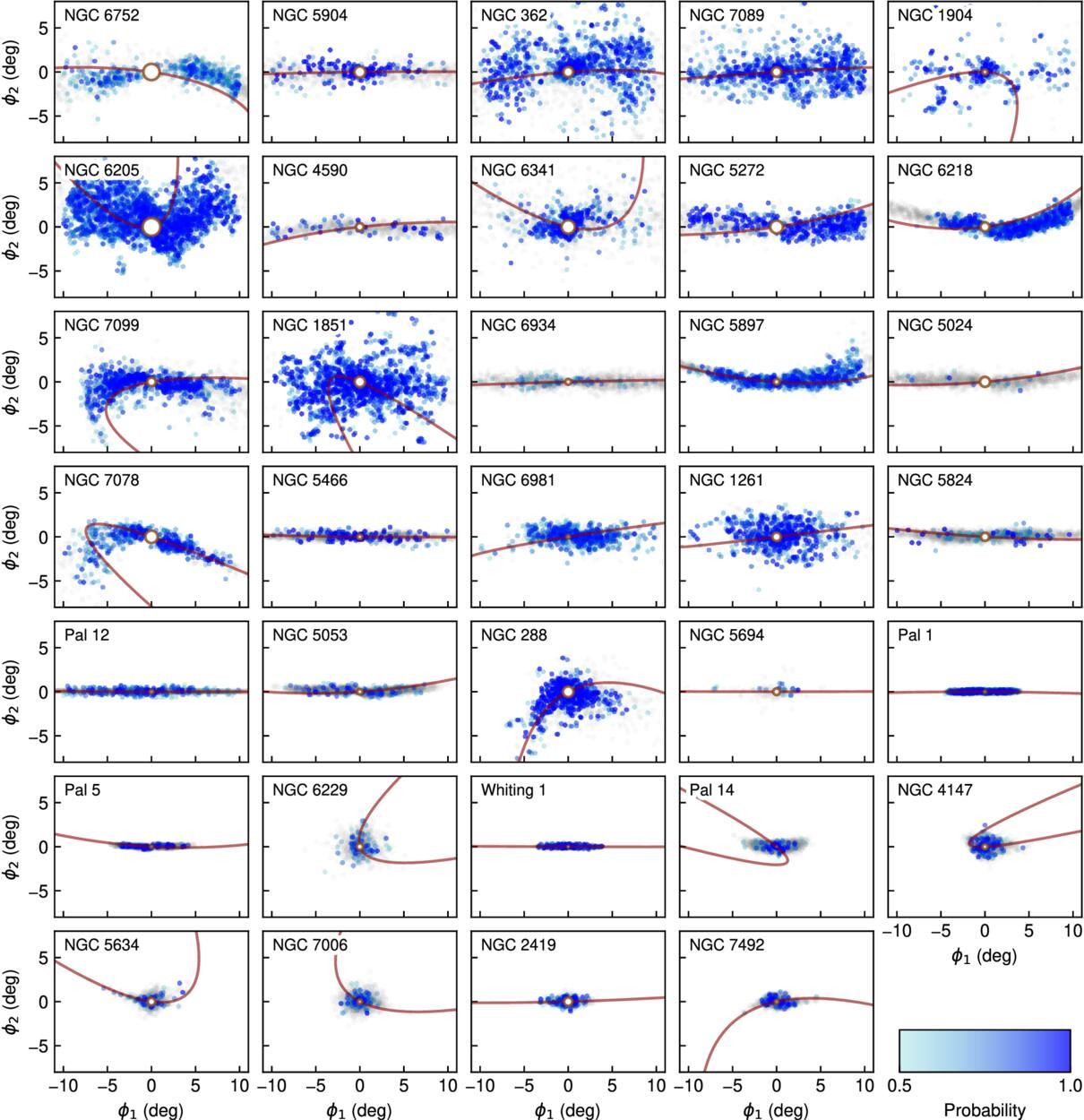
For decades, scientists have aimed to map the Milky Way's remote regions. A recent publication in The Astrophysical Journal marks a major advancement. Utilizing data from the European Space Agency’s Gaia observatory, the team identified 87 new candidate stellar streams in the galaxy’s outskirts. These streams, remnants of tidally disrupted dwarf galaxies and globular clusters, provide a window into the galaxy’s formation history and dark matter distribution.
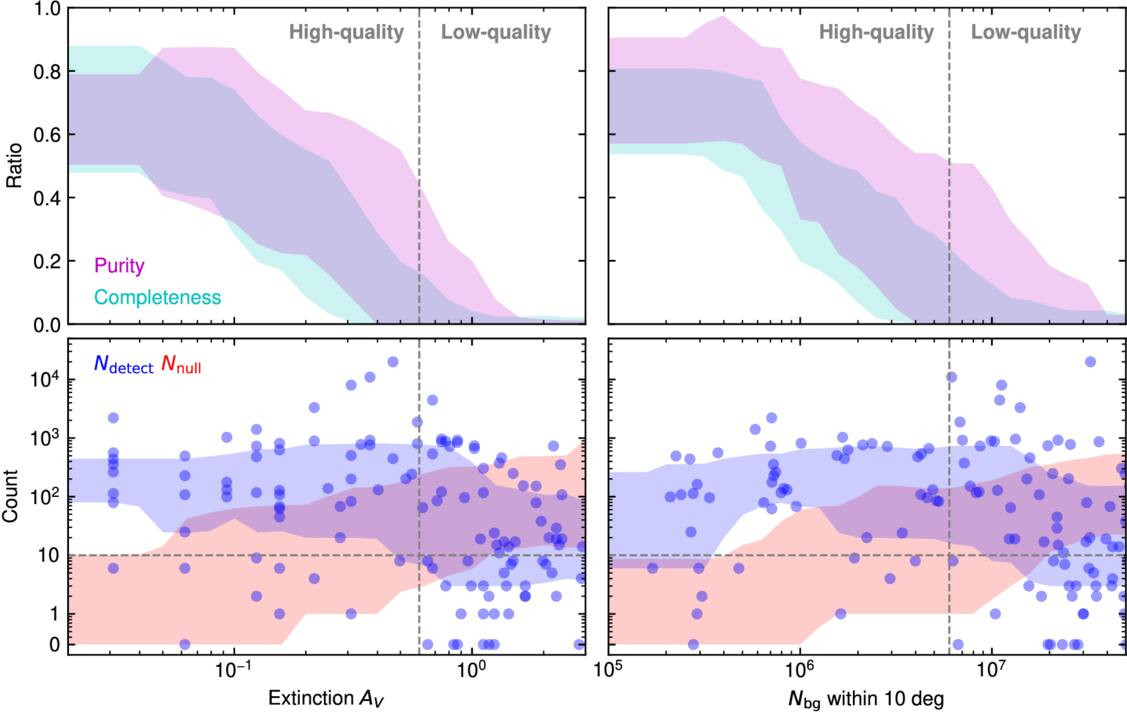
This breakthrough was achieved through the development of StarStream, a novel algorithm crafted by Chen. Unlike traditional methods that depend on visually spotting streams, StarStream employs a physics-informed model to predict their occurrence. This strategy increased the number of recognized star streams from less than 20 to 87, significantly enriching the dataset for future investigations.

Understanding the Importance of Stellar Streams in Mapping Galactic Mass
Star streams are not only breathtaking features but crucial indicators for mapping the mass distribution of the Milky Way, including its dark matter halo. Theoretical astrophysicist Oleg Gnedin from the University of Michigan, who co-authored the study, explained that these streams reveal the gravitational influences that have shaped their trajectories.
“It’s like riding a bike with a bag of sand, only the bag has a hole in it,” Gnedin said. “Those grains of sand are like the stars left behind along their trajectory.”
These stellar streams are formed from dwarf galaxies or star clusters that were gravitationally torn apart by the Milky Way. Their present form and orbits act as a natural record of the gravitational forces exerted on them, making them invaluable for characterizing the galaxy’s mass, especially its elusive dark matter component that remains undetected by conventional means.
Advances in Technology: StarStream’s Role in the Discovery
A key factor in this scientific breakthrough is the innovative technology behind it. Chen’s StarStream algorithm exploits a physics-based approach to anticipate star stream locations, moving beyond reliance on visual detection alone. This innovation allows the identification of stellar streams that previously escaped notice due to their subtle signatures.
“It turns out that it’s a lot easier to find things when you have a theoretical expectation of what you’re looking for when you have a simple phenomenological picture,” Gnedin explained.
By applying fundamental physics, StarStream effectively uncovers streams buried within the data, dramatically expanding the known population of stellar streams and offering a richer perspective on the Milky Way’s composition and dynamics.
- Categories:
- Astronomy




0 comments
Sign in to Comment