

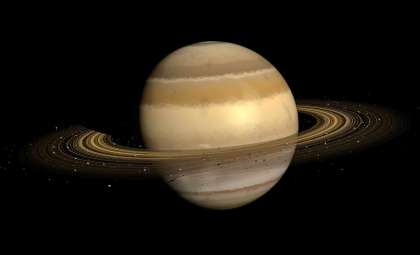
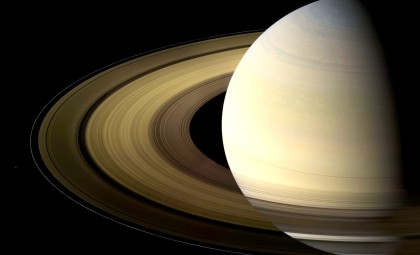
Recent findings from NASA's Cassini mission have unveiled that Saturn’s celebrated rings stretch much farther than the slender band visible through telescopes. In its concluding orbits in 2017, Cassini detected a previously unseen dusty “halo” encircling the rings, reaching distances up to three times Saturn’s radius.
Saturn’s ring system has intrigued scientists for hundreds of years, but the intimate data gathered by Cassini offered unparalleled insights. This remarkable discovery, featured in The Planetary Science Journal, stems from the spacecraft’s Grand Finale Orbits (GFOs). During this phase, Cassini employed its Cosmic Dust Analyzer (CDA) to sample dust particles both above and below the rings. Analysis of these samples has revealed that the ring particles disperse far beyond their previously understood boundaries.
Revealing the Extensive Dust Halo
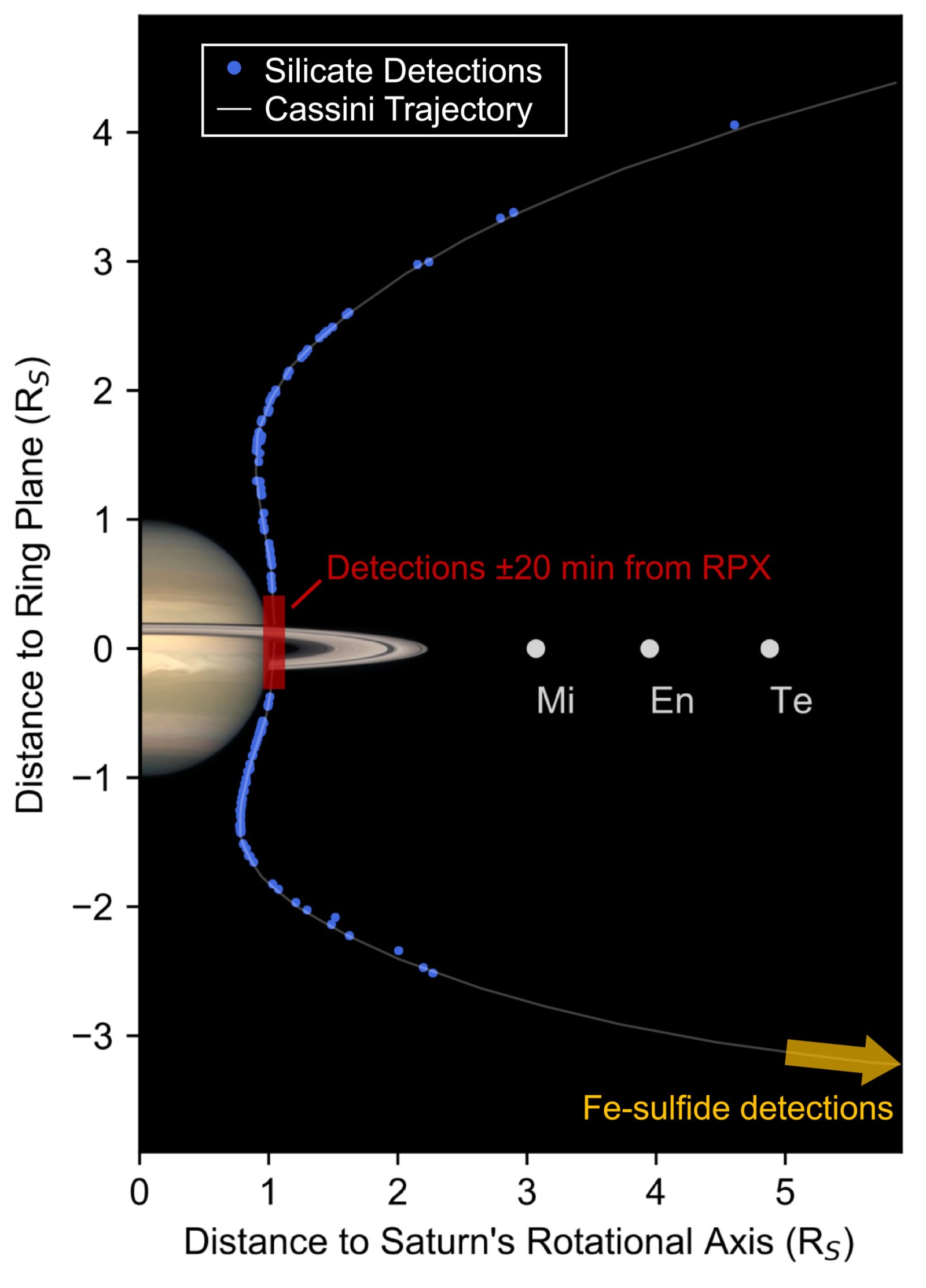
In 2017, Cassini performed its final orbits, skimming above and beneath Saturn’s ring plane. Throughout this mission segment, the spacecraft recorded 1,690 dust spectra, which scientists have meticulously studied. Of these, 155 spectra corresponded to mineral grains predominantly made up of silicates.

Researchers discovered that these particles form a diffuse “halo” extending to roughly three Saturn radii (RS) above and below the ring plane, well beyond the visible rings. This new evidence shows that Saturn’s rings influence a much larger volume of space, with dust particles dispersed across a wider region than formerly recognized.
The chemical makeup of these dust grains played a vital role in tracing their source. The mineral particles in this halo align closely with those composing the main rings, featuring elevated levels of magnesium and calcium and notably low iron content. These findings strongly indicate that the halo’s dust originated from within Saturn’s rings, rather than being accumulated from external sources in the solar system.
Mechanisms Driving Dust to Great Distances
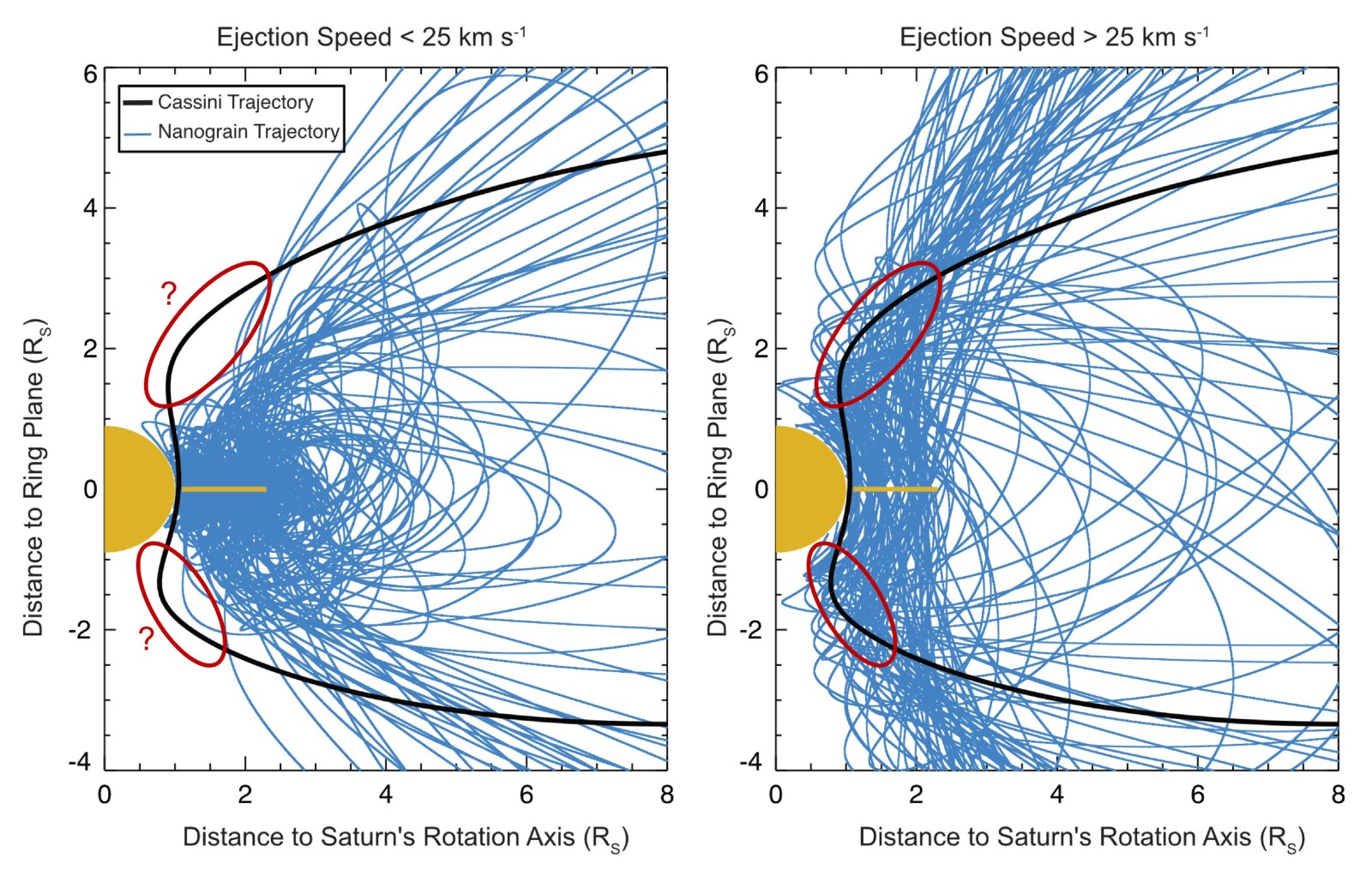
The research, titled “A Dust Halo from Saturn’s Main Rings Extending Several Saturnian Radii above the Ring Plane”, also investigates how these tiny particles manage to travel so far from the ring system. The primary cause appears to be high-speed impacts from micrometeoroids. When these tiny space rocks collide with Saturn’s rings, they can effectively eject small dust grains into surrounding space.
“Most ejected particles are expected to either recollide with the main rings or fall into Saturn, and only a small fraction are assumed to escape successfully from the rings,” the researchers said.
To be propelled outward beyond the rings, these particles must be extremely small—under 20 nanometers in diameter—and capable of velocities exceeding 25 km/s. Such speeds enable their dispersal across extensive distances.
The study concludes that although the majority of particles either return to Saturn’s rings or are absorbed by the planet’s atmosphere, a select few escape to constitute the expansive dust halo Cassini observed. Understanding this ejection process is crucial to unraveling the ongoing evolution and structure of Saturn’s extensive ring system.
- Categories:
- Astronomy







0 comments
Sign in to Comment